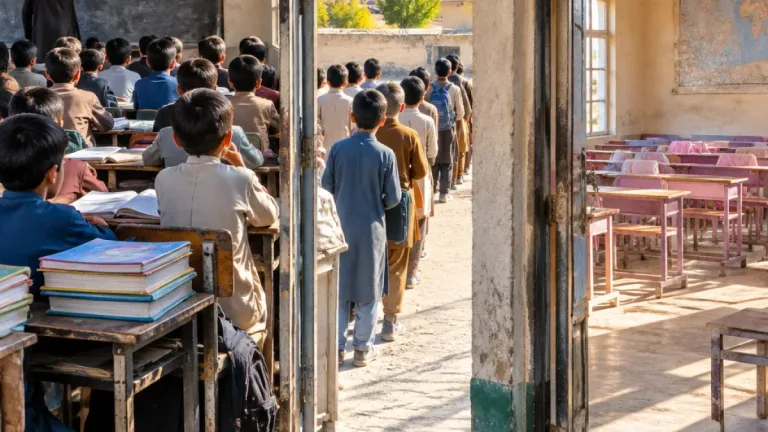
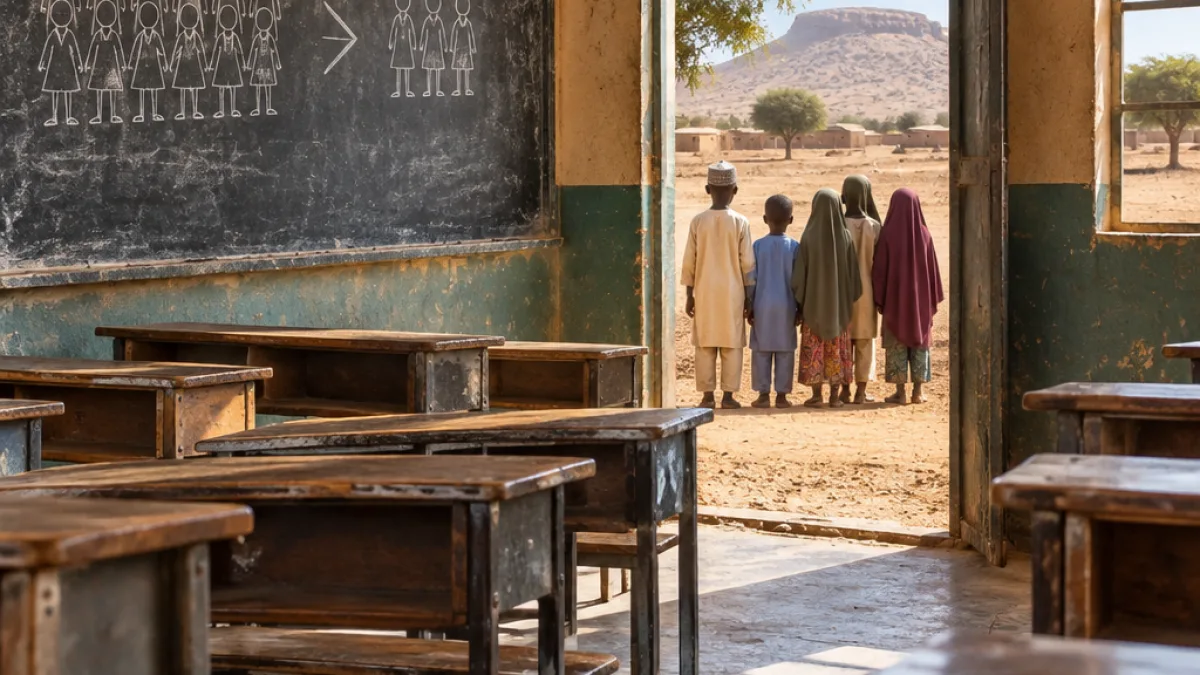
UNICEF has raised concern over the scale of children excluded from education in three north-western Nigerian states, saying about 624,000 children in Sokoto, Kebbi and Zamfara have been identified as being outside the classroom.
The figure was disclosed during a media briefing held by UNICEF’s Sokoto Field Office as part of activities linked to the 2026 World Children’s Day. The organisation said roughly 68,000 children had already benefited from interventions aimed at helping them return to school, but warned that the response remained far smaller than the size of the challenge.
UNICEF’s Chief of Field Office in Sokoto, Dr Michael Juma, said the situation required urgent action from government, greater financial investment and stronger mobilisation at community level. His call placed the responsibility for improving access to education across a broad group of institutions, rather than on schools and families alone.
Large gap between need and intervention
The figures presented at the briefing show the scale of the gap facing education planners in the three states. While interventions have reached tens of thousands of children, the number identified as being outside school is many times higher.
| Measure | Number |
|---|---|
| Children identified as out of school | About 624,000 |
| Children reached through return-to-school interventions | About 68,000 |
| Children reached through the TaRL programme | Approximately 98,000 |
UNICEF also reported that approximately 98,000 children had benefited from the Teaching at the Right Level, or TaRL, programme through partnerships with the three state governments. The source material did not provide a breakdown showing how the beneficiaries were divided between the states or explain whether children could have been counted across more than one intervention.
The organisation’s emphasis on urgent action reflects the fact that exclusion from school is not only an education problem. UNICEF linked children’s wellbeing to access to healthcare, nutrition, safe drinking water and social protection. Its position is that these services must be addressed together if children are to enter school, remain there and benefit from learning.
Call for coordinated response
Juma called for cooperation among state governments, journalists, traditional institutions, religious leaders and other community stakeholders. The appeal recognises that public authorities cannot resolve the problem through school-based measures alone, particularly where families and local communities influence whether children are enrolled and continue attending.
He also urged journalists in Sokoto, Kebbi and Zamfara to expand their role beyond reporting official events. UNICEF wants media organisations to undertake public education, investigative reporting and advocacy focused on children’s rights and government accountability.
The media are important duty-bearers in advancing children’s rights. Journalists must provide balanced coverage that highlights development achievements while drawing attention to persistent gaps affecting the wellbeing of children.
The call carries two parts. Reporting should acknowledge programmes that are reaching children, including the return-to-school interventions and TaRL, but it should also examine the children who remain excluded and the reasons services are not reaching them. UNICEF said reporting should help expose weaknesses in service delivery and draw attention to unmet needs.
What UNICEF wants addressed
UNICEF reaffirmed its commitment to working with the governments of Sokoto, Kebbi and Zamfara, development partners, traditional and religious leaders and grassroots organisations. The stated objective is to improve children’s access to quality and inclusive education and essential services.
- Expanded access to education for children currently outside the classroom.
- Improved healthcare, nutrition and safe drinking water.
- Stronger social protection and community participation.
- More scrutiny of public services and government accountability.
The organisation did not provide a timetable for reducing the number of out-of-school children, nor did it disclose the total funding required to reach them. It also did not identify the specific barriers affecting children in each of the three states. Those details will be important for judging whether future interventions are reaching the children most in need.
For now, UNICEF’s figures present a clear measure of the work still ahead. About 68,000 children have benefited from interventions, and approximately 98,000 have been reached through TaRL, but hundreds of thousands remain outside the classroom. The organisation’s message is that governments and communities must treat the issue as an urgent, shared responsibility, while the media tracks both progress and continuing failures.