
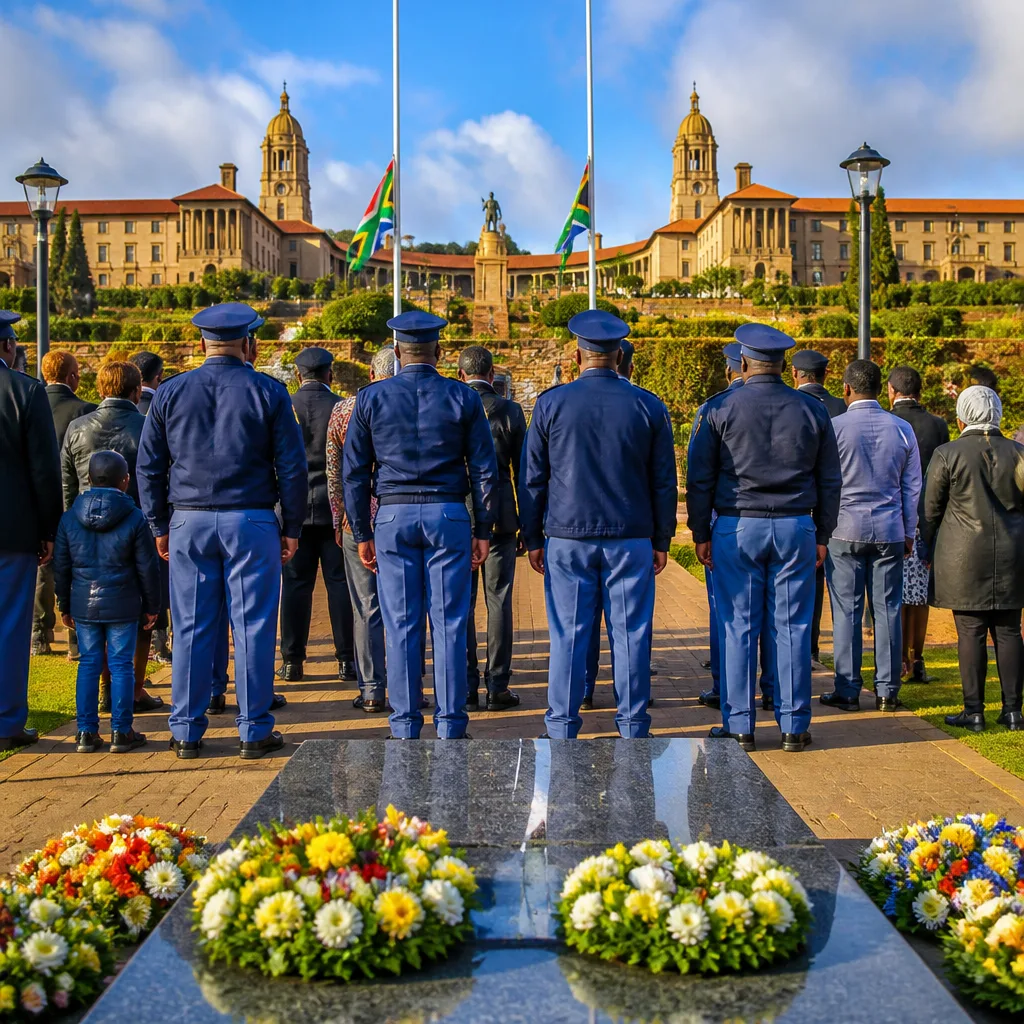
President Cyril Ramaphosa will join families and colleagues of police officers at the SAPS Memorial Site, Union Buildings, to honour 12 members of the South African Police Service who died in the line of duty during the 12-month period from 1 April 2025 to 31 March 2026.
Fewer police fatalities but Gauteng disproportionately affected
The number of officers commemorated this year is markedly lower than the previous period, when 27 members were honoured. Acting National Police Commissioner Lieutenant-General Puleng Dimpane described the overall reduction as encouraging while noting a worrying concentration of deaths in Gauteng.
“When you look at the 12, eight of them come from Gauteng. It tells you that we need to revisit our strategy when it comes to the province of Gauteng,” Dimpane said.
Dimpane confirmed that eight of the 12 officers being remembered this year served in Gauteng. She said the service would reconsider policing strategy in the province in response to that pattern. She also urged young South Africans to consider careers in policing, describing the work as a calling and encouraging recruitment to help combat crime.
Names and remembrance
The 12 officers to be commemorated are:
- Constable Gift Mota
- Sergeant Sello Raymond Sema
- Sergeant Matome Rapetsoa
- Sergeant Simon Masenye
- Constable Mwazkhe Khoza
- Warrant Officer Mosesi Moswana
- Constable Moselalelelo Montja
- Constable George Hlekiso
- Sergeant Sanele Dlamini
- Warrant Officer Vuyisile Sintwa
- Constable Sharon Hlangoane
- Sergeant Lawrence Mtsweni
The names of those killed in the line of duty are engraved at the SAPS Memorial Site at the Union Buildings. SAPS National Commemoration Day is observed on the first Sunday of September each year to honour members who died while performing official duties during the preceding 12 months.
Implications for policing and public safety
The reduction from 27 to 12 fatalities suggests a positive trend for officer safety overall, but the concentration of deaths in one province raises operational and strategic questions for SAPS management. Gauteng is the country’s most populous province and the site of much of its economic activity, presenting complex policing challenges including high crime volumes, resource allocation demands and operational risk for front-line officers.
Revisiting strategy in Gauteng could involve changes to deployment patterns, intelligence-led operations, safety measures for officers and engagement with provincial government and communities. Any operational adjustments will be shaped by internal SAPS reviews and by consultations with provincial stakeholders.
Commemoration as part of institutional memory
Commemoration ceremonies perform multiple functions within SAPS: they acknowledge sacrifice, provide public recognition for the families of the fallen, and serve as a moment for the service to reflect on policy and practice. The attendance of the President underscores the national significance of those themes and the state's recognition of policing as a public service with personal risk.
| Metric | Current period (1 Apr 2025–31 Mar 2026) | Previous period |
|---|---|---|
| Members commemorated | 12 | 27 |
| Members from Gauteng | 8 | Not specified |
The ceremony is scheduled to include ceremonial honours and the unveiling or re-inscription of names at the memorial. Families and colleagues will attend alongside senior police leadership and other dignitaries.
As the service examines the causes and circumstances that led to the deaths, any operational changes proposed by SAPS will be of interest to Parliament, provincial authorities and civil society, given the implications for policing capacity and officer safety in high-risk areas.













