The Eastern Cape’s much‑vaunted R686‑million matric tablet programme has failed to deliver the classroom benefit promised to thousands of Grade 12 learners, with tablets either locked away in storerooms, damaged or not returned, and data bundles that lapsed during critical exam periods.
Devices unused, data stopped during exams
The pilot, launched in 2025 to supply educational tablets and 50GB of monthly data to roughly 54,000 matriculants, has stalled in practice. An investigation of schools that received devices found none running the programme as intended in 2026.
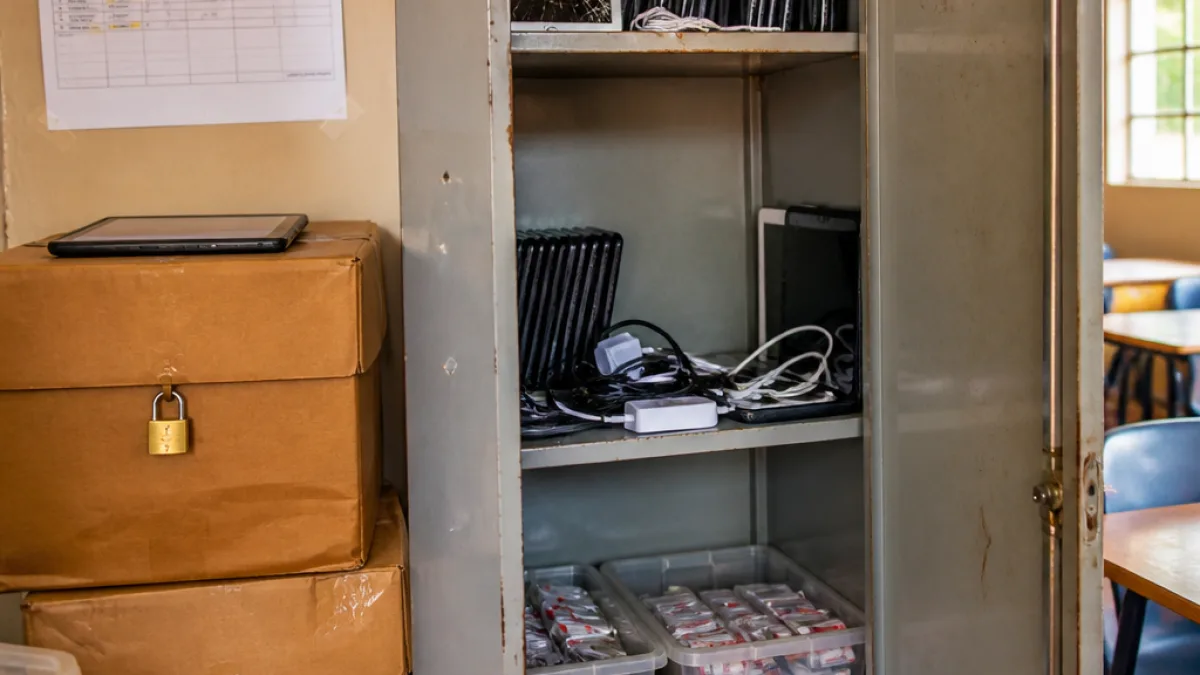
At Mary Waters High School in Makhanda, the 115 tablets delivered at the start of 2025 are kept in a cupboard and were not reissued to learners in 2026. A senior teacher, speaking on condition of anonymity because he was not authorised to speak publicly, said distribution stopped because of a shortage of functioning devices.
“Overall, the project was a complete failure for the school. Building a computer lab would have been better and would have given our learners more skills. The computer lab would be for everyone, and it would be strictly monitored.”
The same teacher estimated that of those learners who did receive devices in 2025, only about 30% used them for schoolwork in any meaningful way. He also said the provincial department had not monitored the project in the 18 months it had been running.
Wider provincial picture
GroundUp contacted a dozen schools across the Eastern Cape — including institutions in Gqeberha, Butterworth, Idutywa, Queenstown (Komani), Mount Ayliff, Libode, Ngcobo, King William’s Town (Qonce), Despatch and Maclear — and found the programme was not operational as designed in any of them.
In 2025 the Eastern Cape Department of Education committed the funding to provide devices to roughly half of the province’s full‑time Grade 12 cohort. However, the data provision stopped for months in 2025, including during the June exams and the September matric trials, undermining the project’s objective to support revision and exam preparation.
What the numbers say
| Item | Figure |
|---|---|
| Allocated budget | R686 million |
| Intended beneficiaries | 54,000 matric learners |
| Monthly data per device | 50GB |
| Devices reported not returned at year end | More than a third |
Operational and accountability concerns
School staff described several implementation problems: devices arriving preloaded with past papers but without supporting ICT infrastructure at schools; tablets malfunctioning; gaps in the data supply; and poor oversight from the department. Where tablets existed, many ended up locked in storerooms rather than in the hands of learners.
These failings point to deeper problems in project design and follow‑through: distributing standalone devices without parallel investment in school ICT facilities, maintenance, training and monitoring meant the initiative was vulnerable to breakage, loss and misuse.
- Devices were not universally deployed — some schools reported shortages or non‑functioning units.
- Monthly data provision stopped for months in 2025, including during key exam periods.
- More than a third of devices were not returned at the end of the year; others are damaged or in storage.
Impact on learners and practical options
For many matriculants the promise of a connected device offered access to past papers, online revision and blended learning. Where tablets were unused or data absent, learners lost that potential advantage during tightly contested examination cycles.
Teachers at affected schools suggested that investment in shared, supervised facilities such as a properly equipped computer lab would have been more sustainable. A dedicated lab can be centrally managed, maintained and used by the whole school rather than leaving devices unmonitored in pupils' hands.
What needs to happen next
The situation raises questions for the provincial education department about procurement, distribution, maintenance and monitoring. Effective next steps would include a full audit of devices, transparent accounting for the R686‑million spend, and a reassessment of whether device‑based approaches are the best way to strengthen matric outcomes without parallel infrastructure and training.
Parents and school governors concerned about unused or damaged devices should seek clarity from their district education offices and request a breakdown of how many tablets were delivered, how many were issued to learners, and the status of the monthly data allocations.
The failure of this programme highlights the difficulty of scaling technology solutions in contexts where supporting infrastructure and oversight are limited. Unless the department addresses those structural gaps, similar large‑scale distributions risk reproducing the same waste of resources and missed opportunities for learners.