
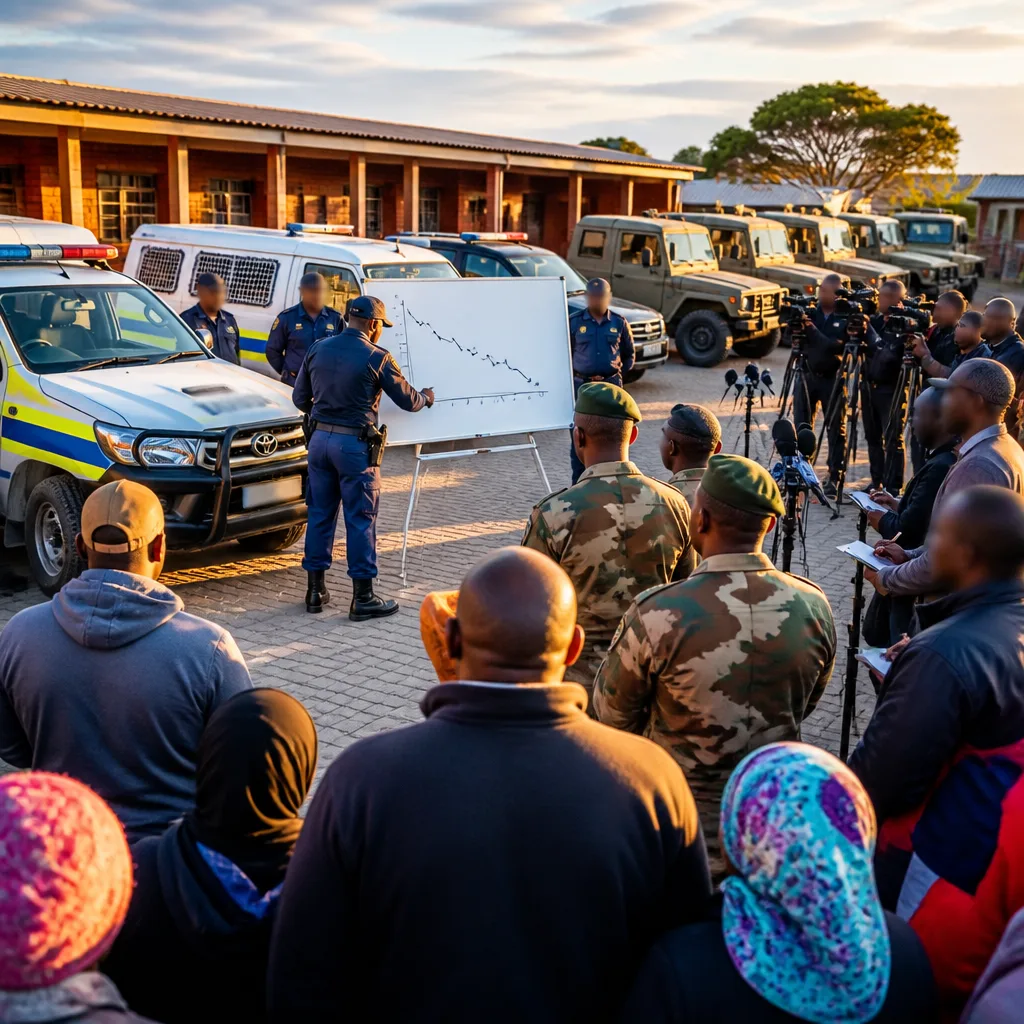
KwaZulu‑Natal police commissioner Nhlanhla Mkhwanazi has urged a clearer distinction between measured crime trends and public perceptions, saying statistics show a reduction in reported murders year‑on‑year in parts of the Western Cape even as mass shootings and their coverage fuel a sense that the police are losing ground.
Oversight visit to Mitchells Plain
Mkhwanazi was in Mitchells Plain on Friday as part of a delegation of police personnel accompanying members of Parliament and representatives of community policing forums. The visit formed part of parliamentary oversight of Operation Prosper, the joint deployment that has seen the South African National Defence Force (SANDF) assist SAPS in gang‑affected areas of the Cape Flats.
The commissioner said a range of factors shapes public perception, and cautioned that the way incidents are communicated and publicised can amplify fears even when recorded crime changes indicate otherwise.
"You can't cheat murder. Murder is murder, if you see the figures, it will tell you there's a drop but if you don't feel it because of how we're communicating and how it's been publicised,"
Mkhwanazi emphasised that statistics and lived experience do not always align, and that communication strategies need to reflect both operational realities and community concerns.
Community feedback and operational impact
Also at the meeting, Rafique Foflonker, chair of the Mitchells Plain sub‑district community policing forum, said Operation Prosper has had a tangible effect in the area. He reported fewer firearms in circulation and ongoing arrests linked to alcohol, drugs and related offences.
The oversight visit brought together MPs, SAPS representatives and members of community forums to assess the deployment's immediate impact and challenges on the ground. The engagement underscores Parliament's role in scrutinising joint security interventions and gauging community sentiment where gang violence remains a serious concern.
- Operation Prosper: SANDF deployed to assist SAPS on the Cape Flats.
- Perception vs statistics: Commissioner says murder figures show a year‑on‑year decline in parts of the Western Cape, despite high‑profile incidents.
- Community reports: Local CPF chairperson noted progress in removing firearms and making related arrests.
Context and consequences
The commissioner’s remarks come amid ongoing national debate over the use of the military in support of policing operations, the effectiveness of crime prevention strategies in gang‑affected urban areas, and the influence of media coverage on public confidence.
Operation Prosper is one of several SANDF‑SAPS collaborations intended to stabilise communities while police focus on investigative work and arrests. The success of such interventions is typically measured both by operational indicators — arrests, seizures, reductions in recorded offences — and by civilians’ sense of safety. Mkhwanazi’s comments suggest a need for improved communication to ensure that statistical gains are not obscured by high‑visibility, violent incidents that attract intense media attention.
Parliamentary oversight teams reviewing deployments will likely consider both quantitative crime data and qualitative feedback from community structures when making recommendations about the continuation, expansion or adjustment of SANDF assistance.
| Element | Reported detail |
|---|---|
| Senior official | Nhlanhla Mkhwanazi, KwaZulu‑Natal commissioner |
| Operation under review | Operation Prosper (SAPS with SANDF support on Cape Flats) |
| Community input | Rafique Foflonker, Mitchells Plain CPF chair: fewer guns, ongoing arrests |
As oversight continues, the balance between securing short‑term reductions in violent incidents and building sustainable policing capacity will remain central to national discussions about the role of the SANDF in domestic security operations and how best to restore public confidence in SAPS’ crime‑fighting capacity.













