
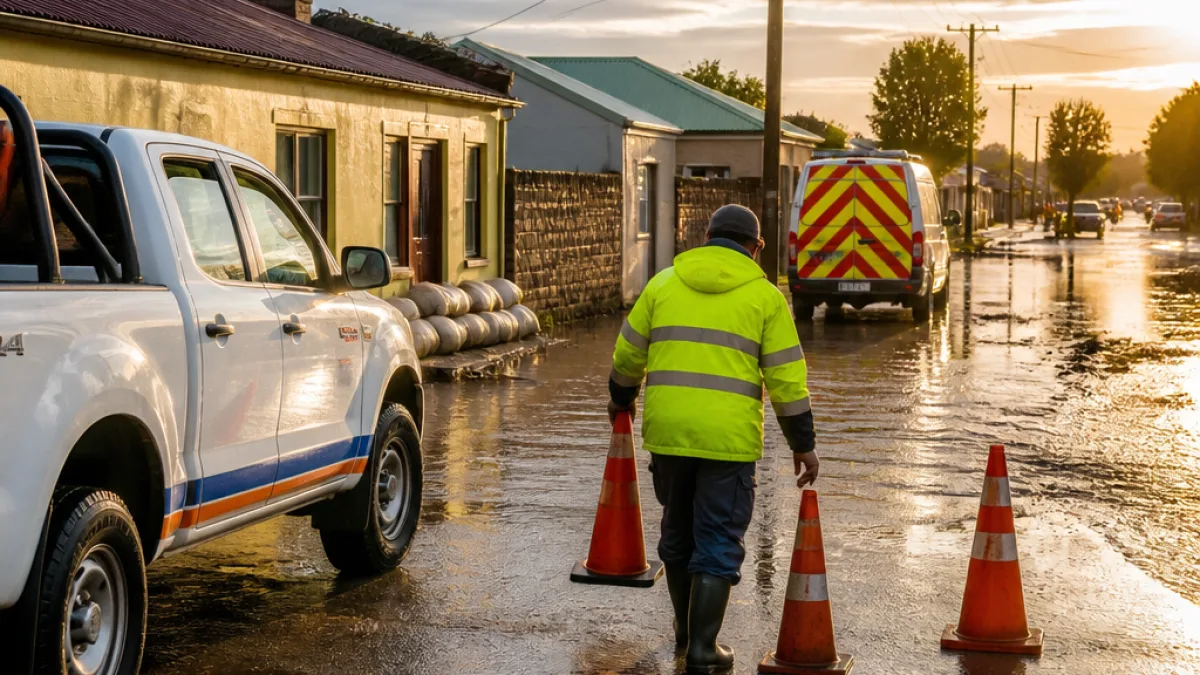
Mahikeng — Provincial authorities have issued a safety alert as very cold and wet weather continues to affect parts of the North West. The Department of Cooperative Governance and Traditional Affairs (COGTA) is urging residents to stay vigilant after the South African Weather Service (SAWS) warned an upper-air trough will deepen as it moves over central to eastern regions of the country.
Scope of the forecast and immediate risks
SAWS forecasts that the trough will bring cold to very cold conditions, with rain and showers extending further inland. The department says this pattern is likely to affect several parts of the North West, increasing the risk of hazardous road conditions, localized flooding and household incidents related to indoor heating.
The North West MEC for Cooperative Governance, Human Settlement and Traditional Affairs, Oageng Molapisi, said the provincial disaster management centre is working with local municipalities to monitor conditions and coordinate emergency responses where necessary.
“In light of these prevailing weather conditions, North West COGTA, through the Provincial Disaster Management Centre, is appealing to residents to take the necessary precautions to protect themselves, their families and their property,”
Safety advice for households and motorists
Authorities highlighted common sources of household danger during cold spells — candles, paraffin stoves, gas appliances and portable heaters — and warned these should never be left unattended. They also advised against using hazardous or inappropriate substances for heating, citing the risk of fires, burns and poisoning.
- Keep heating appliances attended: never leave candles, paraffin stoves or heaters unsupervised and keep them away from curtains, bedding and clothing.
- Ensure ventilation: when using appliances that burn fuel, ventilate rooms to reduce the risk of carbon monoxide poisoning.
- Avoid unsafe fuel substitutes: do not burn plastics, tyres or other harmful materials indoors.
- Exercise caution on roads: reduce speed when driving in rain, allow greater stopping distances and avoid floodwaters — shallow-looking water can have strong currents.
- Monitor official updates: follow SAWS and provincial disaster management alerts for changes to the forecast.
Local government preparedness and community response
COGTA said its Provincial Disaster Management Centre is coordinating with municipal disaster teams to check vulnerable infrastructure and to prioritise rapid response where flooding or storms affect settlements. Ward councillors and community leaders have been asked to identify and assist elderly residents, those with chronic illnesses, and households with young children.
In many informal settlements and older housing stock across the province, residents rely on portable heating. Municipal officials reiterated that improper heating materials increase the incidence of household fires and inhalation injuries, putting extra strain on local emergency services.
Practical help and who to contact
Residents should keep a list of emergency contacts and the nearest municipal disaster management office. Where local shelters are opened because of extreme cold or flooding, municipalities will announce locations through official channels. People who need assistance are advised to contact their ward councillor or the municipal helpline.
| Hazard | Immediate action |
|---|---|
| Household fires / burns | Turn off unattended heaters; use safe heating methods; ensure smoke alarms work |
| Carbon monoxide risk | Ventilate rooms when using combustion appliances; avoid sleeping in unventilated rooms with burning devices |
| Flooding / fast currents | Avoid driving through standing water; move to higher ground if flooding threatens |
Molapisi also reminded residents to be cautious around children and to keep any flame sources out of reach. He warned against leaving heating equipment near flammable materials and encouraged the use of safer alternatives where possible.
For motorists, local traffic authorities advised slowing down on wet roads and taking extra care at low-lying bridges and river crossings. Emergency services urged people not to attempt to cross floodwater on foot or in vehicles, noting that even apparently shallow water can conceal strong currents capable of sweeping people and vehicles away.
As conditions evolve, residents should rely on official alerts from SAWS and provincial disaster management rather than unverified social-media reports. Those planning travel across the province this week should check weather and road conditions in advance and allow extra time for journeys.
COGTA stressed that preparedness and sensible behaviour – particularly around heating and in flood-prone areas – will reduce avoidable harm during the cold, wet spell.













