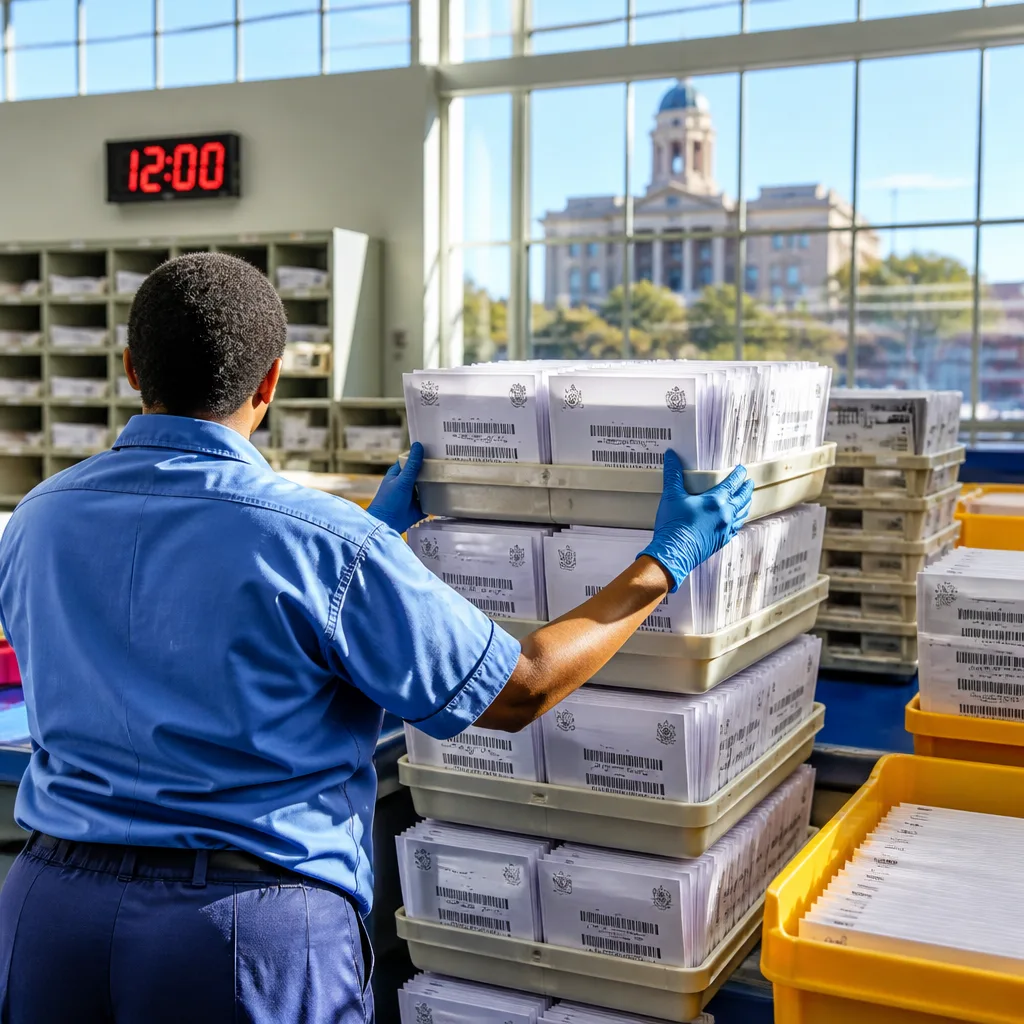
North Carolina began mailing absentee ballots for the November election at noon on Friday, even as federal courts intervened to block a presidential order that sought to alter United States Postal Service (USPS) procedures for handling mail‑in ballots.
Legal uncertainty but process proceeds
State election officials said pending litigation would not delay the start of the mail‑out period. North Carolina is the first US state to begin distributing absentee ballots for November, a step that unfolded amid dispute over an order from President Donald Trump directing the USPS to create an online portal for states to submit voter information before ballots are mailed.
Court rulings this week have prevented that order from taking effect. Nevertheless, Sam Hayes, executive director of the State Board of Elections, told a news conference that he was monitoring court action and would implement the system if the courts allow it.
"North Carolina was already compliant with the best practices that the Postal Service is trying to codify through their rules," Hayes said. "We believe that we are well positioned, as our envelopes have already been approved by the Postal Service. ... We are on track, and we plan to make this process as seamless as possible for the voters of the state."
What is in dispute
The presidential order would have required the USPS to establish tracking and a portal for transmitting voter information to improve the handling of absentee ballots. Courts halted the order before it could be implemented. According to Hayes, ballots already included the bar codes required for tracking under the proposed rules.
- Start time: Ballots began mailing at noon on Friday.
- Federal action: Courts blocked the president's USPS order from taking effect.
- State position: North Carolina officials say they are already following the practices the USPS sought to formalise.
State Board of Elections meeting and criticism
The State Board of Elections planned a meeting for Friday morning to discuss guidance to county election officials on processing absentee ballots. Hayes declined to describe the guidance in advance. The board had earlier postponed a Wednesday meeting at which it was due to consider draft guidance, and it did not publicly release the draft documents.
Governor Josh Stein criticised the lack of transparency. In a social media post on Wednesday evening he asked: "What is going on at the State Board of Elections? No one should have to ask these questions less than 48 hours before absentee ballots are mailed out. The State Board needs to get it together."
Immediate implications
The two strands of the story—the federal court action and the state board’s preparations—leave election officials and voters navigating uncertainty. If courts ultimately permit the USPS order, states that have already mailed ballots may need to adjust procedures or supply additional voter information through the portal described in the order. If the order remains blocked, states like North Carolina say their existing processes already meet the practices the USPS sought to codify.
| Item | Status (as reported) |
|---|---|
| Mailing of absentee ballots in North Carolina | Started at noon on Friday |
| Presidential order on USPS portal and tracking rules | Blocked by courts |
| State Board guidance to counties | To be discussed at Friday meeting; details not released |
The story highlights the interplay between federal directives, judicial oversight and state election administration. For voters, the principal concern is whether ballots will be tracked reliably and counted in a timely fashion. For officials, the question is whether legal developments will force last‑minute operational changes.