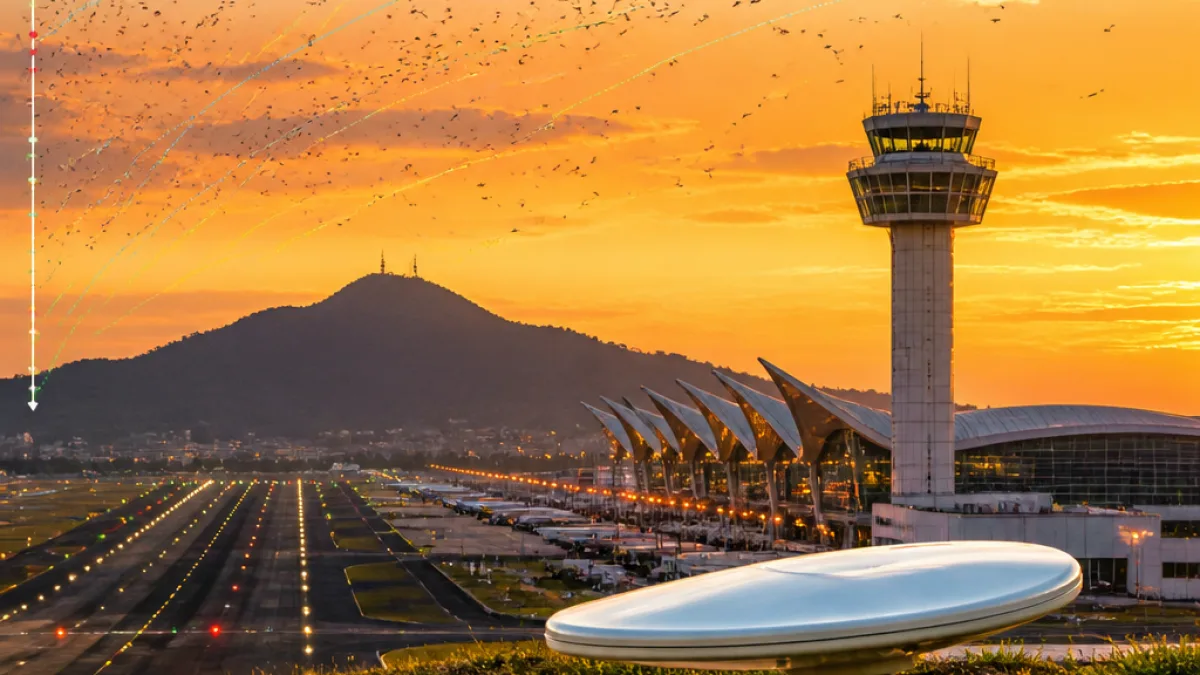
Every spring, the skies above northern KwaZulu‑Natal fill with Barn Swallows. At dusk, as many as 3 million of these migratory birds gather at the Mount Moreland roost near Durban — a spectacle that attracts birdwatchers and researchers from around the world, but that also poses a challenge for aviation safety because of the site's proximity to King Shaka International Airport.
Radar gives researchers and airport teams a clear picture
This year the province has a new tool: a Robin Radar Systems MAX bird detector deployed at King Shaka, operated in partnership with Hensoldt South Africa, the Airports Company South Africa (Acsa) and the University of KwaZulu‑Natal (UKZN). The system can simultaneously track more than 3,000 birds within a 15 km radius, recording flight paths, altitude, speed and flock movements in real time.
Acsa regional general manager Nkosinathi Myataza said the radar gives wildlife management teams "greater visibility of bird activity and helps them make decisions that strengthen aviation safety while protecting local biodiversity." He described the installation as "a significant upgrade" and part of regular infrastructure assessments to keep the airport fit for purpose.
For UKZN researchers the device is primarily a research opportunity. Zoologists and conservation scientists will be able to observe swallows continuously, map where they go after leaving Mount Moreland, and study how weather, habitat and human activity shape their movements. The Barn Swallow — known in isiZulu as inkonjane yaseYurobhu (swallow from Europe) — arrives in the province each year between September and March.
Why this matters locally
Mount Moreland, a few kilometres from King Shaka, hosts vast evening gatherings of swallows during the South African spring and summer. Those large concentrations of birds increase the risk of bird strikes, which can endanger aircraft and passengers and impose costs and delays for airlines and the airport.
The new radar addresses both conservation and safety goals by:
- giving wildlife managers real‑time alerts about large flocks and unusual movements;
- supplying researchers with continuous movement data to inform conservation and habitat management efforts;
- supporting evidence‑based mitigation measures that can reduce collision risk without harming the birds.
What the technology records
| Capability | Detail |
|---|---|
| Concurrent tracks | >3,000 birds |
| Coverage radius | 15 km |
| Data recorded | Flight path, altitude, speed, flock movements (real time) |
| Partners | Hensoldt South Africa; Robin Radar Systems; Acsa; UKZN |
The ability to capture altitude and speed information is particularly useful. It allows comparisons between bird activity and aircraft approach or departure corridors, so wildlife managers can advise air traffic control and operations teams more precisely when clusters of birds are present.
Benefits for science and local communities
Beyond immediate safety gains, the radar provides long‑term data that can help answer questions about migration routes, stopover sites and how environmental change affects the swallows. UKZN researchers expect the dataset to support future studies and conservation planning without the need for intrusive tagging or repeated field counts.
For residents and visitors, the system should mean less disturbance to the Mount Moreland roost. By enabling targeted, timely interventions, the radar can reduce the need for broad, disruptive measures and help maintain the roost as a thriving site for both birds and birdwatching tourism.
What birdwatchers and residents should know
The Barn Swallows arrive from September and remain through March. Evening gatherings at Mount Moreland remain a major attraction; the new system will not change viewing opportunities but is intended to support coexistence between the birds and safe airport operations. Local authorities and conservation groups will continue to share guidance if any temporary changes to access are needed for safety or research.
"The system is a significant upgrade and is part of our regular assessment of our infrastructure and systems to ensure that it remains fit for purpose," said Nkosinathi Myataza of Acsa.
As data accumulates, researchers at UKZN and their partners will publish findings that could inform national guidance on migratory bird management around airports. In the meantime, the radar gives Durban a rare blend of cutting‑edge technology and natural spectacle — keeping skies safer while preserving one of our province's most evocative seasonal displays.
This installation highlights renewed local collaboration between university researchers, airport authorities and technology firms to protect biodiversity while safeguarding transport infrastructure — a model that could be of interest to other regions that host large migratory bird concentrations near airports.