
Three public schools in Makhanda have instituted legal action against the Eastern Cape education department, the national minister of education and National Treasury, alleging persistent underfunding of learners since the province deviated from statutory per-pupil allocation targets in 2020. The matter is due to be heard in the Eastern Cape High Court in Makhanda.
What the lawsuit says
The schools, represented by the Legal Resources Centre (LRC), together with the community group Makhanda Circle of Unity, argue the province reduced the annual per-pupil allocation without the required joint planning with affected schools. According to the LRC, the deviation has left schools without sufficient resources to conduct routine teaching and to provide basic learning materials.
"Providing pupils with access to education requires that, amongst other things, schools are equipped to carry on the day-to-day business of teaching and pupils have access to learning materials," the LRC said, according to court papers.
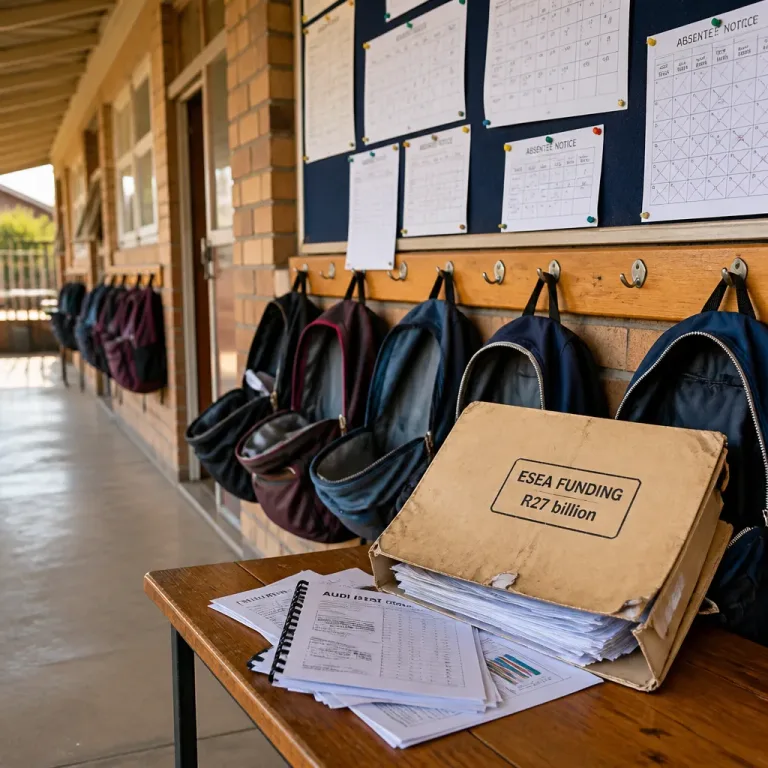
The LRC highlighted concrete shortfalls in recent financial years. In the 2021–22 financial year the national per-pupil target was set at R1 466 per learner per year, yet schools in the Eastern Cape reportedly received only R816 per pupil — about 52% of the required amount. In the 2022–23 year the province funded schools at approximately 53% of the per-pupil allocation.
Legal and administrative context
The LRC's challenge centres on the 2020 decision by the provincial department to deviate from the national per-pupil allocation target. The organisation says the deviations occurred without the prescribed joint plans or consultation with the affected public schools. Under the funding framework, any deviation from prescribed targets should be accompanied by joint planning between the education department and affected schools to manage the impact and establish mitigation measures.
After pressure from schools and civil society, the department announced it would return to funding at the per-pupil target for the 2023–24 financial year, the LRC noted. The court papers indicate that this announcement followed sustained advocacy but do not detail how the department will address earlier shortfalls or whether affected schools will receive back-payments or additional support.
Local impact and wider implications
The Eastern Cape is among the poorest provinces in South Africa, and school budgets are a critical determinant of educational outcomes. When schools receive far less than the per-pupil allocation, the immediate effects are practical: shortage of stationery and textbooks, insufficient classroom resources, limited ability to maintain facilities and increased pressure on educators to cover gaps.
Beyond the classroom, inadequate funding can deepen inequality between well-resourced urban schools and under-resourced public schools in townships and rural areas. The LRC's intervention frames this as not merely an administrative dispute, but a constitutional and socio-economic question about the state's duty to guarantee basic education.
- Financial shortfall: 2021–22 per-pupil funding in EC was R816 vs national target of R1 466.
- Proportion funded: Schools received roughly 52% (2021–22) and 53% (2022–23) of the target.
- Remedial steps: Department committed to meet per-pupil targets in 2023–24 after advocacy.
What to watch at the hearing
The court will consider whether the province lawfully deviated from funding targets and whether it complied with the requirement to develop joint plans with schools. The remedies sought by the applicants are set out in formal court papers lodged by the LRC; public reporting to date indicates the case challenges both the decision-making process and the material consequences of underfunding.
Key questions include whether the court will order the province to make up past shortfalls, require procedural reforms to ensure meaningful school participation in budget decisions, or provide other relief. Any order could have fiscal implications for the provincial budget and may prompt closer scrutiny of funding allocations in other provinces.
Practical information for parents and educators
- Parents and school governing bodies in affected schools should request copies of school budgets and the departmental allocations for transparency.
- Schools seeking support can consult civil-society organisations such as the Legal Resources Centre for advice on rights and contestation routes.
- Educators concerned about resource shortfalls should document specific instructional impacts and communicate these to their SGBs and district officials.
The outcome of this case will be closely watched across the Eastern Cape. If the courts find for the applicants, provincial departments nationally may face renewed pressure to adhere to per-pupil funding frameworks and to strengthen consultation with schools when budget deviations are contemplated.
Reporting for this story relied on the Legal Resources Centre's account and court filings. The Eastern Cape education department, the national minister of education and National Treasury have been named in the papers; their formal responses will form part of the record in the High Court in Makhanda.