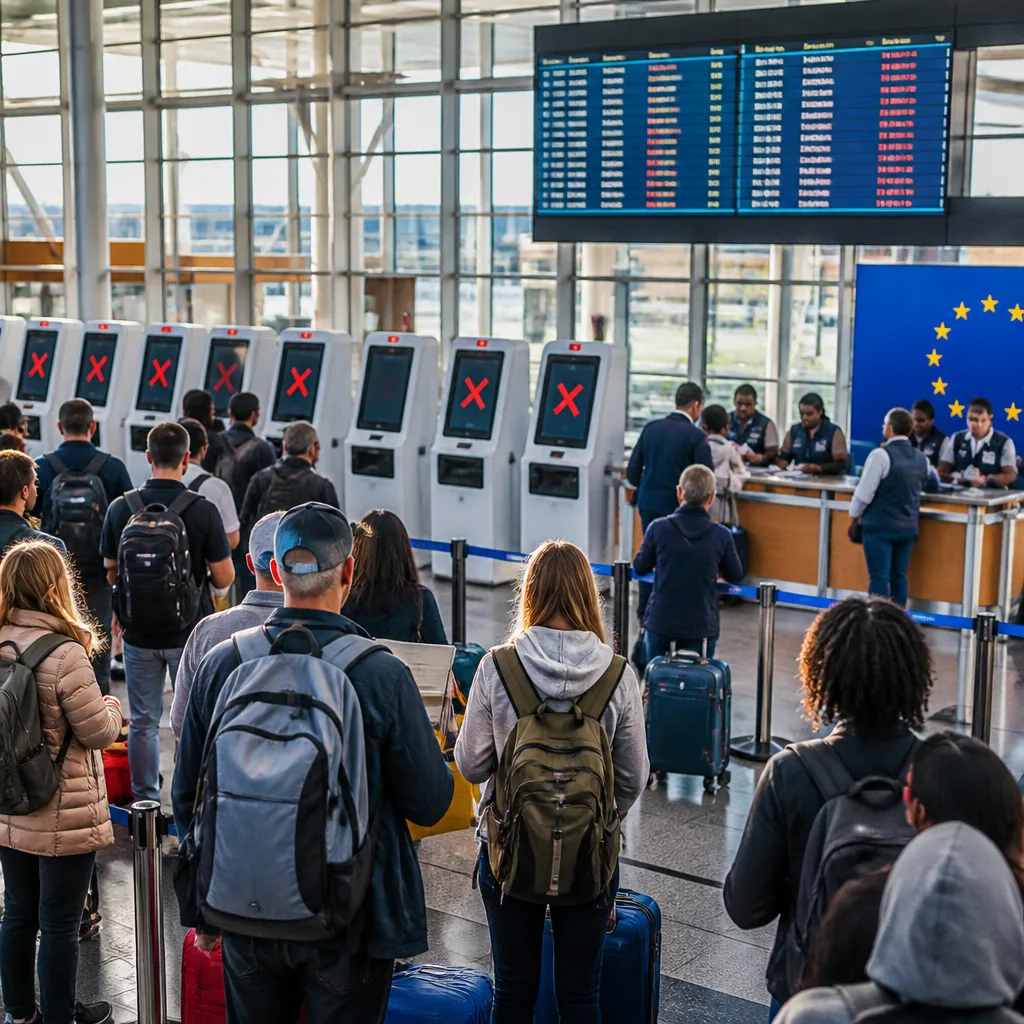
Major airports across Europe have been intermittently suspending the European Union’s automated Entry‑Exit System (EES) during peak travel hours, reverting to manual passport processing to ease mounting queues and keep people moving through terminals.
Which airports and why
Airlines and border authorities at hubs including Paris Charles de Gaulle, Amsterdam Schiphol and Rome Fiumicino have at times halted biometric enrolment and switched back to stamped passports. The move is being used when passenger lines grow long enough to threaten orderly transit, according to reporting by POLITICO and a statement cited from Air France‑KLM.
“When lines form during the busy summer months, the system is shut off to ensure smooth transit at our hubs in Paris and Amsterdam,” Air France‑KLM told POLITICO.
The EES, which replaced physical stamps for most non‑EU travellers earlier this year, collects biometric data such as facial images and fingerprints and records the time of entry and exit from the Schengen area. The system’s automation aims to strengthen border management, but it has also raised practical challenges when passenger volumes surge.
Temporary emergency measures and the timeline
Under current EU Commission guidance, member states may pause EES processing under “exceptional circumstances” to preserve safety and passenger flow. That waiver is time‑limited and, despite calls from some airports and countries for an extension, European authorities have maintained it is temporary and set to end in early September.
Industry groups had warned of severe delays if mandatory biometric enrolment were applied without flexibility. Airports Council International (ACI) Europe previously cautioned that peak waits could extend to up to five hours in the worst case. Local authorities across major hubs have relied on the option to disable the system briefly as a practical workaround to avoid those extreme scenarios.
What this means for South African travellers
If you are planning a trip that connects through a Schengen airport this southern summer, expect the following possibilities:
- Periodic reversion to manual passport stamping during busy periods — this can be faster than waiting for biometric enrolment when queues are long.
- Potential fluctuations in queue length depending on time of day and airport operations; peak summer travel remains unpredictable.
- Continued checks and identity verification even when EES is paused — border authorities retain other control measures.
Practical travel tips to reduce stress at transit hubs:
- Leave extra time for connections, especially if you need to clear immigration at a hub known to use the temporary pause.
- Carry printed and digital copies of your onward tickets and travel documents; officials may request proof of your itinerary.
- Check your airline and the arrival/departure airport’s social channels on the day of travel for live updates on border procedures.
Context and what may change
EU authorities have so far resisted calls to suspend the EES entirely, choosing instead to allow short, controlled pauses under exceptional circumstances. With millions of travellers moving through European gateways over the season, border teams are balancing the system’s security aim against the practical need to keep queues within safe and manageable limits.
| Airport | Action reported |
|---|---|
| Paris Charles de Gaulle | Periodic suspension of EES during busy periods |
| Amsterdam Schiphol | Temporary switch to manual passport checks when lines form |
| Rome Fiumicino | Intermittent pause of biometric checks |
The temporary strategy — effectively a "turn it off, turn it back on" approach — is intended to be short‑term. Authorities and some airport operators asked for more flexibility beyond the waiver’s expiry, but officials have kept the timeframe firm. Travellers should therefore plan for variable processing times and keep informed through their airline and the airport’s official updates.
For South African travellers, the immediate effect is a reminder to budget additional time for connections and to ensure travel documents are readily accessible. Beyond that, the situation will be worth watching: any decision to extend the waiver or change the EES rollout could have a direct effect on how easy — or slow — your next European transfer will be.