
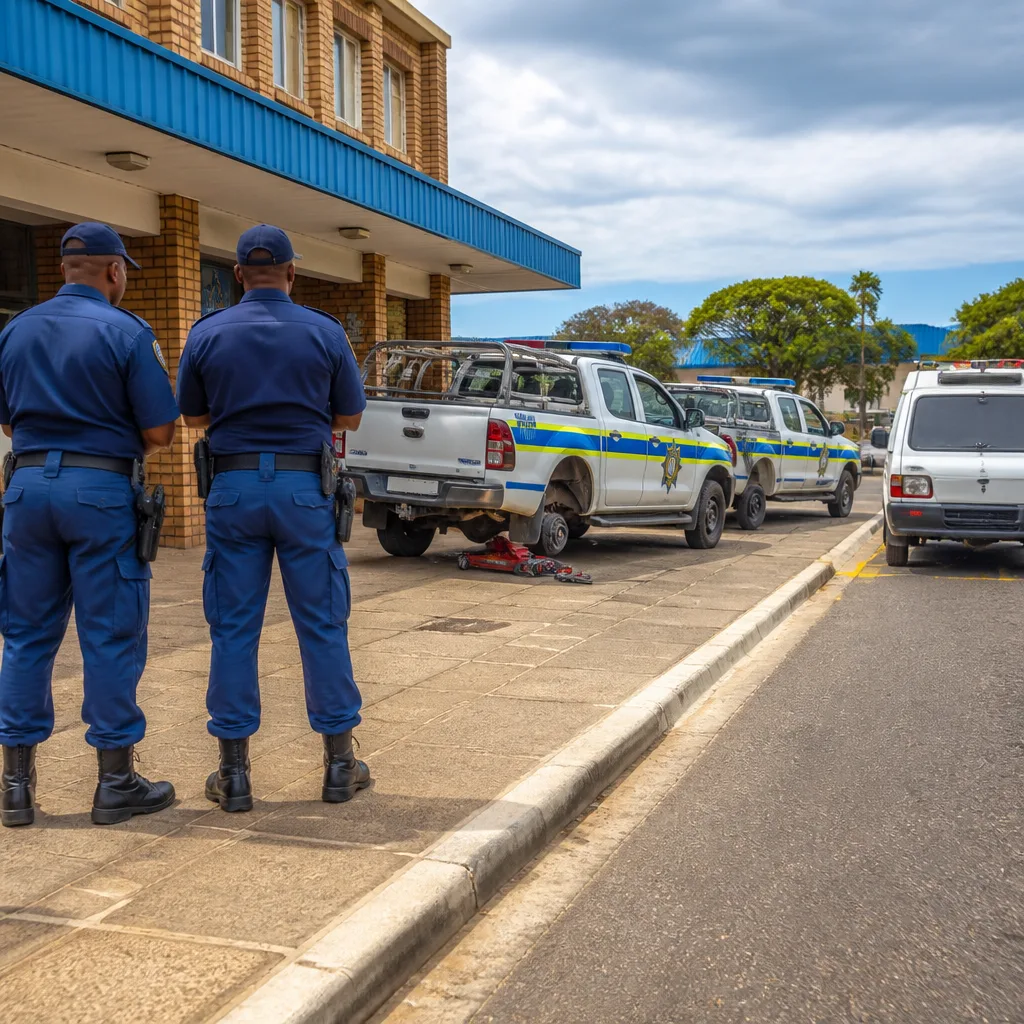
KwaZulu‑Natal provincial SAPS has rejected assertions that shortages of serviceable vehicles have compromised policing at the Newcastle station, saying services to the public continue and the station remains operational.
Dispute over vehicle availability
The provincial response follows allegations, previously flagged by the Newcastle Community Policing Forum (CPF), private security companies and an anonymous police source, that the station regularly operated with only a handful of vehicles available to respond to incidents. Those concerns were first published by Newcastillian News in early August and prompted formal enquiries from media.
In reply to questions from Newcastillian News on 24 August, KZN police spokesperson Colonel Robert Netshiunda maintained that Newcastle SAPS had not allowed vehicle shortages to affect services. He also declined to provide specific numbers of operational vehicles, citing operational security.
“SAPS Newcastle is operational, and services to the public has never been compromised due to shortage of vehicles.”
Allegations and responses
The complaints published earlier alleged that multiple vehicles were out of service for repairs at times, leaving the station with an estimated one to three vehicles able to respond to calls. That estimate was attributed to an internal police source and has not been confirmed by SAPS.
Private security operators reported instances of delayed police attendance after they called for assistance. The Newcastle CPF said it was aware of resource constraints affecting the station, according to the earlier reporting.
- Provincial SAPS position: Newcastle station remains operational; public services not compromised.
- Community and private security concerns: Reports of limited serviceable vehicles and delayed police responses.
- Disclosure refusal: SAPS declined to release numbers of deployed vehicles, citing operational considerations.
Transparency versus operational security
The exchange highlights a recurring tension between public demands for transparency about policing resources and SAPS’ reluctance to reveal operational detail. Police spokespeople commonly refuse to disclose exact staffing and vehicle inventories, arguing such information could be exploited by criminals.
Community policing structures and private security providers say some level of transparency is necessary to hold the service to account and to coordinate responses to crime effectively. Police, for their part, stress the need to balance accountability with safeguarding tactical capabilities.
| Stakeholder | Claim / Position |
|---|---|
| Newcastle CPF | Aware of resource constraints at the station (as reported earlier). |
| Private security operators | Reported occasions of delayed SAPS response after requests for assistance. |
| Unnamed police source | Alleged periods when only one to three vehicles were available for response. |
| KZN Provincial SAPS | Maintains Newcastle SAPS is operational and services have not been compromised; will not disclose numbers of vehicles. |
Publication of the initial concerns in August prompted the provincial office to respond to formal media enquiries. Both the Newcastle station and the Amajuba district office referred subsequent questions to the provincial SAPS, which provided the statement quoted above.
Implications for policing and oversight
The dispute is part of a wider public debate about SAPS capacity in some areas, particularly around response times and resource allocation. Where community policing forums report operational constraints, they may escalate matters to provincial management, the Civilian Secretariat for Police Service or the Independent Police Investigative Directorate for further scrutiny.
For the public, the immediate concern is whether resource shortfalls affect the timely attendance of officers to emergencies and priority calls. SAPS’ refusal to disclose exact vehicle numbers is standard practice, but it leaves communities and oversight bodies reliant on aggregated data or internal audits to assess readiness.
Newcastle residents and stakeholders will be watching for any follow‑up from provincial authorities or independent oversight structures to verify capacity and response metrics at the station.













