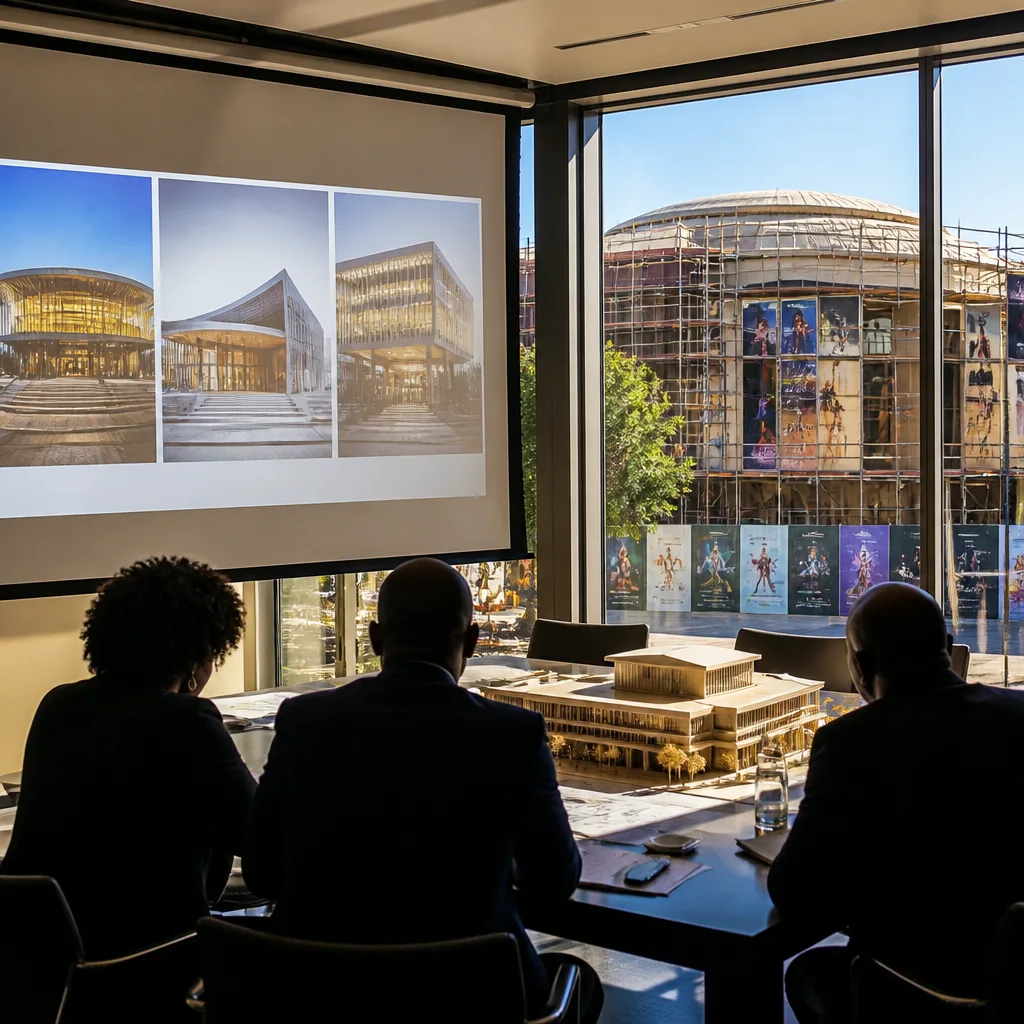
The Kennedy Center’s board of trustees is due to meet to decide how the Washington performing arts venue will proceed after a federal judge last month blocked earlier plans for a two‑year closure intended to allow major renovations.
Three pathways on the table
Management will present the board with three distinct approaches, according to reporting from the Associated Press. The options are:
- Complete closure for the duration of comprehensive renovation work.
- Partial closure that would retain some public access and limited programming in areas not affected by construction.
- Phased, highly limited closures to tackle only the most urgent infrastructure problems while attempting to keep a full programme running elsewhere in the building.
The meeting follows a decision by U.S. District Judge Christopher Cooper to block the board’s 16 March vote to authorize the two‑year shutdown, a ruling that described that earlier decision as seemingly ill‑considered. Judge Cooper has also asked for updates on the length of time a large tarp — placed where the president’s name had been mounted — will remain on the building’s façade.
“Ill‑informed and seemingly preordained,”
The Kennedy Center’s governance and its future operations have become entwined with high‑profile political intervention since the change in leadership early in 2025. The board now largely comprises individuals described in reporting as allies of President Donald Trump; the president was subsequently named chairman. Trump’s name was later removed from the exterior, though the site where it had been affixed is still covered by a tarp, a detail Judge Cooper has specifically questioned.
Politics, preservation and public access
Those advocating for limited or phased closures argue the venue should continue to serve audiences and artists while targeted repairs proceed. Opponents who sought the injunction argued the board’s prior vote did not reflect proper deliberation about alternatives or the public impact of a long shutdown.
Beyond the Kennedy Center’s immediate governance dispute, the case forms part of a broader pattern of contentious projects in Washington, D.C., reported alongside the AP coverage. The administration’s physical alterations to the capital have included the demolition of the White House East Wing and an attempted construction of a new ballroom — the latter halted by an appeals court on grounds that Congress had not approved the work.
| Item | Reported detail |
|---|---|
| Judge | Christopher Cooper |
| Board vote blocked | 16 March vote to allow a two‑year closure |
| Options presented | Full closure, partial closure with limited programming, phased closures for critical work |
The board’s deliberations are likely to attract scrutiny from arts organisations, members of Congress and the public, given the Kennedy Center’s status as a national venue. The legal intervention has already constrained the board’s ability to implement its original plan and has placed a premium on demonstrating that alternative courses of action were properly evaluated.
For performers and audiences, the stakes centre on whether seasons can continue with minimal disruption and how the centre will balance urgent infrastructure needs with access to performances, education and outreach programmes. The management’s third option — a series of targeted, phased closures — seeks to strike that balance by addressing the most pressing repairs while sustaining a full slate of programming in unaffected areas.
How the board reconciles those competing priorities will determine the Kennedy Center’s immediate course and could set a precedent for how major cultural institutions navigate large‑scale capital projects under heightened political scrutiny.