
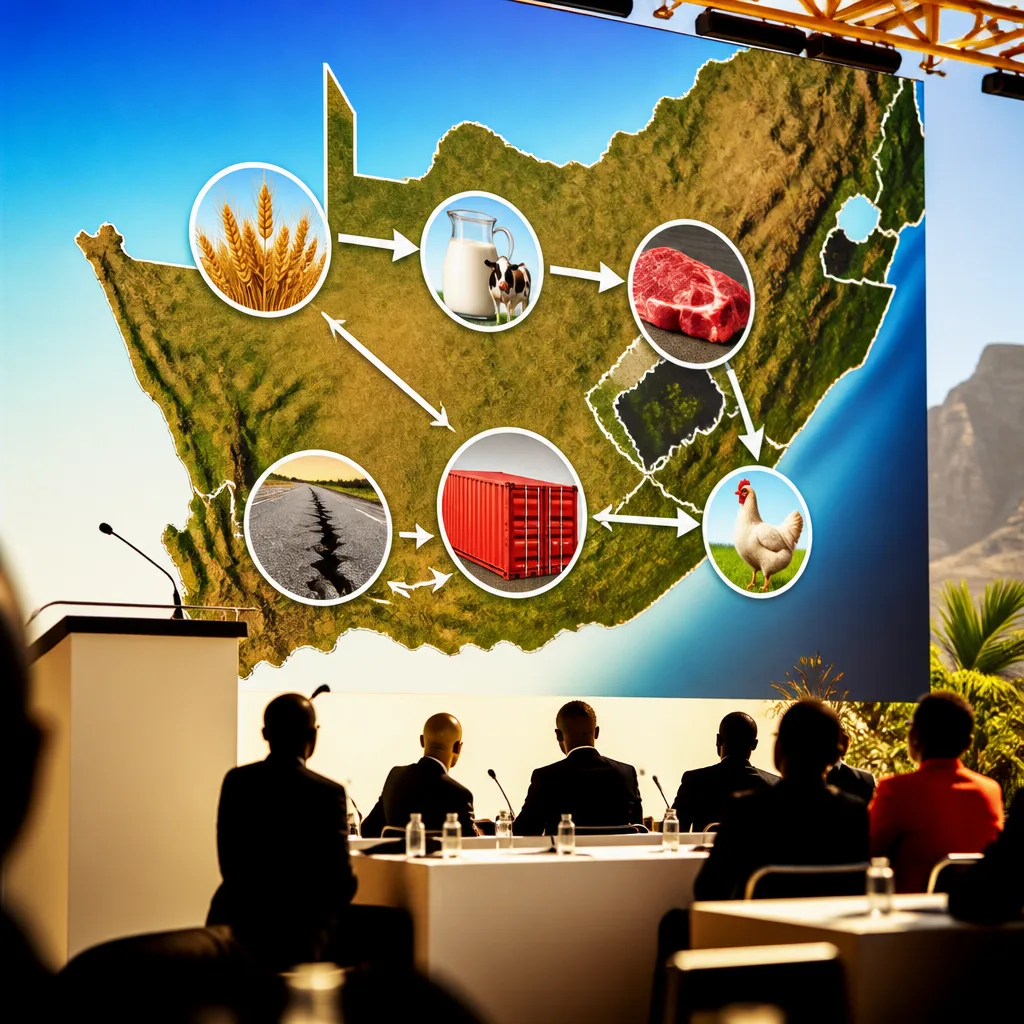
Major agriculture sector bodies urged urgent collaboration at the Animal Feed Manufacturers Association (AFMA) Forum as the industry confronts a rising risk environment despite recent production growth.
Panel: co-operation needed to protect competitiveness and food security
Prof André Jooste, chairperson of the National Agricultural Marketing Council, facilitated a CEO panel at the AFMA Forum 2026 in Sun City, North West, where leaders from associations representing grain, pork, milk, red meat and poultry warned that on-farm gains could be undermined by off‑farm risks.
The CEOs at the panel represent industries that together account for 61% of the gross value of agricultural production in South Africa, the forum was told. Panellists included Dr Tobias Doyer (Grain SA), Fanie Ferreira (Milk Producers’ Organisation), Dr Marlene Louw (South African Pork Producers’ Organisation), Dr Frikkie Maré (Red Meat Producers’ Organisation) and Izaak Breitenbach (South African Poultry Association).
While panellists acknowledged strong production growth in recent years, they said that managing risks beyond the farm gate had become critical to sustaining competitiveness and securing the national food supply.
Risks highlighted at the forum
Prof Jooste outlined a range of factors increasing vulnerability across the sector. These included:
- Geopolitical tension affecting export markets and import supply chains;
- Logistical problems that raise costs and delay deliveries;
- Infrastructural collapse that constrains movement and processing;
- Biosecurity issues that threaten animal and plant health;
- Adverse weather linked to climate variability; and
- Supply chain bottlenecks across inputs and finished product channels.
Panellists emphasised that these risks interact — for example, infrastructure and logistics failures can amplify the impact of adverse weather or biosecurity incidents — and that single-sector responses are unlikely to be sufficient.
| Risk | Primary impact |
|---|---|
| Infrastructure failures | Higher transport and processing costs; delays to market access |
| Logistics bottlenecks | Post-harvest losses; reduced export competitiveness |
| Biosecurity threats | Production shocks; export restrictions |
Why collaboration matters
Speakers said stronger co-ordination between industry associations, the private sector and government agencies is needed to strengthen resilience. The panel framed collaboration as essential for:
- co‑ordinated contingency planning for animal and plant health;
- investment and maintenance of critical transport and storage infrastructure;
- reducing supply chain friction to protect perishable goods and feed supplies; and
- maintaining access to export markets where regulatory compliance and biosecurity standards are increasingly important.
Panel members noted that South African producers face a tougher international environment because of differential levels of state support in competitor markets, and because global market volatility can multiply domestic risks.
Prof Jooste and the CEOs said that industry associations have a collective role in co‑ordinating responses and advocating for policies that shore up the resilience of the food value chain. They called for practical interventions rather than solely rhetorical commitments.
Discussions at the AFMA Forum reflected a shift in focus for many in agriculture: after a period of expansion in planted hectares and production, attention is increasingly turning to the value and reliability of supply delivered to market, not only volume.
Delegates at the forum urged continued multi‑stakeholder engagement to translate the panel’s priorities into concrete actions. Several initiatives and follow‑up meetings were signalled at the event; details of those plans were not provided at the session and remain under development.
This story will be updated as further information on the forum’s post‑event plans becomes available.














