Every year, the waters off Taiji, Japan, become the setting for a hunting season that has drawn sustained international attention — and which, according to Dolphin Project, directly supplies animals to the global captive-dolphin industry that underpins marine parks and interactive attractions.
From open ocean to tanks
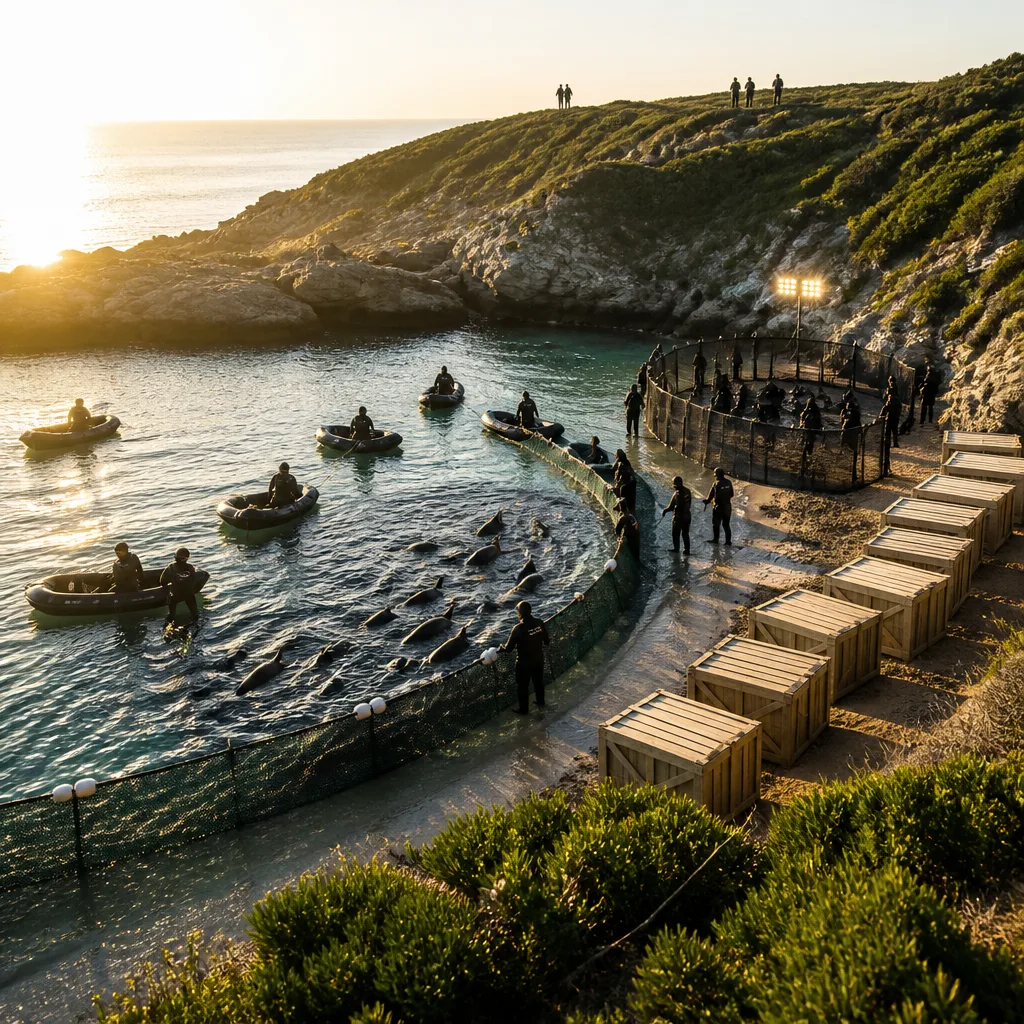
During Taiji’s hunting season, which typically runs from September until March, boats search for migrating pods and drive them toward the coastline and into a shallow inlet known as the Cove. Dolphin Project’s reporting describes how families are separated there: some dolphins are killed, some are released, and others — often younger animals deemed suitable for training — are selected alive for captivity.
The organisation connects the Cove hunts directly to the entertainment sector, arguing the international demand for dolphins used in shows and interactive attractions creates a powerful economic incentive to capture live animals rather than only harvesting meat. That link, Dolphin Project says, helps explain why the hunts continue despite widespread criticism and the spotlight cast by the Academy Award-winning documentary The Cove more than sixteen years ago.
"Imagine one day swimming wild and free. And the next, having your freedoms taken away."
For those dolphins that are taken alive, Dolphin Project warns that being spared slaughter often translates into a lifetime in artificial conditions. Rather than moving through open water with their pod, a captured dolphin may be confined to a tank and trained for performances or interactive encounters with paying visitors.
What the Dolphin Project highlights
- Seasonal hunts: Boats operate mainly from September to March seeking migrating pods.
- Outcomes for dolphins: Killed, released, or selected alive for captivity — with the latter often being younger animals.
- Entertainment demand: International appetite for dolphins in marine parks and shows creates economic incentives for live capture.
The organisation’s monitors document events in the Cove and emphasise that the fight against captivity and the campaign to end Taiji’s hunts are closely linked. As long as there is global demand for captive dolphins, Dolphin Project argues, the incentive to capture live animals during hunts will persist.
| Aspect | Details |
|---|---|
| Hunting season | Typically September–March |
| Primary outcomes for dolphins | Killed; released; selected alive for captivity |
| Main driver for live capture | International demand for dolphins in entertainment and interactive attractions |
For South African entertainment audiences and industry watchers, the Dolphin Project’s framing raises questions about the role of public demand in sustaining practices abroad. Marine parks, shows and interactive experiences form part of a global leisure economy: when animals are used as attractions, the sourcing chain — including places like Taiji — shapes the ethical landscape of that economy.
As conversation about animal welfare and ethical entertainment continues to grow internationally, the link between coastal hunts and the captive-dolphin trade remains central to debates about policy, tourism and consumer choice. Dolphin Project’s reporting re-emphasises that ending the hunts and reducing captivity are not separate objectives but interdependent aims in efforts to change the status quo.
The Cove documentary brought Taiji’s hunts to widespread attention more than sixteen years ago; Dolphin Project’s ongoing monitoring seeks to keep that spotlight on the relationship between capture and the entertainment industry that benefits from live animals.
For now, the organisation urges continued public attention to how entertainment demand can perpetuate practices that have severe consequences for individual animals and for wild populations.