Smart luggage and travel gadgets have evolved far beyond simple tags and trackers. Today’s devices are small connected systems that must work inside airports, in cargo holds and through transfer systems — often where there is no reliable cellular signal. Design decisions about batteries, positioning and which radio to use determine whether a product is genuinely useful for travellers or merely a novelty.
Why luggage needs more than a tracker
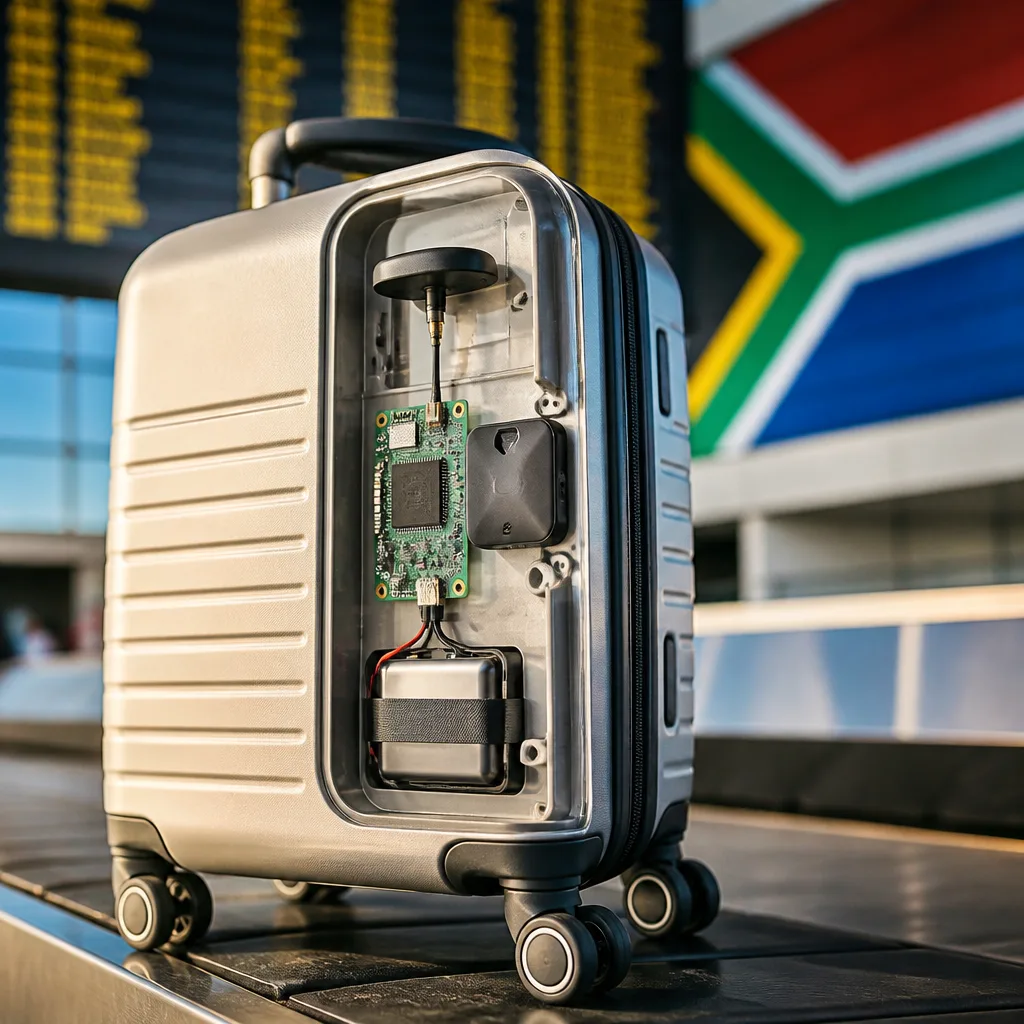
A modern smart suitcase typically combines several technologies to locate and monitor a bag. Global navigation satellite systems (GNSS) deliver precise positioning but need a clear sky view and use a lot of power. Bluetooth Low Energy conserves battery life but only reaches short distances. Low-power wide-area networks like LTE-M and NB-IoT extend coverage but add to device cost and affect battery life.
Other sensors are often included to give travellers useful information: load cells to measure weight, accelerometers to log impacts in transit, and temperature, humidity, proximity and lock sensors for security and condition monitoring. Which mix of sensors and radios a manufacturer uses — and how the power system is architected — usually decides whether a suitcase is practical for everyday travel.
How tracking works in the real world
Not every tracker needs to compute its own position. Systems such as Apple’s Find My let a tag broadcast an encrypted Bluetooth identifier that nearby Apple devices relay along with their location. Airlines and ground handlers can access this kind of crowd-sourced locating: SITA has linked Apple’s item-sharing capabilities with WorldTracer, the global baggage management system used by hundreds of airlines across thousands of airports.
Crowd-sourced Bluetooth is effective in busy terminals but less useful in quiet warehouses or on aircraft in flight. That is where LTE-M and NB-IoT can step in, though choosing how often the device reports its position becomes a trade-off between timeliness of updates and battery life.
- GNSS — accurate but power-hungry and needs clear sky.
- Bluetooth Low Energy — low power, short range, good in crowded spaces.
- LTE-M / NB-IoT — wider coverage, higher cost, affects battery life.
Industry scale: delayed, damaged or lost bags
Despite technology improvements, baggage mishandling remains a global issue. In 2025 the industry recorded about 24 million mishandled bags among roughly 5 billion passengers, with an estimated cost to the sector of about $6.3 billion. Most incidents are delays rather than permanent loss.
| Outcome | Share |
|---|---|
| Delayed | 74% |
| Damaged or pilfered | 18% |
| Lost or stolen | 8% |
Breakdowns in the handling chain help explain how these numbers arise. Transfers between flights account for the largest share of problems, followed by ticketing, tagging and security mistakes, failures to load, and other operational causes:
- Transfers between flights: 41%
- Ticketing, tagging and security errors: 17%
- Failure to load: 16%
- Operational issues: 10%
Because most mishandling is temporary, better visibility for passengers and handlers can reduce stress and speed recovery. That is the promise behind hybrid designs that use crowd-sourced Bluetooth for busy terminals and switch to cellular when a bag is in transit or isolated.
Design history also offers a caution. In January 2018 many airlines stopped accepting smart bags whose lithium-ion batteries could not be removed. One early pioneer in the market, Bluesmart, shut down later that year. The lesson for manufacturers is clear: a smart bag must comply with airline rules as well as function technically.
For South African travellers this matters on two levels: device choice and travel planning. Pick trackers and smart suitcases that provide multiple ways to report location, understand battery life and check airline baggage policies before you fly. Thoughtful design and realistic expectations will make connected luggage a genuine travel partner rather than an extra expense.