
The Makhanda High Court has declared the Eastern Cape Education Department’s decision to withhold a portion of public-school funding unlawful and unconstitutional, a judgment that civil society and school governing bodies said should return significant resources to classrooms.
What the court decided
The ruling follows an application by the Makhanda Circle of Unity and several School Governing Bodies (SGBs) challenging years of underfunding. According to reporting by the SABC, the department had been withholding a substantial share of funds earmarked for schools. The department reached an out-of-court settlement with the applicants that was made an order of court.
“Since the end of 2020, schools in the Eastern Cape have been consistently funded below the per‑learner target, receiving as little as half of their counterparts in other provinces,” said Cecile van Schalkwyk of the Legal Resource Centre, according to the SABC.
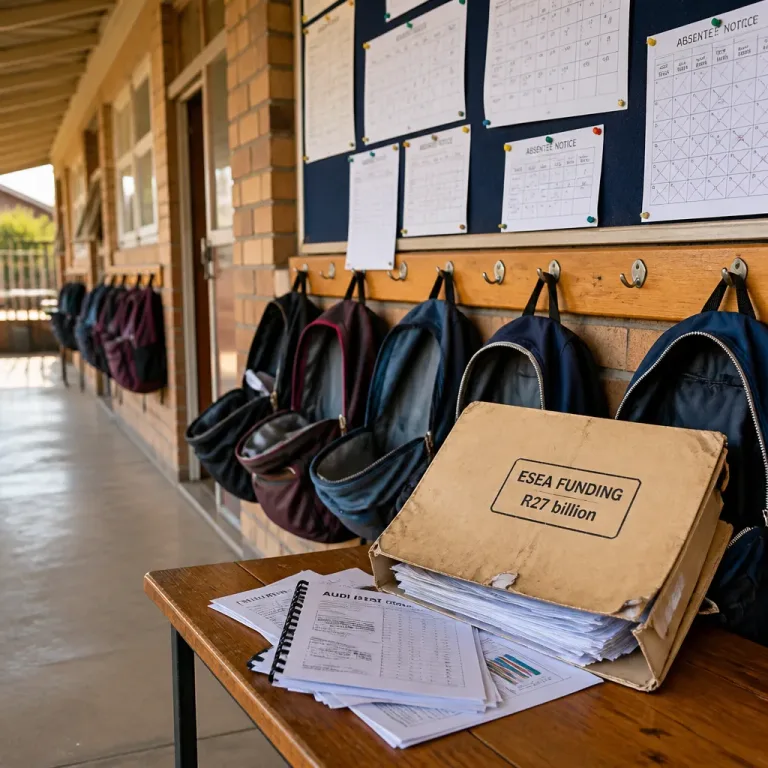
Van Schalkwyk told the SABC that the practice of centralising funds badly affected schools on the ground and that, in recent years, the province had retained large portions of allocations intended for schools. She said the ruling should lead to more money reaching schools in the coming financial years.
Numbers and implications
Different figures appear in reporting and commentary. The SABC reported that the department had withheld 33% of public‑school funding. Van Schalkwyk said the department had, in the 2026/2027 financial year, retained up to 40% of the allocation meant for schools. The settlement and court order are intended to prevent repetition of such practices and to ensure schools receive funds due to them.
| Issue | Figure reported | Source |
|---|---|---|
| Portion of funding withheld | 33% | SABC report |
| Portion reportedly retained in 2026/2027 | 40% | Legal Resource Centre (quoted by SABC) |
The scale of funds involved was not specified in the reporting, but the Legal Resource Centre said the effect on school budgets had been serious and prolonged.
What the department will do now
Provincial Education Department spokesperson Malibongwe Mtima, according to the SABC, said the department will work closely with all parties to ensure an orderly process going forward. Mtima said the department had agreed to consult with schools before undertaking any central procurement of Learner Teacher Support Materials (LTSM).
The settlement, he said, provides clarity on future processes and underlines the importance of meaningful consultation with schools in decisions affecting funding allocations.
- Consultation: The department must consult schools before central procurement of LTSM.
- Financial restoration: Schools may expect a return of withheld funds over coming financial years, subject to budget and implementation.
- Oversight: The settlement is aimed at preventing arbitrary retention of school allocations in future.
What this means for learners, principals and parents
School leaders and parents could see concrete improvements in resource availability if the department follows through. Money channelled back to schools can be used for textbooks, classroom materials, maintenance and other urgent needs that directly affect teaching and learning.
For families, the immediate change may be invisible if budget transfers take time, but SGBs will be able to press the department for clearer timelines and accounting. The ruling also strengthens the legal position of SGBs that want to hold the department to account over school budgets.
Background and wider context
For years, the Eastern Cape’s education system has struggled with underinvestment, infrastructure backlogs and administrative challenges. Nationally, the South African schooling system has large disparities in per‑learner spending between provinces; the Legal Resource Centre’s comments highlight how centralised spending decisions can widen those gaps within a province.
Legal action by communities and governing bodies has increasingly become the mechanism to force corrective action where administrative decisions are perceived to undermine learners’ rights to basic education.
Parents and SGBs seeking more immediate clarity should approach their district education offices and request written timelines for the disbursement of funds and the consultative process promised in the settlement. Monitoring by civil society organisations will be important to ensure the court order has practical effect.
The SABC reported the judgment and the subsequent settlement; details of the exact financial adjustments and timelines will become clearer as the department implements the court order and engages with affected schools.
— Makhanda