
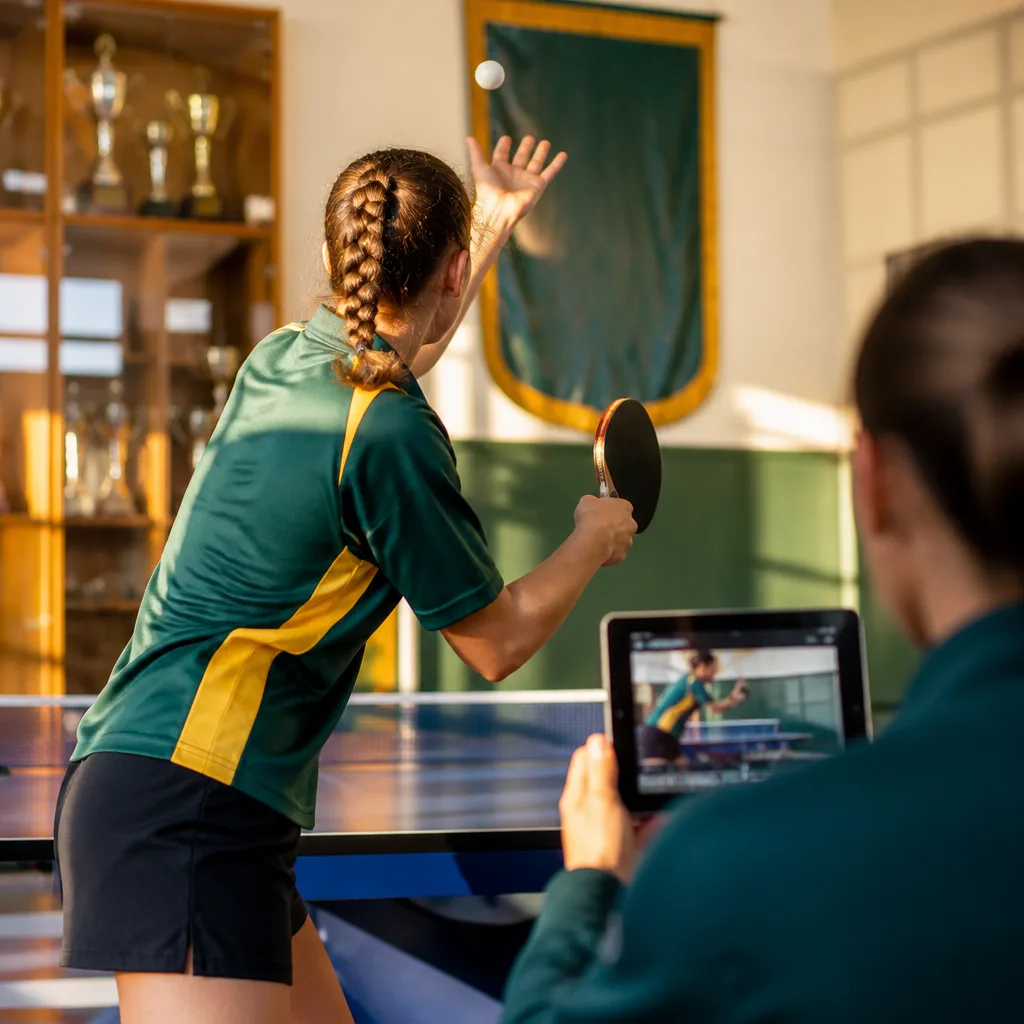
Musfiquh Kalam's journey from the classroom corridors of Central Park Primary School to the international table tennis stage is a quiet, persistent climb that says as much about passion as it does about preparation. The young player, now ranked fourth in South Africa in the women's category, did not emerge from a high-performance academy. She started by shadowing her brothers and turned that sibling curiosity into a national sporting career.
Roots and reason
Kalam told Eyewitness News that her earliest interest came simply from wanting to be near her brothers as they chased results at school tournaments. "I started playing table tennis at Central Park Primary School because my brothers had started playing and were achieving excellent results for their age, which made me want to be more involved in what they were doing," she said. What began as a wish to hang out with family, she added, became her own passion and ultimately led to representing South Africa.
"I was the naughty little sister who always wanted to be around my brothers and do everything they did...What started as me wanting to be part of their world eventually became my own passion, and today I'm incredibly grateful it led me to represent South Africa."
Adjusting to the continental standard
Translating domestic success into competitive performances against Africa’s top nations required a marked change in both mindset and technique. Kalam has had to learn to cope with the extreme speed and heavy spin that characterise the continent's leading players from countries such as Egypt and Nigeria. She said facing those opponents forced her to be more patient, disciplined and adaptable in play.
Her process is methodical. Together with coach Graham Van As, Kalam studies opponents on video, hunting for weaknesses and refining her serve patterns. The focus has shifted from simply delivering a legal serve to creating a tactical advantage — varying spin, placement and speed to engineer preferred returns.
What she has improved
Kalam's evolution centres on a handful of technical and mental adjustments:
- Serve variation — using spin, placement and speed deliberately to force weak returns.
- Spin reading — improving anticipation and racket angles to neutralise heavy spin.
- Patience and point construction — avoiding rushed winners and building opportunities.
- Video analysis — identifying opponent tendencies to tailor match plans.
Small team, big ambitions
Her tactical maturity has come from close work with Van As and a focus on margins. In a sport where fractions of a second and a millimetre of racket angle can decide a rally, those small changes are crucial. Kalam’s story underlines the role of coaches and video analysis even in sports that receive less mainstream attention than rugby, cricket or soccer in South Africa.
| Item | Detail |
|---|---|
| Current national ranking | 4th (women) |
| School where she began | Central Park Primary School |
| Coach | Graham Van As |
Kalam’s rise is significant for a number of reasons. It highlights the value of school sport as a talent pipeline, demonstrates how targeted coaching and analysis can narrow the gap with continental powers, and places a spotlight on women’s participation in a sport with modest resources. Her route — from sibling rivalry to national representation — is familiar in South African sport but no less compelling.
As she looks ahead, continued exposure to high-level continental competition will be essential if she is to climb further up the national rankings and make deeper inroads on the African scene. For now, Kalam’s game is built on incremental gains: sharper serves, better spin control and a mentality that treats each point as a problem to be solved. That approach, more than flashy showmanship, has carried her from a primary-school table to the blue-and-white of South Africa.
Her story is a reminder that national sporting depth often grows from modest beginnings — a table in a school hall, a coach willing to study hours of footage, and an athlete determined to turn curiosity into craft.














