
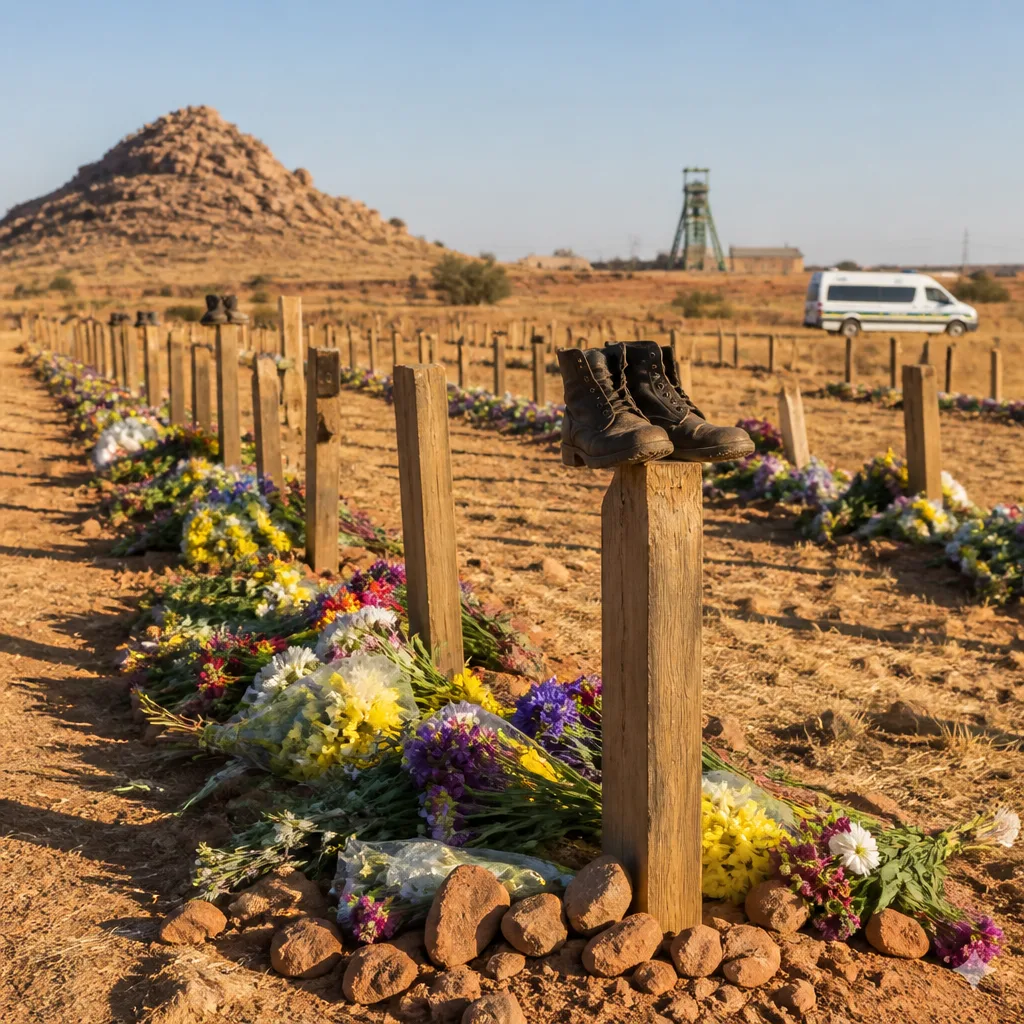
Fourteen years after the police shootings that left 34 mineworkers dead at Marikana, families and labour representatives say the search for accountability has stalled.
Prosecutions and settled claims
The Socio-Economic Rights Institute of South Africa (Seri), which represents the families of the 34 slain mineworkers, said there had been no successful criminal prosecutions arising from the August 2012 violence. Seri attorney Thato Masiangoako described the situation as “quite appalling”, pointing to the acquittal of the nine police officers who were initially charged.
“It is quite appalling that 14 years after the killings, there had been no successful prosecutions,” Seri attorney Thato Masiangoako said.
Advocate Dali Mpofu SC, who has acted for some Marikana families, said the state had failed to secure the prosecutions required to hold those responsible criminally accountable. He noted, however, that some civil claims had been settled and that other civil actions involving private parties remained before the courts.
Mpofu highlighted ongoing civil proceedings that concern the role of the mining company and senior individuals in the events surrounding the massacre. He said these civil cases, which include claims against the company and against President Cyril Ramaphosa, were still being litigated.
Unresolved recommendations and institutional change
Seri raised questions about which recommendations from the Farlam Commission of Inquiry had been implemented. While noting that the South African Police Service’s approach to public protests has changed since Marikana, Masiangoako said clarity was lacking on the state’s follow-through.
She emphasised that the state bears the primary responsibility for pursuing criminal prosecutions, and described the families’ ongoing legal efforts as part of a broader struggle for justice.
Context and consequences
The Marikana killings remain a defining moment in South Africa’s post‑1994 labour and policing history. Beyond the immediate loss of life, the incident exposed fraught relations between mining companies, trade unions and the state. Labour leaders and community members argued the response to the strike reflected broader failures in addressing miners’ grievances, including wages, safety and living conditions.
For families and labour advocates, the absence of successful criminal convictions deepens a sense of injustice and undermines confidence in the ability of criminal processes to address state violence. The settled civil claims offer some redress, but do not replace the criminal findings many families seek.
- Key figures: 34 mineworkers killed; 14 years since the massacre; nine police officers initially charged and later acquitted.
- Legal status: No successful criminal prosecutions; some civil claims settled; other civil matters remain before the courts.
- Inquiry: Farlam Commission recommendations—unclear which have been implemented.
| Year | Event |
|---|---|
| 2012 | 34 mineworkers killed during police operation at Marikana |
| 2012–2015 | Farlam Commission of Inquiry investigates the incident |
| 2012–present | Criminal charges and civil claims pursued; no successful criminal prosecutions to date |
What remains unclear
Key questions persist. Which specific Farlam recommendations have been actioned by the state and the police? What lessons have been institutionalised to prevent similar loss of life during industrial action? And will pending civil litigation produce further factual clarity about the role of companies and senior individuals?
Families, labour unions and civil society groups continue to press for answers. Their calls underline the wider stakes: public confidence in policing, corporate accountability, and the capacity of the justice system to address episodes of mass violence.
As the civil proceedings proceed and calls for full implementation of the inquiry’s recommendations continue, the Marikana tragedy remains both a legal contest and a moral test for South Africa’s institutions.














