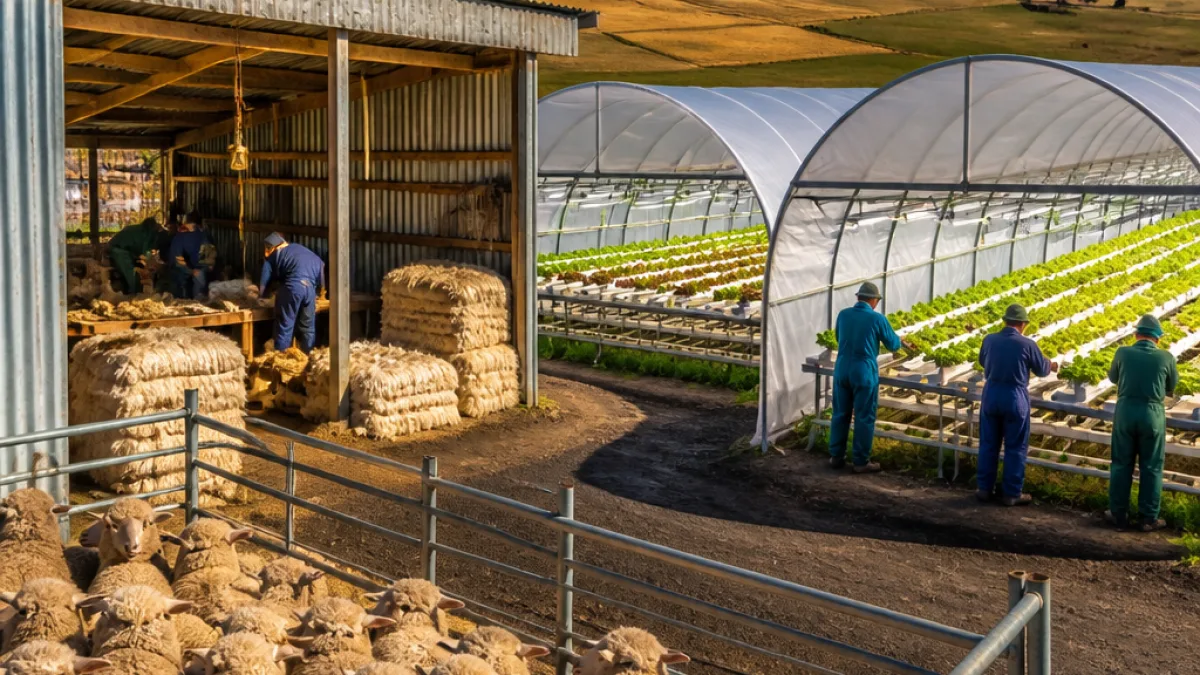
Exxaro has opened a R36-million sheep shearing and nutrient film technique hydroponics facility in the Cofimvaba area of the Eastern Cape as part of the social and labour plan (SLP) for its Matla mine. The project is intended to benefit the neighbouring villages of EliXeni, eThunzini and Ezingxingweni.
Facility purpose and capacity
The mixed-use site combines traditional livestock support with modern controlled-environment agriculture. It includes a sheep-shearing shed and accompanying sheep dip infrastructure, a packhouse and equipment for wool handling and processing. On the vegetable side, the hydroponics installation comprises a two-tunnel enterprise designed to produce leafy vegetables using the nutrient film technique.
The facility’s stated production capacities are clear:
- Shearing capacity of up to 500 sheep a day during the season.
- Forecast annual wool output of about 22 418 kg.
- Hydroponics output designed at roughly 90 000 heads of lettuce and spinach a year.
“For Exxaro, impact is measured not only by what we extract from the ground, from solar and wind, but by what we help communities build beyond the surface for generations to come,”
said Exxaro CEO Ben Magara, emphasising the company’s view that SLPs can translate mining investment into sustained socioeconomic development.
Components and partners
Exxaro said the project scope encompassed site creation, civil and structural works, procurement of equipment and establishment of operational infrastructure for both the sheep and hydroponics enterprises. The company highlighted the importance of collaboration with government departments and local stakeholders, framing the development as an example of a public–private partnership that combines private investment with public technical expertise and community participation.
| Item | Capacity / Value |
|---|---|
| Total investment | R36-million |
| Shearing capacity (seasonal) | Up to 500 sheep/day |
| Forecast annual wool | 22 418 kg |
| Hydroponics output | About 90 000 heads/year |
Local impact and context
The project is located in EliXeni but aims to serve neighbouring communities in the Cofimvaba area. Exxaro stated that while Cofimvaba is not a host community to its mining operations, it forms part of the company’s broader labour-sending footprint — communities from which mine employees originate. The company framed the investment as part of its obligation to support those communities.
For farmers and smallholder producers in the three targeted villages, the facility offers multiple potential benefits: improved access to a professional shearing service close to stock, formalisation of wool handling and packing, and a locally based source of leafy vegetables produced year-round. The hydroponics element, using nutrient film technique tunnels, reduces reliance on open-field cultivation and is suited to areas where water use efficiency and climate resilience are priorities.
Why the facility matters
From an economic-development perspective, the project attempts to address several constraints that rural Eastern Cape livestock producers and small-scale horticulturalists typically face: distance to markets, limited agritech support, and seasonal reliance on informal services. By combining equipment, a packhouse and infrastructure for both livestock and horticulture, the initiative is designed to create linkages across primary production, value addition and market-readiness.
Exxaro highlighted the role of multi-stakeholder cooperation in the facility’s delivery, noting the need for institutional backing and community participation to make such SLP projects sustainable beyond initial capital expenditure.
Practical considerations
Stakeholders looking to use the facility will need to engage with Exxaro and local coordinators to understand booking procedures for shearing seasons, standards required for wool grading and packaging, and the distribution channels for hydroponic produce. Training and skills transfer — often the weakest link in facility handovers — will determine whether the infrastructure translates into lasting livelihoods and local enterprise growth.
For communities that contribute labour to mines but sit outside immediate host areas, the Cofimvaba project represents a concrete example of how mining companies aim to broaden the reach of their social and labour obligations. Whether it becomes a template for similar investments in other labour-sending communities will depend on measurable outcomes in production, employment and market access over the coming seasons.