
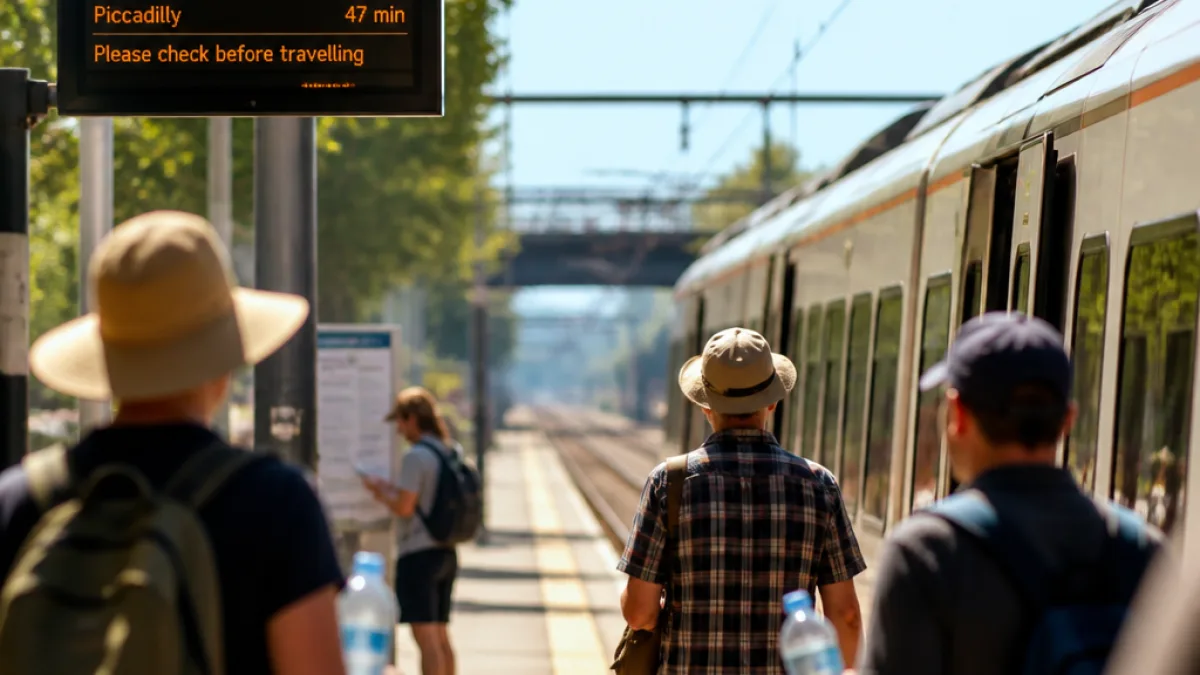
Rail passengers in the north-west of England have been warned to expect disruption after heat-related measures forced operator Northern to run reduced timetables on several routes. The company said parts of both the track and trains are vulnerable to elevated temperatures and that some services will be required to operate at lower speeds to preserve safety and reliability.
What Northern says and why the changes were made
A Northern spokesperson said the temporary timetable reductions and speed restrictions are intended to protect customers from last-minute cancellations and systemic failures that can arise when equipment is stressed by extreme heat. The operator described the measures as a way to "reduce the potential for disruption for customers, and to provide stability and resilience".
"Taking trains out of the timetable means trains are less likely to be caught up in disruption, or cancelled on the day due to failures," the spokesperson added.
The company explained that both rolling stock and infrastructure are affected by high temperatures: rails can expand and deform, overhead wires can sag, and on-board systems may be more prone to faults. Reduced speed limits and fewer scheduled services lower the risk of chains of cancellations that leave passengers stranded.
Routes affected
Northern said a number of stopping and inter-regional services would operate with a reduced timetable on the day of the heat warning. The operator singled out services to and from Manchester Piccadilly and Manchester Oxford Road among the routes to be cut back.
- Rochdale to Blackburn
- Southport to Wigan / Manchester Oxford Road
- Alderley Edge to Manchester Piccadilly
- Hazel Grove / Buxton to Manchester Piccadilly
- Rose Hill and Hadfield to Manchester Piccadilly
- Leeds to Rochdale (between 10:12 and 16:34 BST)
- Leeds to York via Harrogate (between 10:45 and 15:45 BST)
In addition, certain express services were curtailed for the affected period. The Yorkshire Flyer fast service between Leeds and Sheffield was withdrawn until later in the day: no fast services ran prior to the 16:52 departure from Sheffield or the 17:45 departure from Leeds. Northern said its stopping services would continue to operate throughout the day, and that the Scarborough to Hull portion of the Scarborough–Sheffield via Hull route would run a full timetable, while Hull–Doncaster/Sheffield links were reduced.
Practical advice for travellers
Passengers were asked to check before travelling and to allow extra time for their journeys. Northern specifically urged customers to carry water and be prepared for longer station waits. The operator has published timetable variations and updates on its website and social channels; it also advised customers to monitor journey planners for real-time changes.
| Advice | Why it matters |
|---|---|
| Check the timetable before leaving | Planned reductions mean some services will not run as usual |
| Allow extra travel time | Reduced speeds and altered connections can lengthen trips |
| Carry water | Stations and trains may be hot; air conditioning can be less effective |
Wider context: heat and transport resilience
Transport operators across Europe have increasingly adopted contingency timetables and speed restrictions during heatwaves. Heat affects both the physical track and electrical systems used by modern trains, and small faults can cascade into widespread cancellations if not managed. By pre-emptively removing some services from the timetable, operators aim to create a buffer that reduces the chance of abrupt mid-day cancellations.
For commuters and communities that depend on punctual rail services, these measures can cause inconvenience, particularly for those with tight connections or time-sensitive commitments. Passengers with mobility needs or who require assistance are advised to contact the operator in advance to confirm arrangements. Where possible, travellers should consider alternative routes or modes where services remain unaffected.
Northern's approach reflects a trade-off between running a full service that risks larger-scale disruption and operating a smaller, more reliable timetable. For many passengers the immediate impact will be delayed journeys and altered plans; for the network it aims to prevent longer, more damaging failure cascades that would leave far more people without options.
Travellers should continue to monitor Northern's updates and plan accordingly for potential heat-related disruption during ongoing high temperatures.













