
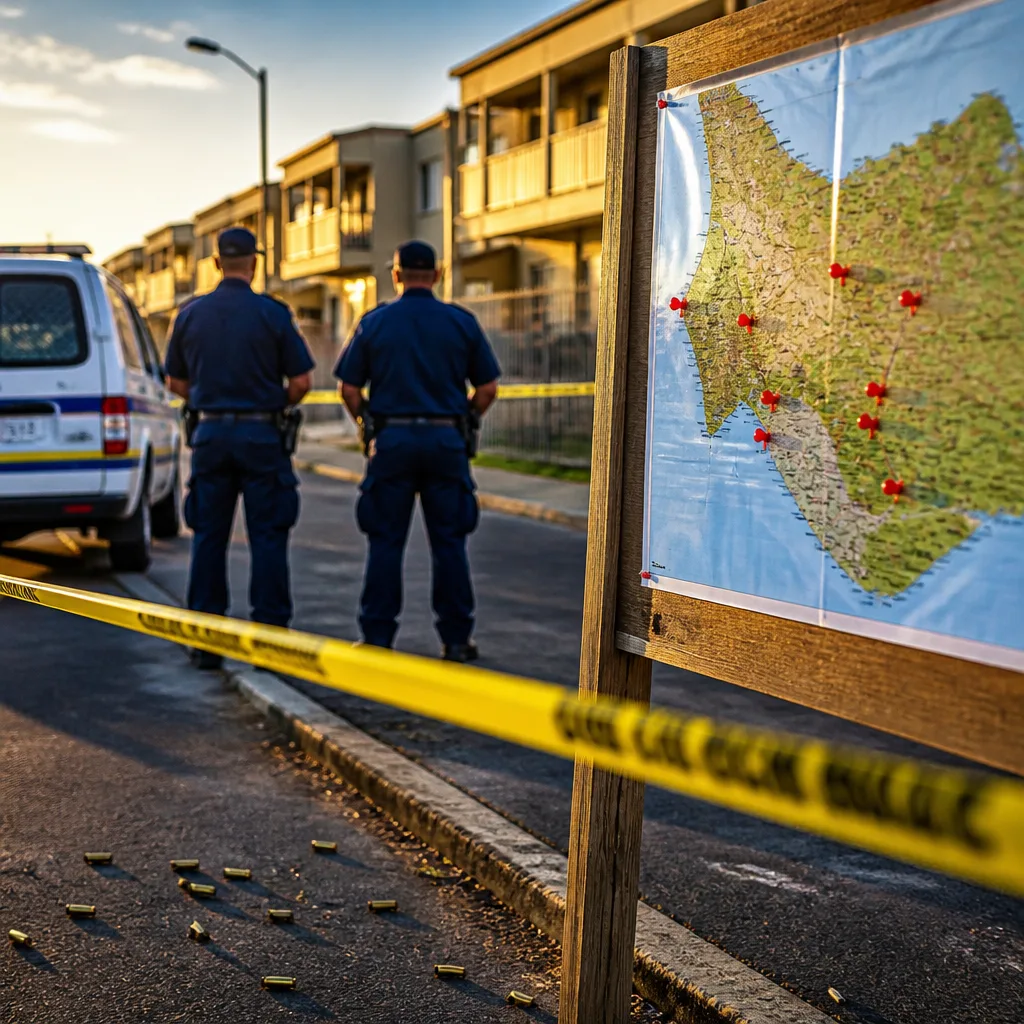
The South African Police Service (SAPS) quarterly crime statistics for 1 April to 30 June 2026 show that 11 policing precincts in Cape Town rank within the country’s 30 highest for murder, underscoring concentrated levels of lethal violence in parts of the Western Cape.
Numbers and patterns
According to the SAPS figures, the Western Cape recorded 1 071 murders in the quarter, down from 1 148 in the same period last year — a reduction of 77 cases. Despite the decline, the province’s murder rate of 13.9 per 100 000 population leaves it ranked second nationally for the likelihood of being murdered.
Firearms were used in a large share of the killings: of the 1 071 murders, 663 involved a firearm. The data also highlights gang-related violence as a major driver of killings on the Cape Flats, with 217 murders linked to gang conflict. Other contributors included interpersonal fights, retaliatory attacks and vigilantism.
- Mfuleni and Nyanga policing districts recorded the highest national murder rates.
- Other Cape Town precincts inside the top 30 are Philippi East (4), Delft (5), Harare (6), Khayelitsha (10), Kraaifontein (11), Gugulethu (16), Makhaza (17), Lingelethu-West (25) and Mitchells Plain (27).
- The Western Cape and Gauteng are tied for the highest number of deaths in mass shooting incidents, with 65 dockets opened in the quarter.
| Indicator | Value |
|---|---|
| Total murders (Q1 2026) | 1 071 |
| Murder with a firearm | 663 |
| Gang-related murders | 217 |
| Mass-shooting dockets | 65 |
Official response and analysis
Acting Minister of Police Firoz Cachalia acknowledged the crimes that “create fear in our communities” and noted the role of both organised, heavily armed groups and interpersonal violence. He said the sustained declines across some categories point to the effect of intelligence-led policing and targeted interventions, according to the SAPS release quoted in reporting.
Even with a quarter-on-quarter reduction in reported murders, the concentration of high murder rates in specific policing districts points to entrenched challenges: the persistent availability of firearms, organised gang activity on the Cape Flats and social fractures that produce interpersonal violence.
Police spokespeople and provincial authorities will face renewed pressure to explain how operational resources are being allocated to the most affected precincts, and what measures are being taken to reduce firearm-enabled killings and gang-related violence. The SAPS reported the overall downward trend in serious crime for the city but did not set out detailed corrective measures in the quarter summary referenced in reporting.
Implications for policing and communities
High murder concentrations affect public trust in law enforcement and strain local criminal-justice systems. Persistent gun violence and collective offences such as mass shootings typically require combined responses spanning intelligence, specialised investigations, community policing and inter-agency cooperation.
For residents in the listed policing districts, the statistics carry immediate consequences: elevated risk of lethal harm, disruption of everyday life, and the likelihood that schools, businesses and community programmes will have to adapt to higher security concerns while awaiting longer-term crime-prevention strategies.
“These are the crimes that create fear in our communities,” Acting Minister of Police Firoz Cachalia said, as quoted in the SAPS release.
The quarter’s figures will inform parliamentary oversight, resource planning and the allocation of specialised policing units. They will also feature in public debate about strategies to curb gun availability, disrupt organised criminal networks and address the social drivers of violence in the Western Cape.
Reporting on the SAPS quarterly statistics for 1 April to 30 June 2026 was published by Cape Argus and draws directly on the SAPS release made public on the same day.













