
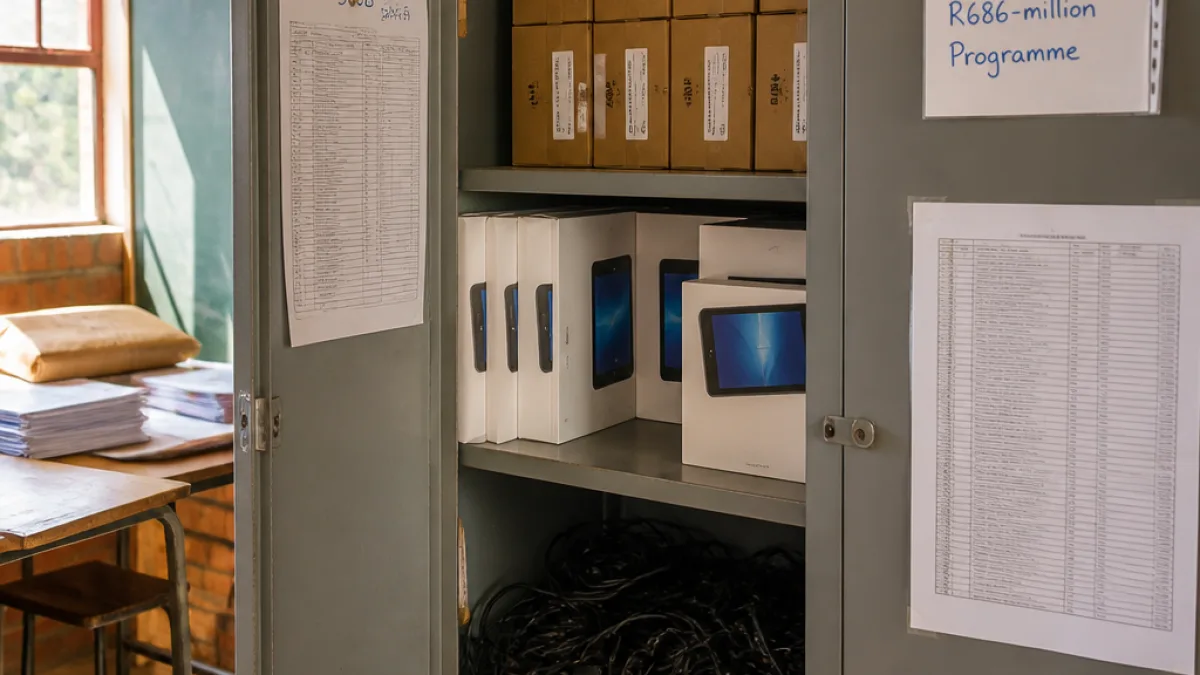
The Eastern Cape's flagship matric tablet programme has stalled, with many devices either locked away in school cupboards, not distributed, or not functioning as intended — leaving the initiative far short of its stated goals for this year's Grade 12 cohort.
Large spend, limited delivery and poor oversight
The provincial Department of Education set aside R686-million for the programme, with R447-million allocated to devices, and planned monthly data bundles of 50GB per tablet. The scheme was intended to reach 54,000 Grade 12 learners, prioritising no-fee Quintile 1 to 3 schools.
However, a delivery report tabled in the legislature and dated 15 May 2025 recorded that 53,254 devices had been delivered by that date. The same report showed 746 units still owed to 41 schools and listed 165 schools with shortages. Subsequent checks by reporters found that the programme was not running as designed in 2026.
On-the-ground failures
At Mary Waters High School in Makhanda, where the school received 115 tablets at the start of 2025, none have been issued to learners this year. According to a senior teacher who declined to be named because he is not authorised to speak, many tablets were not distributed “due to a shortage of tablets, with some not functioning properly”.
“The tablets were not distributed this year due to a shortage of tablets, with some not functioning properly,” said a senior teacher.
GroundUp contacted a dozen schools across the province — in Makhanda, Gqeberha, Butterworth, Idutywa, Queenstown, Mount Ayliff, Libode, Ngcobo, King William’s Town, Despatch and Maclear — and found that none were operating the programme as intended in 2026. Of those learners who received devices in 2025, the senior teacher estimated only about 30% used them for schoolwork in any meaningful way.
Problems identified
Reporting indicates several recurring issues that have undermined the rollout:
- Shortages of devices at some schools while others received units;
- Faulty or non-functioning tablets rendering them unusable;
- Insufficient monitoring and follow-up from the department since rollout began;
- Unclear criteria for selecting beneficiary schools, with residents and school managers left uncertain about allocation decisions;
- Budgetary constraints resulting in some qualifying learners, including those in Q3 schools, being excluded.
Numbers at a glance
| Planned | Recorded/Reported |
|---|---|
| Target learners (tablets) | 54,000 |
| Devices delivered by 15 May 2025 | 53,254 |
| Devices still owed | 746 (to 41 schools) |
| Schools listed with shortages | 165 |
| Budget set aside | R686-million (R447-million on devices) |
Impact on learners and schools
Matric pupils in under-resourced schools stand to gain materially from devices preloaded with past papers and data to access online resources. The failure to distribute functioning tablets and to provide ongoing support limits study options for learners preparing for final examinations. The uneven distribution reported in several towns — including Makhanda where half the qualifying schools received nothing — may widen already significant disparities between schools.
School managers told reporters they had not been given public criteria explaining why some schools were included and others were excluded. That lack of transparency complicates attempts by communities to hold the department to account.
Department response and next steps
The department acknowledged prioritising Quintile 1 to 3 matriculants but also said budget constraints meant not all eligible Q3 learners received tablets. It has not provided a published, detailed monitoring report showing how the devices were used, nor a comprehensive list of schools that received functioning tablets versus those that did not.
Daily Maverick reported these findings, citing GroundUp's enquiries to schools across the province. The absence of active monitoring and visible corrective action raises questions about value for money and the department’s capacity to manage large, technology-driven interventions in education.
What learners and parents should know
Parents and matric learners who believe their school should have been included can pursue several avenues:
- Request written clarification from the school principal about device allocations and whether the school received the monthly 50GB data bundles;
- Submit enquiries or complaints to the District Education Office and ask for the delivery schedule and criteria used;
- Engage local ward councillors or the provincial education portfolio committee for oversight and transparency.
The effectiveness of technology in classrooms hinges on reliable devices, clear rollout criteria, robust monitoring and ongoing technical support. Until those elements are demonstrably in place, the provincial tablet programme risks becoming an expensive lesson in poor implementation rather than a tool for lifting matric results.












