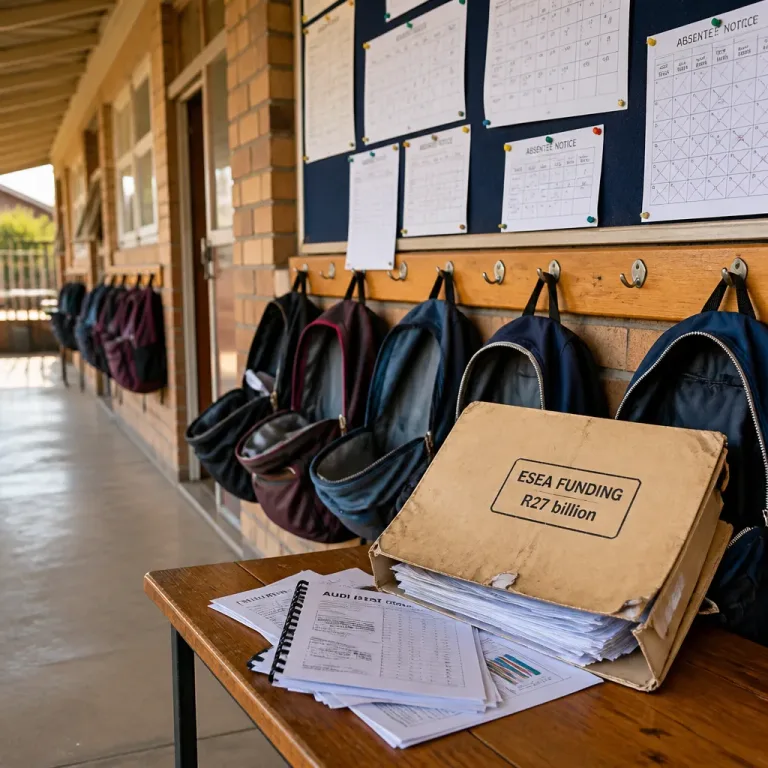

The Eastern Cape Department of Education (ECDoE) has admitted in the Makhanda High Court that it acted unlawfully and unconstitutionally when it withheld a portion of public-school funding from 2020 onwards. According to calculations presented in the case, roughly R6-billion has been held back from no-fee schools across the province between 2020 and 2026.
Court agreement forces restoration of full allocations for 2027/2028
The matter was brought by the Makhanda Circle of Unity together with the governing bodies of Ntsika Secondary School, Hoërskool PJ Olivier and Tyantyi Primary School, represented by the Legal Resources Centre (LRC). SECTION27 was admitted as amicus curiae. The parties reached an agreement that was made an order of court.
Under the court order, the ECDoE’s decision to deviate from the minimum per-learner school allocation target was declared unconstitutional. The department is required to allocate to every Eastern Cape school its full allocation for the 2027/2028 financial year, calculated using the prevailing minimum per-learner target.
The order also compels the department to report on compliance at set intervals until September 2027, giving civil-society parties and affected school governing bodies a structured mechanism to monitor whether budget decisions are implemented.
What was withheld and what this means for schools
Campaigners and legal representatives estimated the withheld amount at about R6-billion. The figure had previously been calculated at around R5-billion but rose while the matter awaited adjudication.
The dispute revolves around a 2020 ECDoE decision to deviate from the per-learner allocation that forms part of schools’ annual budgets. The national Minister of Basic Education has gazetted a no-fee school target of R1,835 per learner for 2026 in quintiles 1 to 3 — a reference point for what schools should receive in uniform minimum funding.
| Item | Detail |
|---|---|
| Estimated withheld amount (2020–2026) | R6-billion |
| Gazetted minimum per-learner target (2026) | R1,835 per learner (no-fee schools, quintiles 1–3) |
The court order does not require the ECDoE to pay back the withheld funds to past years; instead, it mandates full restoration of allocations for the 2027/2028 budget year. That outcome means schools will not receive retrospective reimbursements for amounts held between 2020 and 2026.
What stakeholders said
The LRC represented the three Makhanda governing bodies in the litigation. SECTION27 was admitted to assist the court as amicus curiae. The ECDoE conceded the unlawfulness of its funding deviations during proceedings at the Makhanda High Court.
"The department’s deviation from the per-learner allocation target was declared unconstitutional and the department must provide full allocations for 2027/2028," the court order states.
The agreement places reporting obligations on the department, including interval reports to show whether schools are receiving the required allocations going forward. These reports will run until September 2027, enabling monitoring ahead of the 2027/2028 financial year.
Implications for learners, governing bodies and oversight
For hundreds of no-fee schools in quintiles 1 to 3, the ruling offers a forward-looking remedy: full future allocations based on the national per-learner minimum. However, the absence of an order for retrospective restitution leaves governing bodies and school administrators without recovery of funds they say were withheld over several years.
School governing bodies — statutory structures responsible for school budgets and priorities — have relied on per-learner allocations to plan provisioning for basics like textbooks, sanitation, feeding schemes and other learner support. The withheld amounts therefore represent lost opportunities that districts and individual schools will now have to address going forward.
- Immediate effect: ECDoE must adjust 2027/2028 budgets so each school receives full per-learner allocations based on the prevailing target.
- Monitoring: The department must submit compliance reports at intervals until September 2027.
- No retrospective repayment: Schools will not be reimbursed for funds withheld between 2020 and 2026.
Next steps and what to watch
Education-sector stakeholders and parent bodies will now focus on the department’s interval reports and the 2027/2028 budget process to see whether allocations are restored in practice. The court order provides a framework for oversight, but effective implementation will depend on transparency in departmental budgeting and district-level disbursements.
As the province prepares for the next financial year, governing bodies and parents may seek clarity from the ECDoE and district offices on how the restored allocations will be calculated and disbursed, and how schools can document unresolved needs stemming from the years in which funding was curtailed.
Coverage will continue as the department files its mandated reports and as schools and civil-society organisations review the practical rollout of the court-ordered changes.