
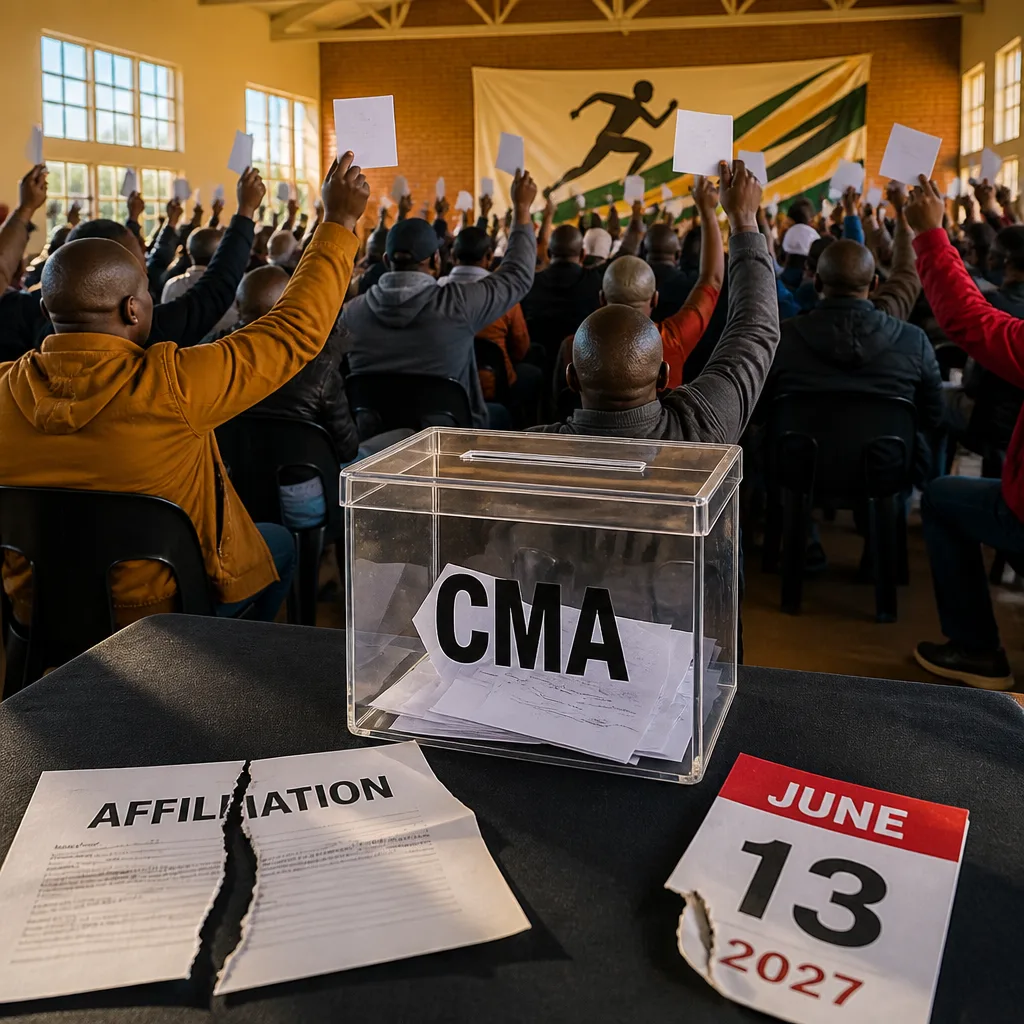
The Comrades Marathon Association (CMA) has moved decisively to prioritise its own governance after more than a thousand members backed a “CMA-first” approach at a special general meeting on 1 August. The decision follows a series of clashes with KwaZulu-Natal Athletics (KZNA) and Athletics South Africa (ASA) over affiliation, race dates and disputed finances as organisers prepare for the event’s centenary in 2027.
From special member to stand-alone
Until 2025, the CMA operated as a special member of KZNA, an arrangement that allowed the non-profit body to stage the Comrades Marathon. In November 2025 the CMA withdrew that special membership and sought direct affiliation with ASA. Efforts to confirm race dates for 2027 and 2028 subsequently became entangled in legal and administrative dispute.
After the CMA publicly announced that the centenary event would be run on 13 June 2027, KZNA objected and lodged a cease-and-desist order. At the same time KZNA asserted that the CMA owed it more than R4 million from the 2026 race; the CMA has disputed that claim on the basis that it was no longer a KZNA affiliate.
Following a three-way meeting between the CMA, KZNA and ASA on 10 July, ASA declared that previously approved race dates were “null and void”. On 17 July, ASA wrote to the CMA refusing direct affiliation and instructed that CMA must affiliate through the provincial federation.
Members choose the race over affiliation
Faced with the impasse, CMA called a special general meeting on 1 August. More than a thousand members voted on two options: an accommodative path maintaining closer ties with KZNA and ASA, or a CMA-first route that prioritises the association’s autonomy. According to reporting, an overwhelming majority supported the CMA-first resolution.
The vote makes clear the strength of feeling among runners and officials who want the Comrades to be governed primarily by the organisation that stages the race, especially with the centenary looming. It also places the CMA at odds with established athletics governance structures and raises questions about sanctioning and regulatory oversight moving forward.
- Key dates: CMA withdrew from KZNA special membership in November 2025.
- Meeting and rulings: Three-way meeting on 10 July; ASA said approved dates were “null and void”.
- Affiliation decision: ASA’s 17 July letter rejected direct affiliation; CMA members voted for a CMA-first approach on 1 August.
| Date | Event |
|---|---|
| November 2025 | CMA withdraws special membership of KZNA |
| 10 July | Meeting between CMA, KZNA and ASA; ASA rules approved dates null and void |
| 17 July | ASA refuses CMA's request for direct affiliation |
| 1 August | Special general meeting; CMA members vote for CMA-first approach |
All of this unfolds while the Comrades prepares for a major milestone: the centenary race in 2027. The event’s unique place in South African sport — an 85km-plus road ultra that has captured public affection for generations — makes the current governance dispute particularly sensitive.
The CMA’s push for self-determination will test the interplay between event organisers and athletics governance in the country. Practical questions follow: who will sanction the centenary race; how will athlete eligibility and safety protocols be managed; and what mechanisms exist to resolve the financial disagreement over the alleged R4 million owed to KZNA? The public reporting does not yet answer those operational questions.
For runners, volunteers and sponsors, the priority is continuity and certainty. The centenary offers an opportunity to celebrate the race’s history and the community around it. But the build-up now contains an added layer of uncertainty as three parties — the CMA, KZNA and ASA — try to find a way through competing claims about affiliation, authority and money.
The coming weeks will be critical. If the CMA proceeds as an effectively independent organiser, athletics bodies and the running community will need to establish clear lines of cooperation to ensure the centenary event proceeds safely and with full recognition of results and standards. If not, the dispute could cast a shadow over what should be a landmark celebration for South African endurance running.














