
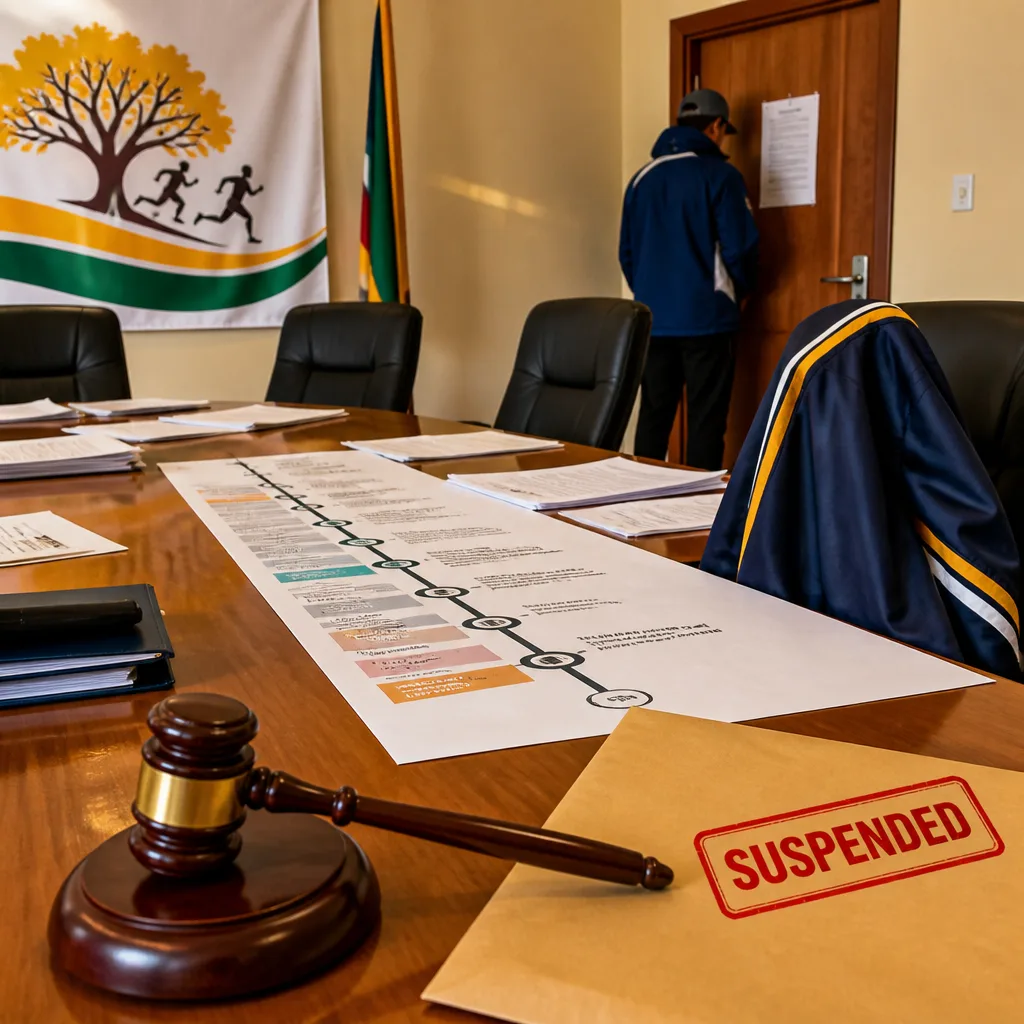
A rape conviction, subsequent election to provincial office and a slow response from national structures have combined to expose what a guest commentator calls major safeguarding failings within Athletics South Africa (ASA).
Timeline of events raises governance questions
According to a detailed guest blog by Norman Brook MBE, the matter centres on Steven Swarts, a well-known Free State coach and athletics administrator. Swarts was arrested in 2018 and later charged with the rape of a 21-year-old athlete he coached. The charge related to an allegation that he inserted his fingers into her vagina while giving her a massage. Swarts pleaded guilty in 2020 and received a five-year suspended sentence.
Despite that record, Brook reports, Swarts was elected President of Athletics Free State (AFS) in November 2023, which also gave him a seat on the Athletics South Africa board. The election prompted concern from several athletics clubs when court documentation of the conviction became known the following year, 2024, and those clubs challenged the validity of the election on the basis that they had not been aware of the conviction.
Rather than treating those challenges as a safeguarding red flag, Brook says AFS and ASA suspended the representatives who raised the concerns. The suspensions attracted public criticism and the matter was reported to both SASCOC and World Athletics. It was only under mounting pressure that the ASA Board resolved on 6 March 2025 to suspend Swarts with immediate effect pending a disciplinary enquiry; the suspension and disciplinary notification were delivered to Swarts on the morning of 8 March 2025.
- 2018: Arrest and charge for rape.
- 2020: Pleaded guilty; five-year suspended sentence.
- November 2023: Elected President of Athletics Free State (AFS), became ASA board member.
- 2024: Clubs challenged the election after obtaining court documents; representatives were suspended by AFS/ASA.
- 6 March 2025: ASA Board resolved to suspend Swarts pending enquiry.
- 8 March 2025: Suspension and disciplinary notice delivered to Swarts.
Accountability, safeguarding and the cost to athlete trust
The sequence Brook outlines puts a spotlight on several uncomfortable questions for sport administrators. How did a person with a criminal conviction for a sexual offence come to be elected to provincial leadership? Why were the representatives who raised the issue suspended rather than their concerns being treated as potential safeguarding breaches? And why did national structures act only after public pressure and escalation to external bodies?
Those questions are not academic. Safeguarding failures erode athlete trust, deter victims from reporting abuse and create reputational risk for the sport at all levels. Brook’s analysis suggests that ASA’s policies, decision-making processes and disciplinary mechanisms were tested — and that their response fell short until external scrutiny intensified.
| Year | Event |
|---|---|
| 2018 | Arrest and charge |
| 2020 | Guilty plea; five-year suspended sentence |
| Nov 2023 | Elected AFS President; ASA board seat |
| 2024 | Clubs challenge election; representatives suspended |
| 6 Mar 2025 | ASA Board resolves to suspend pending enquiry |
| 8 Mar 2025 | Suspension notice delivered |
The urgency of reform — on governance, transparency and the prioritisation of athlete safety — is clear. Brook’s piece calls for ASA to confront weaknesses in its safeguarding framework, to ensure those in positions of authority cannot remain in office when there are credible, documented criminal convictions, and to protect those who raise concerns from punitive action.
For the broader athletics community, the episode is a reminder that robust, consistently applied safeguarding and governance rules are essential. The facts set out in Brook’s analysis show a chain of events in which institutional decisions delayed a clearer and faster resolution to a matter that involved the safety of an athlete under care.
How ASA, SASCOC and affiliated provincial bodies respond to these criticisms will determine whether trust can be rebuilt and whether lessons from this case produce meaningful, enforceable change to protect vulnerable athletes in future.














