Underground history: West Star to become public museum
Plans are underway to convert a former Cold War nuclear bunker outside Verona into a public museum, with the Italian parliament approving €7 million for the project aimed at opening the site by 2029, according to reporting by TravelTomorrow.
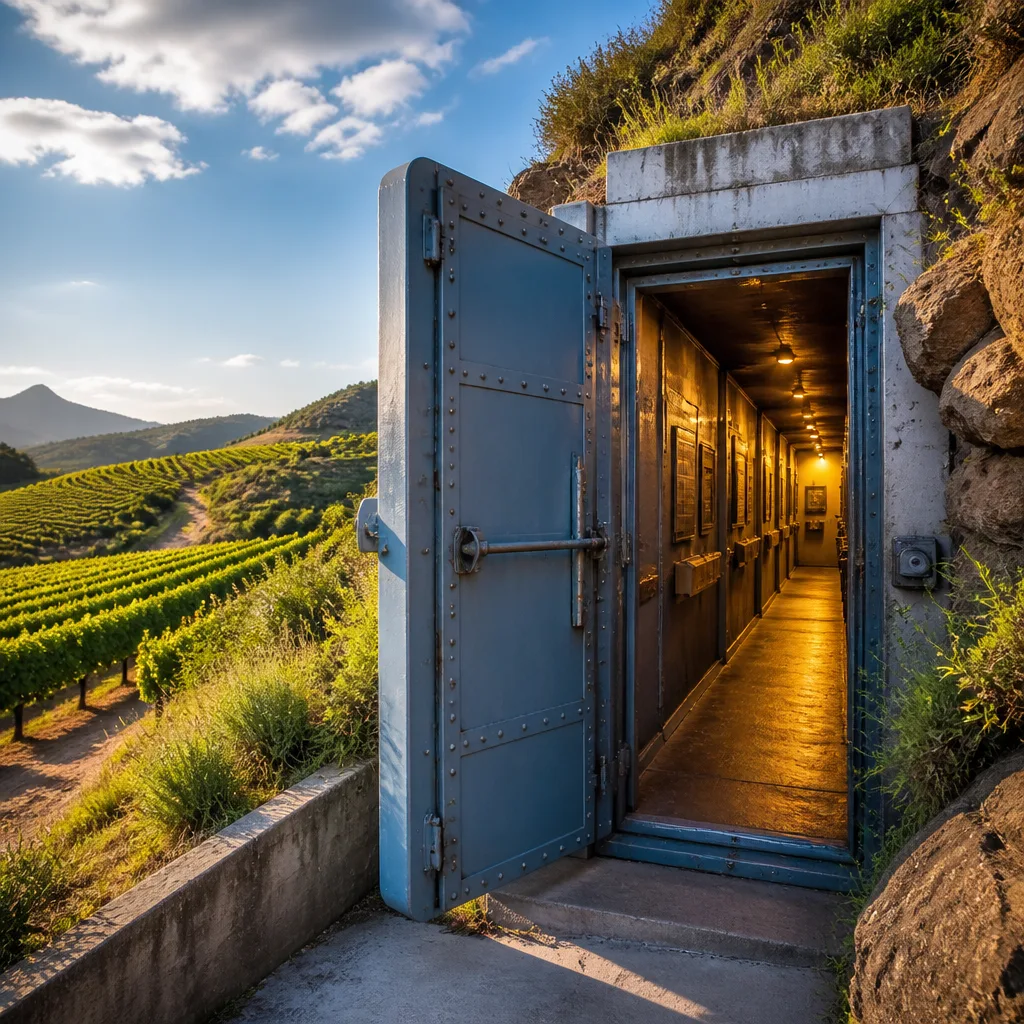
Known by its codename West Star, the subterranean complex sits in the hills near Lake Garda, beneath vineyards not far from Verona’s famous balcony linked to Romeo and Juliet. Constructed between 1960 and 1966, the facility served as a NATO command-and-control centre until 2004 and was decommissioned in 2007.
What visitors will see
The site spans about 13,000 square metres and is connected by roughly a kilometre of tunnels. It was built to resist nuclear, chemical and biological attacks and contains the facilities needed to sustain operations for a month. The complex originally included:
- around 100 rooms designed to accommodate 300 personnel,
- kitchens, water tanks and filtration systems,
- protected showers and an infirmary,
- a war room and communications centre,
- amenities such as a gym, a bar and a mechanics’ workshop.
Researchers who began mapping the site in 2022 digitised technical documents and interviewed former employees to build a historical record of the complex, TravelTomorrow reported. Some of the more human details of life in the bunker — such as erotic posters in the mechanics’ workshop — will be left in place as part of the visitor experience.
From military hub to cultural attraction
Ownership of the bunker passed from Italy’s Ministry of Defence to the municipality of Affi in 2018, and plans to turn it into a museum took shape after mapping and research by university teams. The museum project aims to open parts of the complex to the public ahead of a complete transformation scheduled by 2029, funded in part by the recently approved parliamentary allocation.
| Feature | Detail |
|---|---|
| Codename | West Star |
| Location | Hills near Lake Garda, outside Verona (Affi) |
| Size | 13,000 sqm with ~1 km of tunnels |
| Construction | 1960–1966 |
| Military use | Key NATO command centre until 2004; decommissioned 2007 |
| Public ownership | Transferred to municipality of Affi in 2018 |
| Funding approved | €7 million (Italian parliament) |
The conversion will add a new dimension to the cultural offer of the Verona area, where visitors already come for Roman architecture, opera, and the surrounding wine regions such as Valpolicella. For travellers who like to pair wine tasting and history, the bunker offers an unusual counterpoint: a Cold War relic beneath the same landscape that produces Amarone and Valpolicella.
Travel operators and cultural tourism planners increasingly see value in adaptive reuse of military sites because they provide immersive, tangible links to recent history. In this case, the combination of preserved technical infrastructure and personal artefacts collected by researchers creates an interpretive opportunity: to explore how NATO coordinated operations across southern Europe during a tense period of the 20th century.
According to TravelTomorrow, authorities expect part of the complex to open to visitors before the full transformation is complete, but the timetable beyond the broad 2029 target is subject to the pace of restoration, conservation work and museum planning.
For South African travellers planning European itineraries, the project represents a fresh kind of destination — one where vineyards, Shakespearean romance and Cold War history share the same map pin.