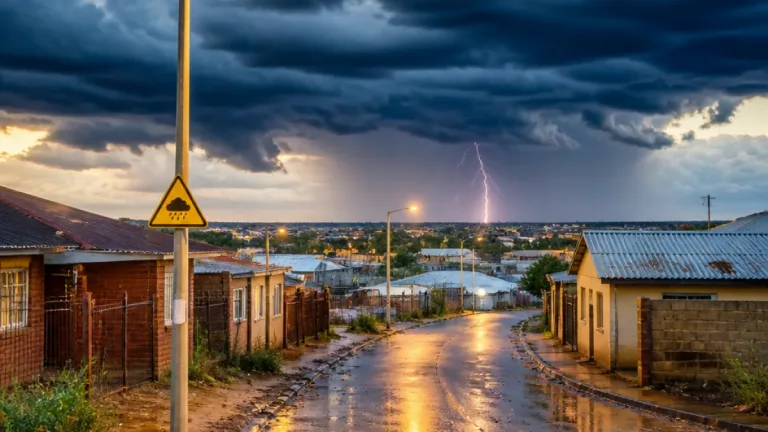
The sudden plunge in temperatures across Gauteng has exposed the risks faced by households in informal settlements who lack reliable electricity and warm shelter. In the Good Hope informal settlement in Germiston, Ekurhuleni, residents said they were surviving on layers of blankets, small gas cylinders and open fires as the South African Weather Service warned of cold, cloudy conditions with scattered showers and thundershowers across the province.
Snow in Pretoria, smoke in the shacks
Light snowfall was reported in parts of Pretoria in the early hours of the morning, while many informal settlements further south relied on embers and wood to keep children and older relatives warm. For some, the choice between staying warm and keeping the family safe is stark.
Mpho Nong, who was visiting her husband from Limpopo and staying in Good Hope, said she relied heavily on blankets because gas and paraffin were too costly. She described a household forced to ration cooking fuel while avoiding indoor braziers because of breathing difficulties.
“We cannot afford gas or paraffin, so we have to collect wood to make fires, cook and keep warm.”
She added that while a 3kg gas cylinder costs about R130 and lasts roughly three weeks for her household, many families still prefer wood fires despite the dangers.
Why people still use imbawulas
Residents said limited, if any, access to electricity meant imbawulas (braziers) are often the only available source of heat. Grandmother Gladys Malapile, who lives in the settlement with three grandchildren, told reporters the family had briefly seen snow before rain set in after 10:00.
She acknowledged the risks: several families in the settlement use imbawulas indoors, exposing children to smoke and raising the possibility of carbon monoxide poisoning or house fires.
- Many informal settlements have no reliable electricity supply;
- Households resort to collecting wood, paraffin or small gas cylinders for heat and cooking;
- Indoor use of braziers creates a serious health and fire risk, especially for young children and older adults.
Practical safety reminders
With the cold expected to persist, residents should take precautions when using alternative heating:
| Risk | Practical step |
|---|---|
| Smoke inhalation | Keep braziers outside; ensure good ventilation; avoid sleeping in rooms with active fires |
| Carbon monoxide | Do not use paraffin or gas heaters in enclosed spaces; never leave heaters unattended |
| Fire | Keep combustible materials away from open flames; have a bucket of water or sand nearby |
The South African Weather Service forecast cloudy and cold weather with scattered showers and thundershowers across the province, underscoring the need for communities to prepare for wet roads and low night temperatures.
Residents who cannot afford commercial heating options described improvising: collecting wood for fires, sharing blankets or rotating use of a small gas cylinder. Those with respiratory conditions said they avoided imbawulas because of smoke, but acknowledged that many families have no alternative.
While some households use small gas cylinders such as the 3kg size, the cost — about R130 — was described as a burden even when shared, and not everyone has safe, ventilated space to use them without risk.
As temperatures remain low across Gauteng, the situation in informal settlements highlights wider problems: energy poverty, overcrowding and the trade-offs families make between warmth and safety. Neighbourhoods like Good Hope in Germiston are a reminder that weather warnings have uneven consequences depending on housing and income.
Those experiencing emergencies should contact local emergency services. Community organisations and ward councillors can assist with information on safe heating and local support initiatives where available.