Many travellers assume a travel insurance add‑on bought at checkout covers everything that could go wrong on holiday. Real life shows that assumption can be costly. Reporting into remote, high‑risk or unusual destinations — from Antarctica to mountaineering routes — reveals insurers sometimes exclude entire regions or specific activities, and frontline representatives may not always know the details.
What happened at the South Pole
Janice Lintz, a disability advocate from Washington, D.C., asked her travel insurer whether she would be covered for a trip to the South Pole. According to the reporting, initial responses from several representatives were unclear — and some staff appeared unfamiliar with where the South Pole lay.
“Sadly, many insurance representatives did not know where the South Pole was,”
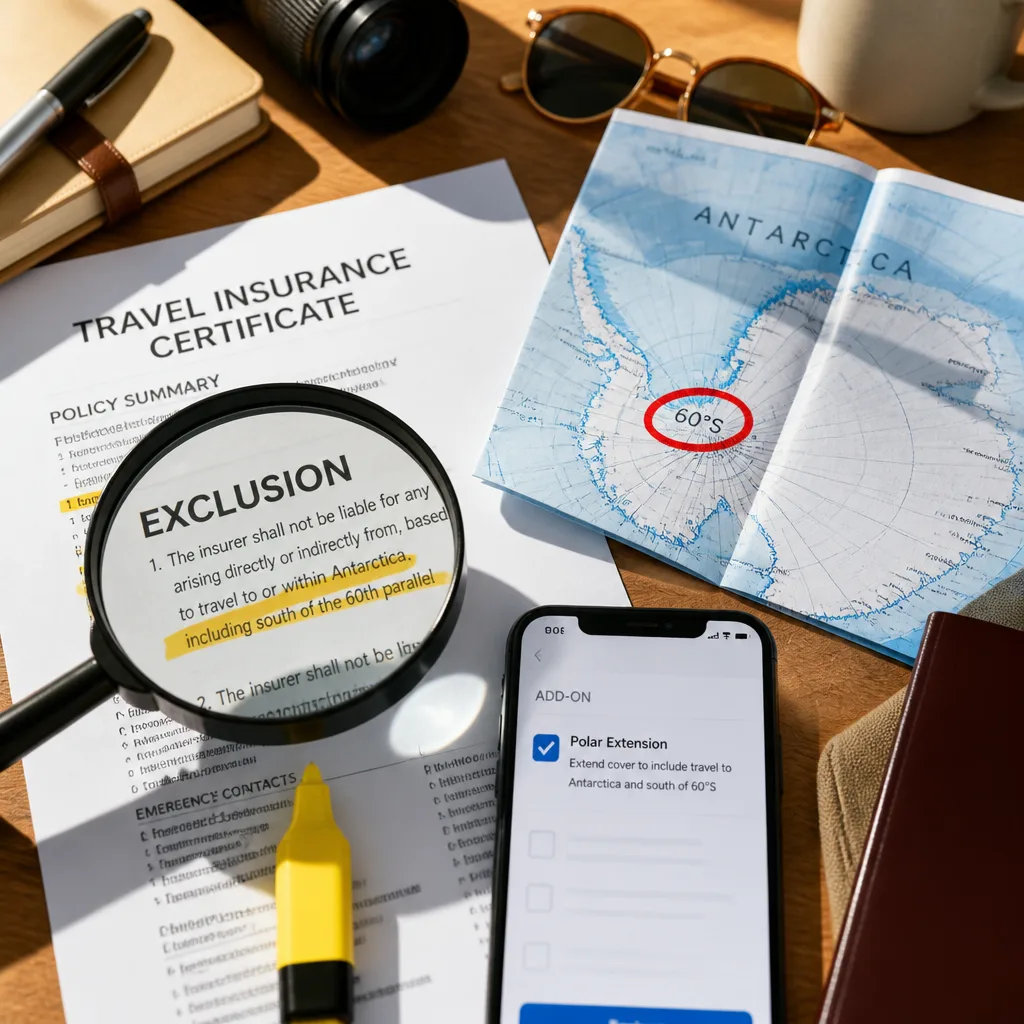
Lintz persisted and eventually obtained written confirmation about the coverage. The insurer would not cover travel below the 60th parallel for some rescue services — a common cut‑off for Antarctic operations. Her insurer also listed a mix of permitted and excluded activities. Excluded: rock climbing, ice climbing, mountaineering and rappelling. Allowed: skiing, snowmobile tours, visits to ice tunnels, rope walking and simply walking — but only if the written policy explicitly allowed those activities.
| Activity | Lintz's insurer |
|---|---|
| Rock climbing / Ice climbing / Mountaineering / Rappelling | Excluded |
| Skiing / Snowmobile tour / Ice tunnels / Rope walking / Walking | Allowed |
Why exclusions matter
Most people who buy insurance click the box and move on, the reporting says. Problems arise when an injury happens while doing an activity the insurer defines as hazardous — or if the trip falls into an excluded geographical zone. Bill McIntyre, director at Global Rescue, told the report that travellers are safer with plans that do not impose activity limitations. He said: “travelers are better off with protection that has no activity limitations.”
Policy language can be technical and insurers sometimes use their own definitions for terms such as “hazardous activity”. Alex Adekola, founder of ReadyAdjuster, warned that labels are not always reliable: the word used on a certificate might not mean what a traveller assumes. He urged readers to check what a policy actually considers hazardous and the conditions that apply to any exclusion.
Practical steps before you go
From the reporting, a few clear consumer actions emerge:
- Read the full insurance certificate — not just the summary on checkout.
- Get written confirmation of cover for unusual destinations (for example, anything south of the 60th parallel) and for specific activities you plan to do.
- Ask precisely whether rescue, evacuation and medical repatriation are available for your destination and activities.
- Check activity definitions — terms such as "mountaineering" or "extreme sports" can be defined narrowly or broadly.
- Keep documentation of all correspondence with the insurer when you book the trip.
These measures are particularly important for adventurous travellers, people with pre‑existing conditions and those visiting remote regions where medical evacuation is specialised and costly. Without clear coverage, a rescue or evacuation bill could run into very large sums — and the policy wording will determine whether it is paid.
In short: don’t treat a travel insurance purchase as an administrative afterthought. A few extra minutes checking the certificate and a written answer from the insurer can prevent disappointments and financial shock if something goes wrong on holiday.
For South African travellers planning expeditions or trips to remote or polar regions, the lesson is the same everywhere — know exactly what is and isn’t covered before you leave.