
City report shows rising arrears, tough recovery measures planned
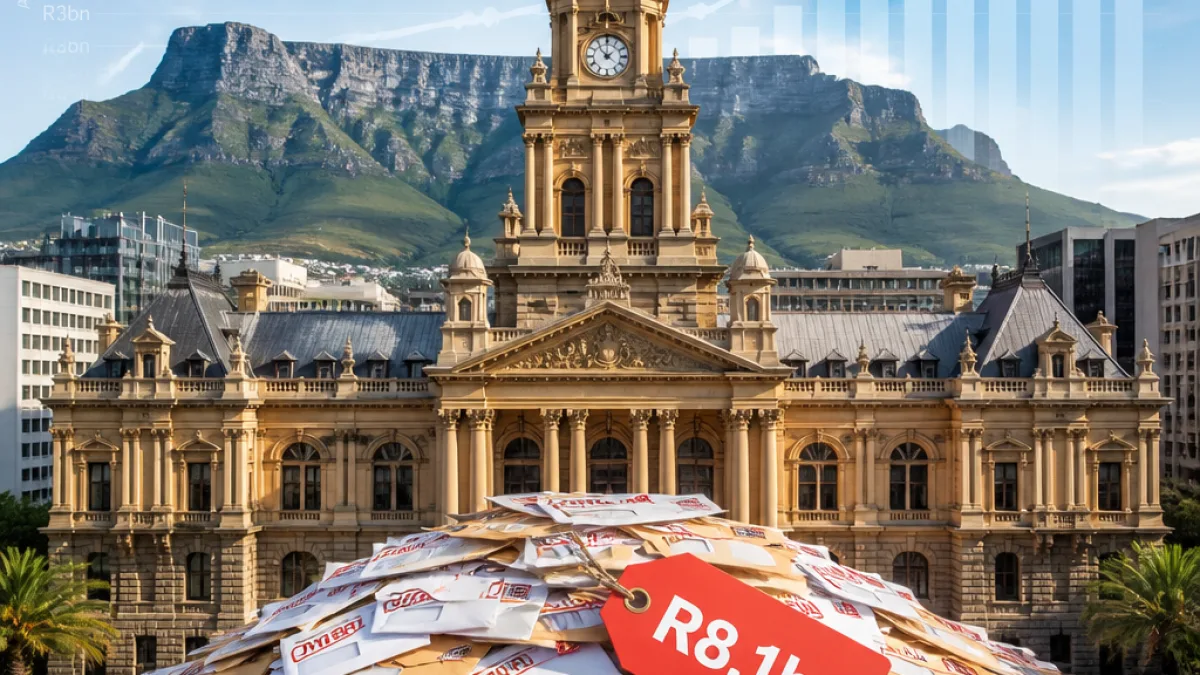
The City of Cape Town was owed R8.1 billion in outstanding debts for rates and services at the end of June, up from R7 billion three years ago, according to a report presented to the City’s Finance Portfolio Committee.
The report, which outlined the municipality’s collection ratio and debt-management actions, also recorded R87.3 million written off as bad debt during the same month. The City provided a breakdown of the outstanding amounts: R5.2 billion owed by residents, R2.1 billion by businesses, R402 million by government departments and R384.51 million by other customers.
- Total arrears older than 60 days stood at R5.3 billion, though only about R1.46 billion of those arrears was considered open for active debt collection.
- The City said it had pursued actions against the top 1,000 debtors, government departments, state-owned entities, councillors and staff in arrears.
- For the top 1,000 large debtors the balance outstanding as at 30 June 2026 was R1.337 billion.
The report said a special plan of action had been drawn up for large commercial and industrial properties on the list, with final warnings and disconnection or restriction notices issued. The City warned that enforcement measures may include water and electricity disconnections, the recovery of arrears through prepaid electricity purchases and adverse credit listings for property owners who fail to engage.
“The City will continue enforcing payments of outstanding debts through effective debt management actions to those residents or businesses, who have not come forward to access the City’s benefits offered,” the report said.
What the numbers mean for residents and services
The scale of the arrears presents several challenges for local service delivery. Rising unpaid rates limit the City’s revenue pool for capital projects and maintenance work, while increases in write-offs reduce the funds available for core services.
Although the report notes that only a portion of the arrears is open for collection, the City’s focus on its largest debtors shows where officials believe recovery can be most effective. The prominence of commercial and industrial properties among the top 1,000 debtors indicates that municipal finance officers are concentrating recovery efforts where they expect the biggest returns.
For ordinary households, the immediate prospect is the continuation of targeted collection drives and the message that non-payment can prompt restrictions on municipal services or adverse credit consequences. For businesses, the risk includes disconnection and formal credit steps by the municipality.
City measures and political context
The report follows questions raised in recent months by ratepayers, watchdogs and political parties about the City’s fixed municipal charges and who ultimately benefits from them. The City says it will keep enforcing payments and is pursuing debt management actions against institutional and individual debtors alike.
| Category | Amount |
|---|---|
| Residents | R5.2 billion |
| Businesses | R2.1 billion |
| Government | R402 million |
| Other customers | R384.51 million |
| Arrears >60 days | R5.3 billion |
| Top 1,000 debtors | R1.337 billion |
City officials reported to the Finance Portfolio Committee that they were pursuing a mix of administrative and legal remedies, and had already begun issuing final notices and preparing disconnection orders where necessary. The report did not list the names of the top debtors, but said sectional-title schemes and commercial properties featured prominently.
How aggressively the City enforces collections will shape revenue availability over the coming financial year. If recovery from large corporate debtors succeeds, it could ease pressure on rates and service budgets. If it does not, the City may face hard choices about write-offs, spending reprioritisation and service provisioning.
The report and its measures will be watched closely by ratepayers and political representatives as the City balances fiscal recovery with the social and economic consequences of cutting services to indebted households and institutions.
Reporting: Mayibongwe Maqhina; Finance Portfolio Committee report presented to the City of Cape Town.













