
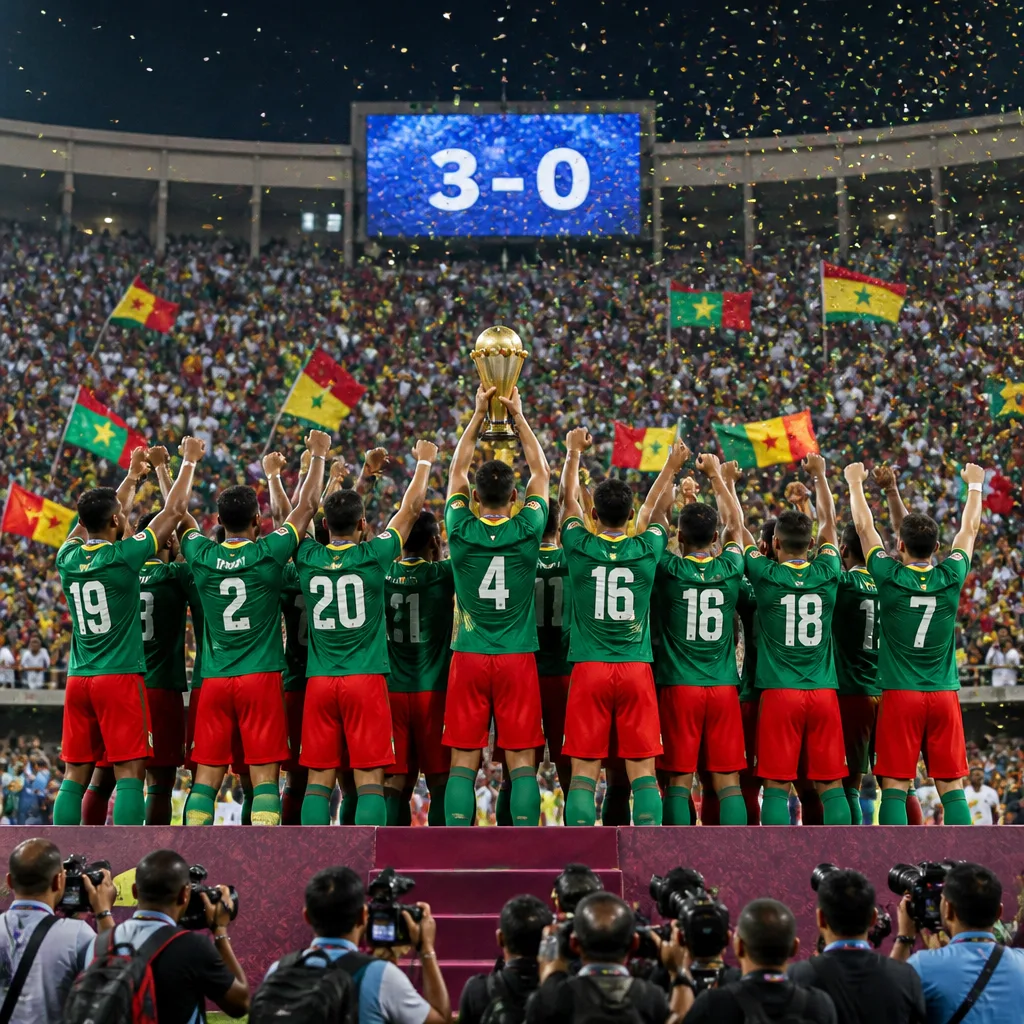
Cameroon were crowned champions of the 2026 Women’s Africa Cup of Nations after a convincing 3-0 victory over Malawi in the final in Morocco, a tournament that underlined how expansion and competitive balance are changing the landscape of women’s football on the continent.
Results, places and the road to the World Cup
The finals in Rabat and Casablanca produced more than just a new name on the trophy. The Confederation of African Football’s decision to move to a 16‑team Wafcon delivered greater unpredictability and, crucially, qualification opportunities for the 2027 Fifa Women’s World Cup.
All four semi‑finalists — Cameroon, Algeria, Malawi and Morocco — clinched places at the 2027 global showpiece. For Algeria and Malawi, it will be a debut on football’s biggest stage.
| Team | Wafcon 2026 outcome | World Cup 2027 status |
|---|---|---|
| Cameroon | Winners (3-0 v Malawi) | Qualified |
| Algeria | Semi-finalist | Qualified (debut) |
| Malawi | Runners-up | Qualified (debut) |
| Morocco | Semi-finalist / hosts | Qualified |
What changed with expansion?
Expanding the tournament to 16 teams — an announcement that came in the middle of qualifying — produced tangible effects. Teams who would earlier have missed out gained a stage on which to test themselves and, in some cases, flourish.
- Cameroon benefited directly: eliminated in the qualifying round by Algeria, they advanced to the finals on the basis of their world ranking and then went all the way to the title.
- Ivory Coast also owed their place to ranking; they topped a group before bowing out in the quarter-finals to Algeria.
- The broader field produced more shocks and narrower margins than the previous edition.
The tournament’s organisers will point to the increased number of high‑level matches as evidence that the expansion supports development. For nations with less international exposure, the group stage was a rare, valuable stretch of competitive fixtures.
Notable performances and shocks
The finals showcased individual talent as well as collective growth. Malawi’s Temwa Chawinga took the tournament’s golden boot, finishing with five goals and two assists, edging out Cameroonian Marie Ngah Manga and Zambia’s Barbra Banda.
There were genuine upsets too: Tanzania shocked South Africa in the group stage, overturning a gap of 65 places in the world rankings to claim victory. That result has direct consequences for Banyana Banyana, who must now navigate an inter‑confederation qualifier to reach the 2027 World Cup rather than qualifying automatically.
The tournament itself faced disruption before a ball had been kicked — it was postponed just 12 days before its original March start — yet organisers and teams adapted and the competition proceeded.
Consequences for South Africa and the continent
For South Africa, the message is clear: margins are narrowing across Africa and complacency is costly. The rise in competitive matches through a larger Wafcon should, in theory, raise standards continent‑wide. But for teams accustomed to automatic berths or fewer surprises, the expanded field requires sustained investment in youth pathways, coaching and match exposure.
For CAF and national federations, the 2026 edition provides evidence that a 16‑team Wafcon can drive development by giving more players and coaches competitive minutes under tournament pressure. Whether that translates into stronger performances at global tournaments will depend on follow‑through at home — leagues, funding and access to international friendlies.
On the pitch, Cameroon’s triumph adds another name to a short list of Wafcon champions and underlines that the title is within reach of nations that prepare well and seize rare opportunities.
For supporters across the continent, the tournament offered fresh storylines and new faces to follow — and a reminder that African women’s football is moving fast. The trick now is to turn the momentum from Morocco into sustainable progress for the next four years.














