
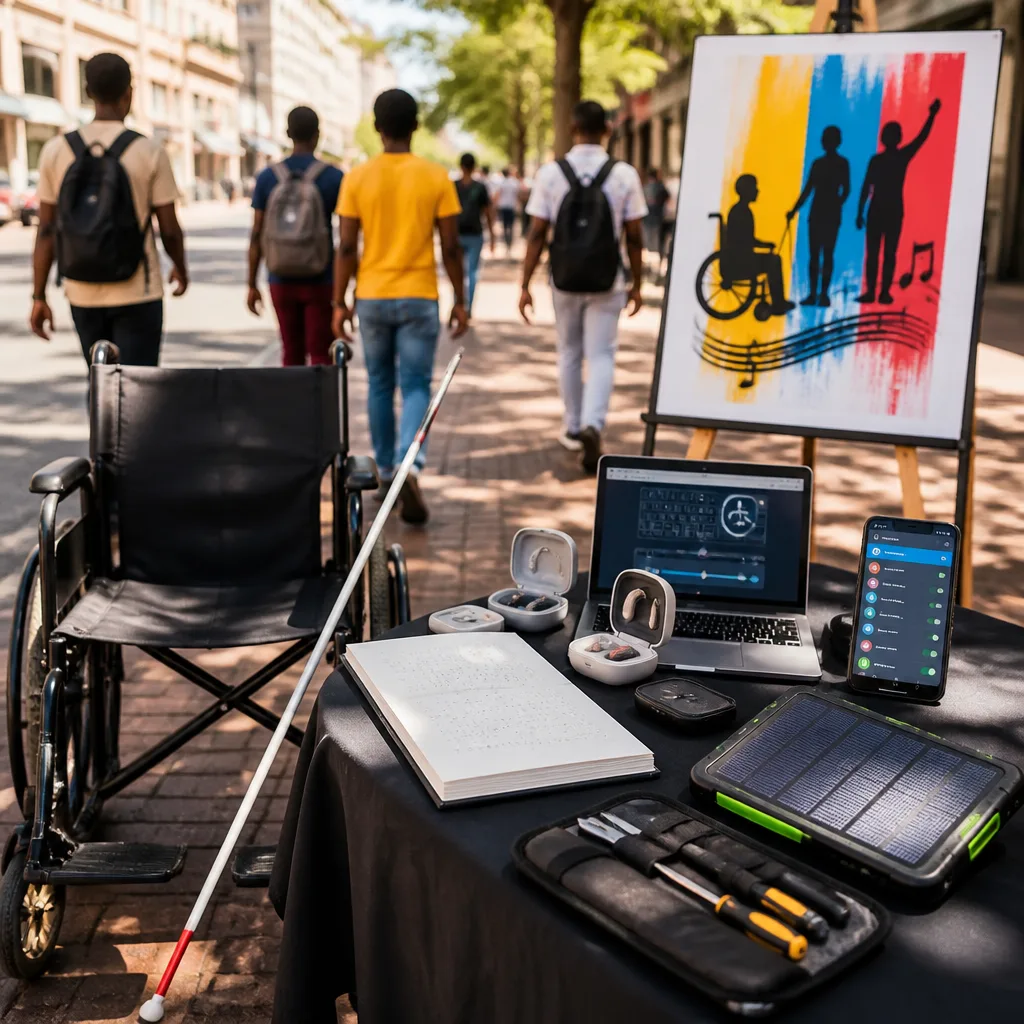
As South Africa prepares to mark Casual Day on 4 September, organisers and disability advocates are urging a rethink of how assistive technology is perceived and provided. This year's theme, "Beat as One: Rhythm Matters", underlines that inclusion requires understanding the different rhythms of people's lives and ensuring access to the tools that let them participate fully in society.
Assistive tech: more than a medical device
Assistive technology includes a wide range of products and services that help people with disabilities to function independently. The category covers both longstanding, non-digital devices and newer digital accessibility tools. Examples raised in recent coverage include screen readers for people who are blind or partially sighted, hearing aids for people with hearing loss, wheelchairs for mobility impairments, braille devices and communication aids.
Advocates warn that these devices are too often framed solely as medical or specialised equipment rather than as enablers of education, employment and social participation. That view, they say, contributes to underinvestment and to access barriers that prevent people from reaching milestones such as completing a university degree, holding meaningful employment, or living independently.
"Beat as One: Rhythm Matters"
A contributor with lived experience, identified as Luigia in the coverage, described how assistive technology has been decisive in her life: it enabled her to finish her studies, live independently and work productively. Her testimony is used to illustrate that assistive technology can be the difference between exclusion and participation.
Why access matters for ordinary South Africans
When assistive technology is available and appropriate, it can transform daily life — from communicating without an interpreter to travelling independently or participating in the labour market. The framing of these tools as optional extras rather than essential infrastructure means many people must rely on personal resilience or patchwork solutions.
For many households on tight budgets, even modest costs associated with assistive devices or the data and power needed to run digital aids create a barrier. The political and service-delivery challenge is to treat assistive technology as part of the broader accessibility and social-protection ecosystem rather than a niche medical expense.
- Education: Screen readers, braille displays and communication aids enable students to access curricula and assessments.
- Employment: Assistive tech can make workplaces accessible, allowing people to use software, communicate and perform tasks independently.
- Independence: Mobility aids and communication devices support daily living and social participation.
Practical categories of assistive technology
| Category | Examples |
|---|---|
| Visual | Screen readers, braille displays |
| Hearing | Hearing aids, captioning services |
| Mobility | Wheelchairs, walkers |
| Communication | Augmentative and alternative communication devices |
| Digital accessibility | Accessible websites, voice assistants, captioning tools |
These categories overlap. For instance, many digital tools require reliable internet, electricity and compatible devices — factors that create additional access hurdles for people in rural areas or those with limited incomes.
Policy and practical implications
Reframing assistive technology from a medical commodity to an essential service would have consequences across procurement, education policy and workplace regulation. Public bodies, educational institutions and employers would need to plan for aligned budgets, training and support so that devices are not only provided but maintained and integrated into daily life.
Campaigns like Casual Day play a role by raising awareness and funds. But advocates say awareness must be matched by policy action: clearer procurement strategies, subsidised access where needed, and stronger enforcement of accessibility standards in public services and digital platforms.
For individuals, the gains are tangible: access to learning, meaningful work and greater autonomy. For society, treating assistive technology as infrastructure rather than charity would help broaden participation and economic opportunity.
As Casual Day approaches, the message from disability advocates is plain: inclusion will not be achieved by goodwill alone. It requires investment in the tools that let people live and work on their own terms.










