The 2026 summer outbreak of cyclosporiasis linked to iceberg lettuce has sickened tens of thousands and exposed the limits of consumer-focused food-safety advice, federal data and public-health officials say.
Scope of the outbreak
The Centers for Disease Control and Prevention reports that the multi-state outbreak tied to one supplier, Taylor Farms de Mexico, produced at least 11,458 confirmed illnesses across 20 states, with 495 hospitalizations and at least two deaths in Michigan. Separately, CDC counted a total of 17,180 laboratory-confirmed cases of domestically acquired cyclosporiasis with onset dates from May 1 through Aug. 31, and noted an additional 11,844 illnesses that still required investigation.
| Measure | Count |
|---|---|
| Confirmed outbreak cases tied to lettuce | 11,458 |
| Total laboratory-confirmed domestic cases since May 1 | 17,180 |
| Hospitalizations | 922 (national total); 495 linked to lettuce outbreak |
| Reported deaths | 2 (in Michigan, outbreak-linked) |
Why common advice may not help
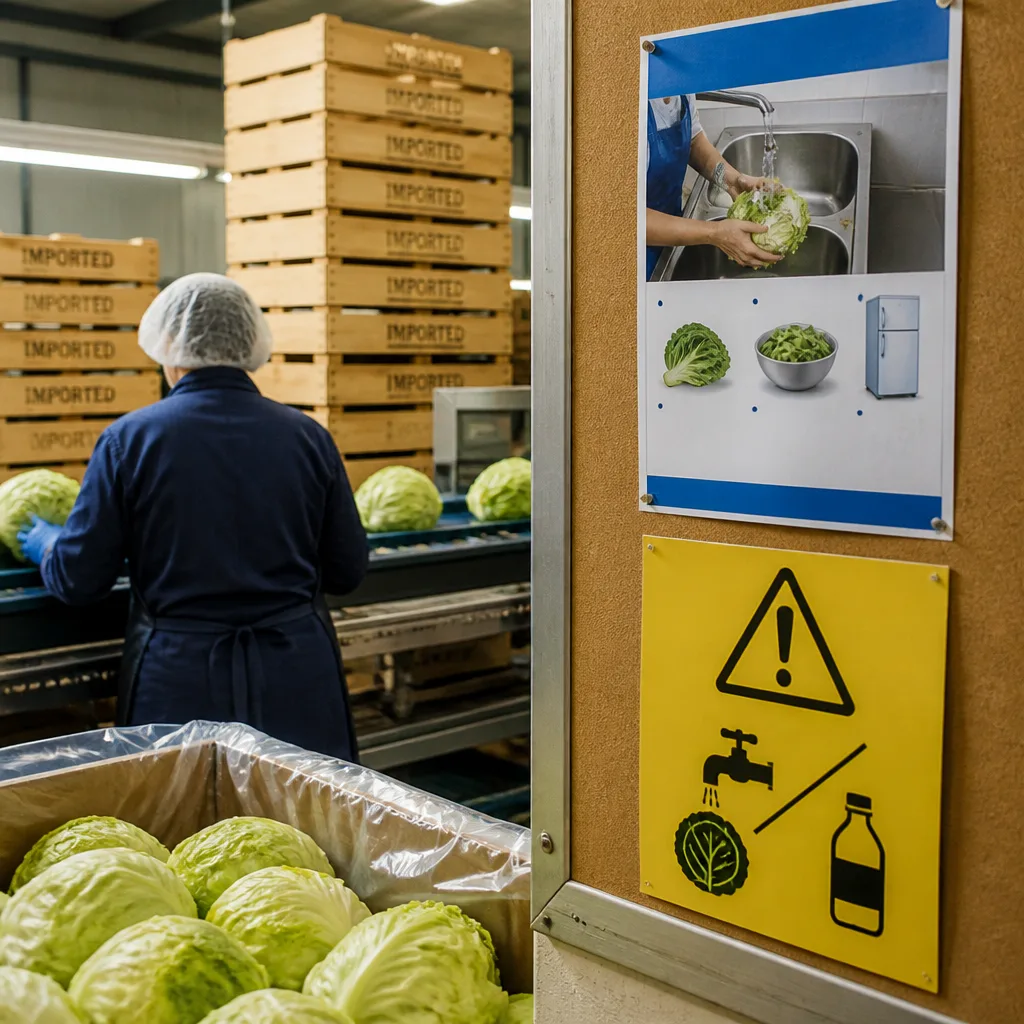
Public messaging that emphasizes handwashing and household food-handling practices — staples of many consumer campaigns including the long-running National Food Safety Education Month each September — is not sufficient against this parasite. Cyclosporiasis is caused by Cyclospora cayetanensis, a microscopic organism transmitted when food or water are contaminated with human feces. The parasite resists ordinary household interventions: washing produce and routine levels of chlorine do not reliably remove or kill Cyclospora.
"Not one of those illnesses would have been prevented by better handwashing."
That distinction matters because national outreach efforts traditionally target the last person who touches food in the chain: consumers, restaurant workers and food handlers. The National Restaurant Association established National Food Safety Education Month in the 1990s to promote safer buying, storage, preparation and serving practices. Government agencies including CDC, USDA and FDA also mount campaigns emphasizing the familiar four messages: Clean, Separate, Cook and Chill.
Public-health consequence and context
CDC data show a sharp rise in domestically acquired cyclosporiasis compared with the same time last year: the agency reported 17,180 confirmed cases since May 1 in 2026, compared with just 1,180 in the same period in 2025. The outbreak underscores that some contamination risks originate earlier in the supply chain — at production, packing or processing — beyond the reach of consumer-level precautions.
- Washing produce does not reliably remove Cyclospora.
- Common chlorine disinfection does not kill the parasite.
- Prevention for this pathogen depends on upstream controls and supplier practices, not only consumer behavior.
The outbreak pattern — with illnesses peaking between June 14 and Aug. 15 for the lettuce-linked cases — highlights how a contaminated batch can affect large populations across many states before detection and public notices lead to recalls or supply changes. Federal agencies differ slightly in how they mark the beginning of National Food Safety Education Month, but all endorse the month as a time to reinforce safe food handling. This year’s outbreak, however, raises questions about the balance between consumer education and regulatory or industry measures aimed at preventing contamination at the source.
Implications for policy and industry
Public-health experts and consumer advocates often say the safest path is to reduce pathogen entry into the food supply through stronger on-farm, packing and processing standards, improved environmental monitoring, and more rapid traceback systems. The numbers in this outbreak point to a broader need for coordination among growers, suppliers, retailers and federal agencies to identify contamination earlier and reduce risk before products reach restaurants and homes.
As National Food Safety Education Month begins this September, officials and industry groups will continue to promote the core consumer messages while also confronting the reality that education alone cannot stop certain foodborne parasites. The task for regulators and businesses is to translate surveillance and laboratory findings into preventive actions upstream in the supply chain so that consumer messaging addresses the hazards people can actually control.