The share of Colorado students missing 10% or more of school days declined modestly in 2025-26 but remains substantially higher than before the pandemic, state figures released Thursday show.
Small statewide improvement masks persistent gaps
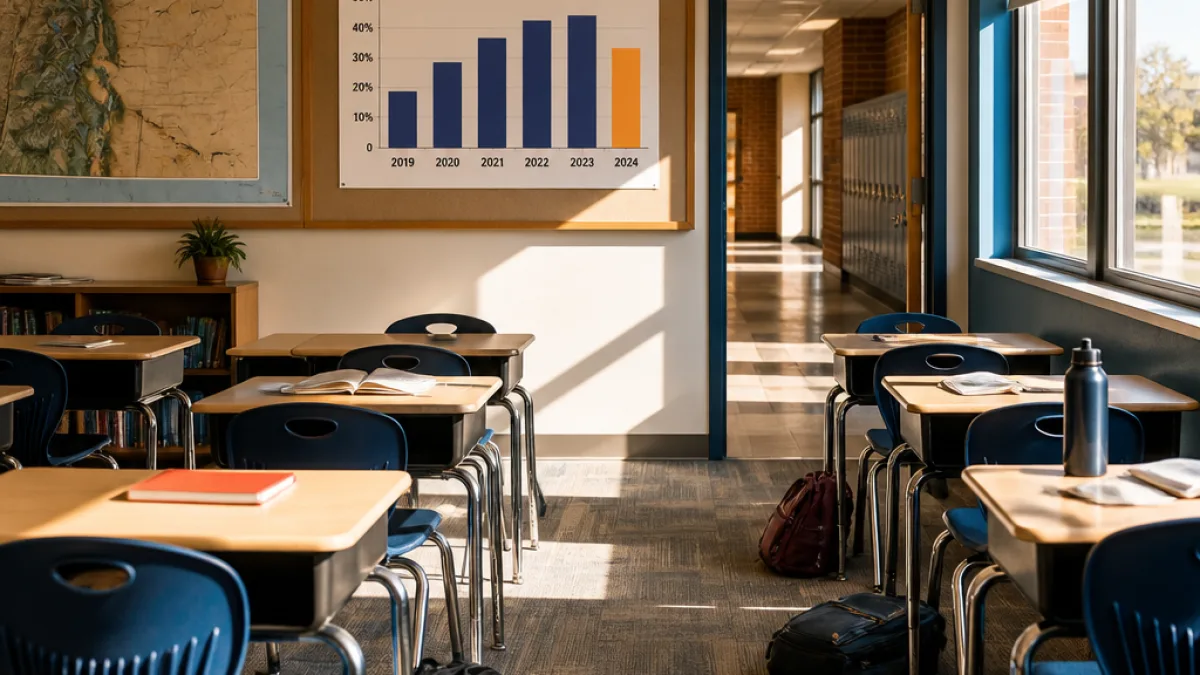
According to data from the Colorado Department of Education, 27.5% of students were classified as chronically absent during the 2025-26 school year. That is a drop from 28.4% in 2024-25, and roughly flat with 2023-24, but well above the pre-pandemic rate of 22.6% in 2019-20.
State education officials set a goal of reducing chronic absenteeism to 15% by the 2027-28 school year, but the most recent data indicate substantial progress will be necessary to reach that target.
Who is missing the most school?
The state report highlights stark disparities by grade level, disability status, income and race. More than 230,000 students missed at least 10% of their school days in 2025-26.
- High school seniors had the highest chronic absenteeism rate of any grade.
- Students with disabilities, English language learners and students from low-income families experienced higher-than-average rates.
- Racial disparities persisted: about 33% of Black students and 37% of Latino students were chronically absent, compared with 20% of white students.
Smaller populations showed extreme rates: Hawaiian and Pacific Islander students had a chronic absenteeism rate of 52.1%, up slightly from 51.1% the prior year. The state noted that group comprises roughly 3,200 students statewide, meaning percentage swings affect a small population but reflect serious attendance challenges.
District-level change and state efforts
The chronic absenteeism rate fell in 109 of Colorado's 182 school districts and boards of cooperative education services. While that indicates progress in a majority of districts, many communities continue to struggle to bring students to school regularly.
In 2024, the Colorado Department of Education launched an attendance campaign called "Every School Day Matters!" aiming to engage districts and improve daily attendance. State officials hoped that 80% of districts would participate; as of the campaign webpage update, fewer than one-third had enrolled.
Why the numbers matter
Educational research and state officials say missing school at high rates increases the likelihood a student will fall behind academically. Chronic absenteeism — defined by the department as missing at least 10% of school days — has been an acute concern across the nation since the disruption of the COVID-19 pandemic.
The slow decline in Colorado's rate reflects mixed progress: some districts managed to reduce absences, while statewide the total proportion of students missing large numbers of days remains elevated. The department’s stated goal of cutting chronic absenteeism to 15% by 2027-28 will require accelerated gains.
| Measure | Rate / Number |
|---|---|
| 2025-26 statewide chronic absenteeism | 27.5% |
| 2024-25 statewide chronic absenteeism | 28.4% |
| Pre-pandemic (2019-20) | 22.6% |
| State goal for 2027-28 | 15% |
| Students missing ≥10% of days (2025-26) | 230,000+ |
Statewide disparities by race and student group underscore that attendance is not evenly distributed. The department's data show declines for Black, Latino and white students compared with the prior year, with Black students experiencing the largest percentage-point drop among those groups, though all groups remain above pre-pandemic levels.
What districts and families can do
While the state has rolled out awareness campaigns, attendance experts recommend a mix of district-led and community-based strategies: targeted outreach to families, addressing transportation and health barriers, school climate improvements, and early warning systems to flag students at risk of chronic absence. The department’s campaign seeks to coordinate some of those efforts, but limited district participation may blunt statewide impact.
With fewer than two academic years remaining before the department's 2027-28 target, school leaders and policymakers will face pressure to scale up interventions and reach students most at risk of long-term disengagement.
As Colorado prepares for the next school year, the latest figures offer a reminder that incremental improvement is possible but achieving substantive, equitable change will require focused action across districts, families and state agencies.