PHOENIX — A federal proposal to reduce allocations from the Colorado River has sharpened fears among municipal leaders, irrigators and small-town officials about how they will secure reliable water in the years ahead.
Widespread reliance, deepening anxiety
The Colorado River supplies water to roughly 40 million people across the U.S. West, including municipal systems, farms and tribal communities. Officials warn that shrinking river flows, driven by long-term drought and increased demand, have left the basin vulnerable and forced difficult planning decisions.
On the outskirts of Phoenix, the mayor of Cave Creek — a town of about 5,000 people — says his community has already implemented measures such as capping growth, reopening old wells and negotiating supply agreements. But he told reporters the town remains unsure whether those steps will be sufficient if deeper cuts are imposed by federal authorities.
“You can see it coming, but you can't get out of the way and you don't know what the damage is going to be,”
That comment, from Cave Creek Mayor Robert Morris, captures the uncertainty facing local leaders who must weigh infrastructure investments and potential restrictions against unknown future cuts.
Potential impacts across sectors
The federal plan could trigger reductions that ripple through municipal water delivery, agriculture and industry. Some communities already have enacted conservation actions this year, and agricultural producers are re-evaluating which crops remain economically viable under constrained supply.
State water officials warn that the uncertainty will continue to grow. Tom Buschatzke, director of the Arizona Department of Water Resources, said the outlook is troubling for planners who must make long-term decisions without a clear sense of how severe future cuts will be.
- Cities: Municipal systems may face reduced allocations and higher costs as they tap backup supplies or invest in new infrastructure.
- Farms: Growers are determining which crops can withstand lower water deliveries and whether to fallow land.
- Tribal nations and downstream users: Tribes and Mexico remain part of the negotiations over shared water supplies and potential impacts.
Legal and political tensions escalate
The federal approach has also prompted legal challenges. Nevada this week filed suit against the Interior Department and the U.S. Bureau of Reclamation, arguing the state’s basic water needs could be unmet if it must absorb planned reductions of up to 70% in the coming decade. The Bureau declined to comment on pending litigation.
The lawsuit underscores how contentious allocation decisions have become as states, local governments and water users jockey to protect supplies. Officials say litigation and negotiations are likely to continue as stakeholders seek clarity and protections.
Reservoirs serve as barometers
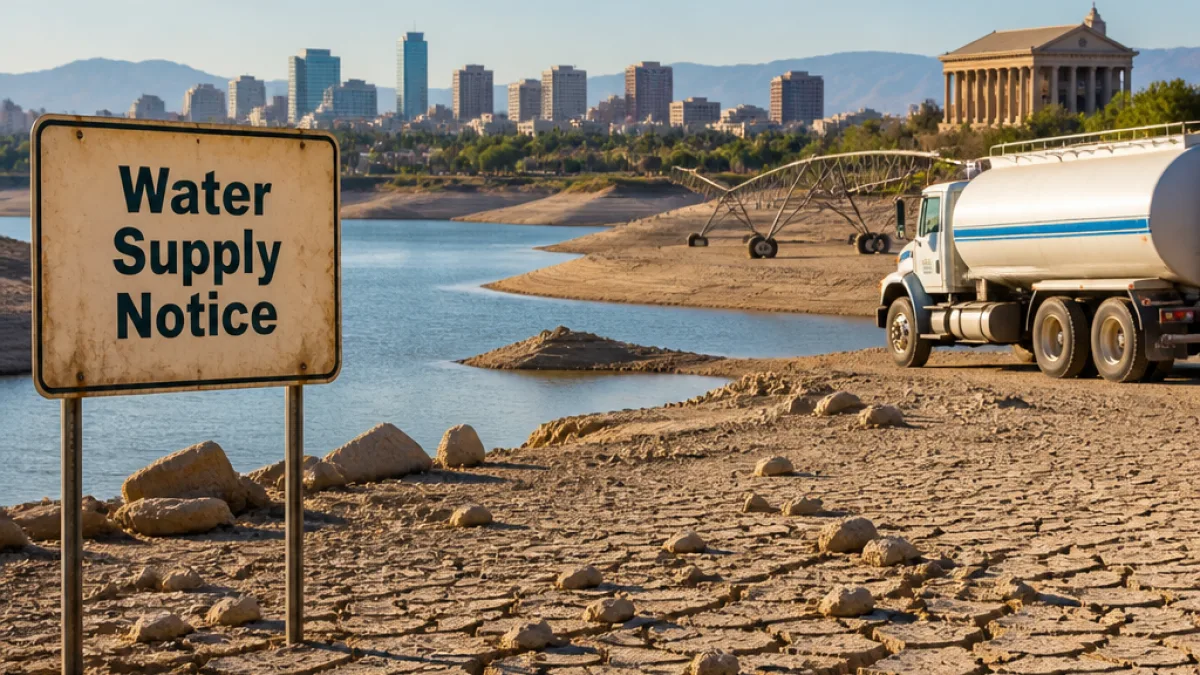
Water managers point to the two largest reservoirs on the Colorado River system — Lake Mead and Lake Powell — as critical indicators of basin health. Both have recently fallen to record-low levels, signaling diminished capacity to buffer dry years.
| Measure | Reported detail |
|---|---|
| People served | About 40 million |
| Cave Creek population | About 5,000 |
| Potential reductions cited in Nevada suit | Up to 70% |
Local planning under strain
Some communities are turning to a mix of strategies to buffer against uncertainty: reviving groundwater wells, entering long-term supply agreements, restricting growth, or investing in conservation and reuse programs. Yet these measures often come with significant costs and political trade-offs.
Experts caution that without coordinated, basinwide action and clearer federal guidance, local planners will continue to face unpredictable conditions that complicate water management and economic planning.
What this means for Colorado
For Colorado communities that rely on Colorado River system allocations, the plan underscores the need to reassess water priorities and accelerate conservation efforts. Officials here and across the basin will be watching litigation, federal guidance and reservoir trends closely as they develop contingency plans.
As policymakers and water managers navigate a future with reduced supplies and higher stakes, households and businesses may face rising costs, altered irrigation schedules and tightened municipal restrictions. The coming months are likely to bring further negotiations and legal maneuvers as states and stakeholders seek to protect critical supplies for their communities.
Hannah Sorensen is a state correspondent for WE NEWS.