Ontario Premier Doug Ford called on the United States and Canada to reach a negotiated trade deal Sunday as relations between Ottawa and Washington deteriorated into public insults and dramatic tariff announcements.
Economic stakes and public sparring
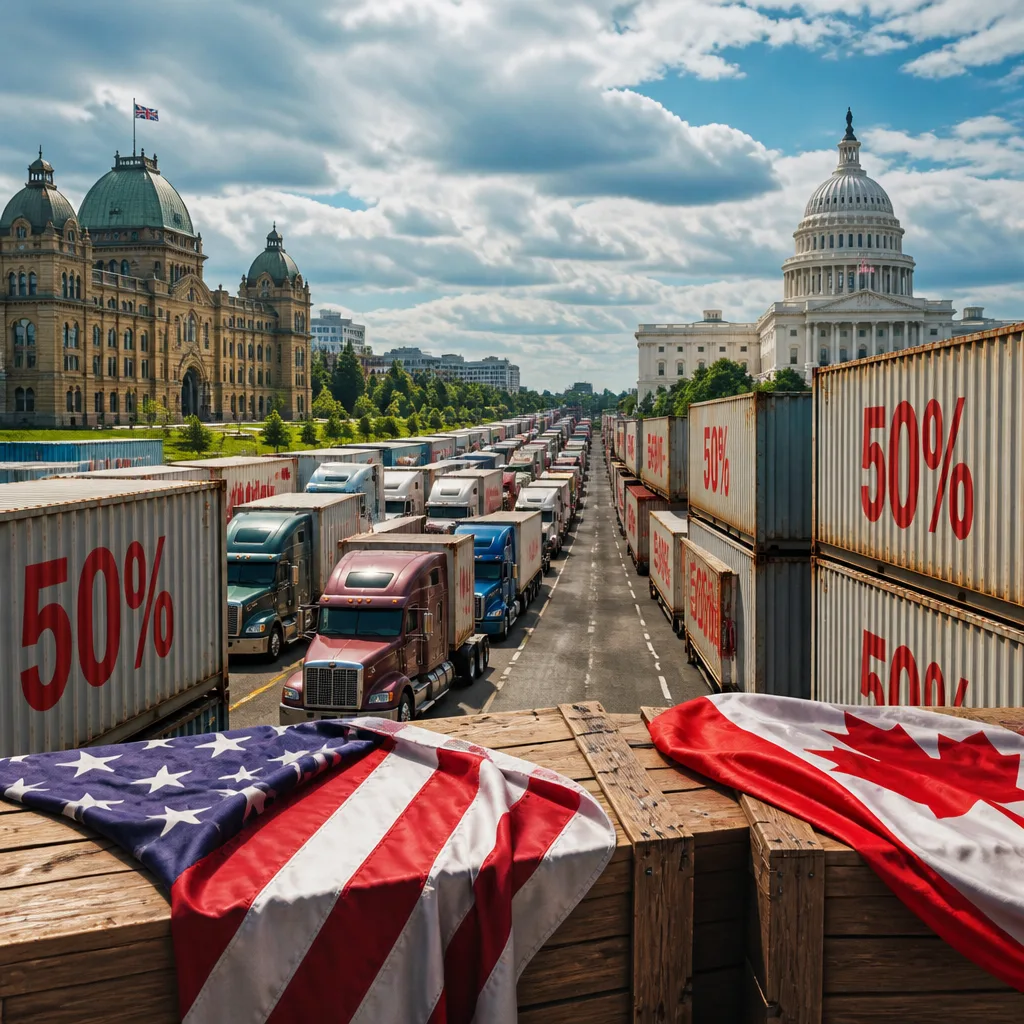
In an interview that aired on ABC News’ “This Week,” Ford said the two countries’ economies are tightly intertwined and that a deal is needed that benefits both nations. The plea followed President Donald Trump’s announcement of new 50 percent tariffs on about $20 billion in Canadian goods, and Ottawa’s vow to retaliate on a “dollar for dollar” basis.
“We’re allies. We’re best friends. Our trading is so integrated. We need to get a deal that’s beneficial for both countries,”
Ford, the premier of Canada’s most populous province, also reflected on the escalating personal exchanges between him and the president, acknowledging that he too had responded in kind. He told ABC that while it was “unfortunate” that the rhetoric had become heated, standing up to repeated attacks on his country required response.
Timeline and measures
Trade talks between the two countries collapsed on Aug. 22. Days later, the Trump administration announced the steep tariffs affecting a range of products, and Canada signaled it would match penalties on an equivalent value of U.S. goods. The U.S. statement accompanying the tariffs included a list of targeted categories such as whisky, dairy products and clothing.
| Action | Scope |
|---|---|
| U.S. tariffs | 50% on about $20 billion in Canadian goods (including whisky, dairy and clothing) |
| Canada’s response | Retaliation vowed on a “dollar for dollar” basis |
The dispute has spilled beyond trade policy. The two leaders have exchanged personal barbs in public and on social media, with Trump referring to Ford as “Flunky, Ford” and “unimpressive” in recent remarks. Ford, in turn, has labeled Trump a “dictator,” “king of bankruptcies” and a “bully,” according to remarks aired and reported this week. The exchanges included an unusual move by the president renaming Lake Ontario to “Lake America” through an executive order, a symbolic step that underscored the depth of discord.
Political and practical consequences
Ford emphasized that the dispute is harming people on both sides of the border, arguing that integrated supply chains and cross-border commerce make steep tariffs costly for workers and consumers in the United States and Canada alike. The measures come against the backdrop of ongoing political maneuvering: Ford has positioned himself as a vocal critic of the president’s approach, while federal Ottawa has signaled readiness to retaliate economically.
- Tariffs target sectors that support manufacturing, agriculture and retail trade across North America.
- Retaliatory actions could hit U.S. exporters in politically sensitive industries.
- Escalation heightens pressure on negotiators to revive talks or seek third-party mediation.
Analysts say protracted retaliation could raise prices for consumers and disrupt supply chains that have become deeply integrated over decades of cross-border commerce. Ford’s public appeal seeks to reframe the confrontation as solvable through negotiation, even as both sides stake out hard positions.
The coming days will likely test whether cooler heads in Ottawa and Washington can restore a negotiating track after the breakdown of talks on Aug. 22, or whether tit-for-tat measures will widen the dispute and add friction to an already complex bilateral relationship.
Ford’s interview suggested an opening for diplomacy, but the presence of steep tariffs and reciprocal threats means the window for quick de-escalation may be narrow without a substantive shift in negotiating stances.