
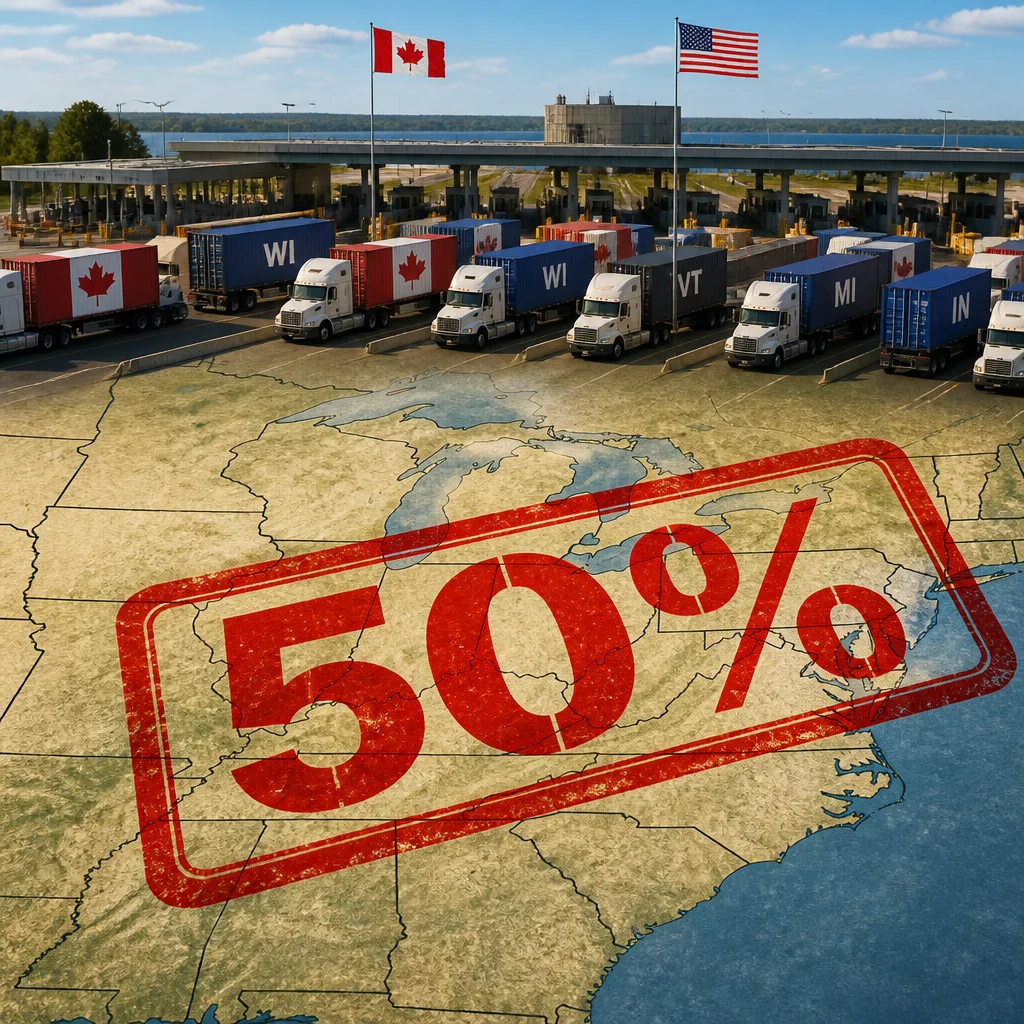
Canada on Tuesday unveiled retaliatory import duties of up to 50% on about $20 billion of U.S. goods, a step Ottawa described as a strategic effort to pressure the Trump administration that economists say could disproportionately affect states in the Midwest and Northeast.
Ottawa frames tariffs as targeted pressure
Canada’s industry minister, Melanie Joly, signaled that the duties were selected to apply political leverage. “
We are picking products that will target states in the U.S.,”Joly said when announcing the measures, adding that the government aimed to be “wise and strategic to put political pressure.”
The retaliatory duties are a response to earlier U.S. action: the Trump administration’s announcement of 50% tariffs on certain Canadian products, and a separate declaration that 50% tariffs on Canadian automotive and steel imports would take effect on Jan. 1, 2027, if no deal is reached.
Which U.S. industries and regions are most at risk
Canadian officials said the new import duties would be applied to more than 800 types of U.S. goods. Economists and analysts cited in the announcement warned the measures could hurt specific sectors and states, including:
- American-made cheddar cheese, raising concerns for dairy producers in Wisconsin and Vermont.
- Steel and aluminum products that could affect manufacturers in states such as Michigan and Indiana.
- Other manufactured goods and specialty products representative of state export portfolios targeted by Ottawa’s selections.
Canada is an important market for many U.S. states: government data cited by analysts show Canada is the top export destination for businesses in 27 states. While some states are highly reliant on trade with Canada, not all exports are vulnerable: for example, much of North Dakota’s nonfuel exports are agricultural commodities — soybeans, wheat and similar products — that are exempt from the new duties.
| Sector | States Called Out by Analysts | Potential Impact |
|---|---|---|
| Dairy (cheese) | Wisconsin, Vermont | Price pressure, market access concerns for producers |
| Steel & Aluminum | Michigan, Indiana | Supply-chain and manufacturing cost disruptions |
| Agriculture (exempt) | North Dakota | Major exports largely unaffected by new duties |
Political and economic consequences
Analysts said the tariffs appear calibrated not only to inflict economic pain but to exert pressure in political terms — potentially targeting states with competitive races or policy influence. That strategy is consistent with Ottawa’s stated goal of creating leverage in negotiations with Washington.
Economists warn that a prolonged tit-for-tat escalation could damage both economies. The measures come amid a broader trade confrontation that, if sustained, would raise costs for producers and consumers on both sides of the border and could complicate supply chains that span the U.S.-Canada border.
For U.S. exporters and state officials, the immediate challenge will be assessing exposure and seeking ways to mitigate near-term disruption. Industries that rely on cross-border supply chains may face higher input costs or lost market share if Canadian buyers shift to other suppliers or if logistical barriers increase.
As the two countries move through this next phase of trade retaliation, attention will focus on whether negotiations can defuse the dispute before the tariffs take a deeper toll on regional economies and upcoming political contests.
Reporting based on statements and data released by Canadian and U.S. officials and economic analysts cited in the public announcement.

















