
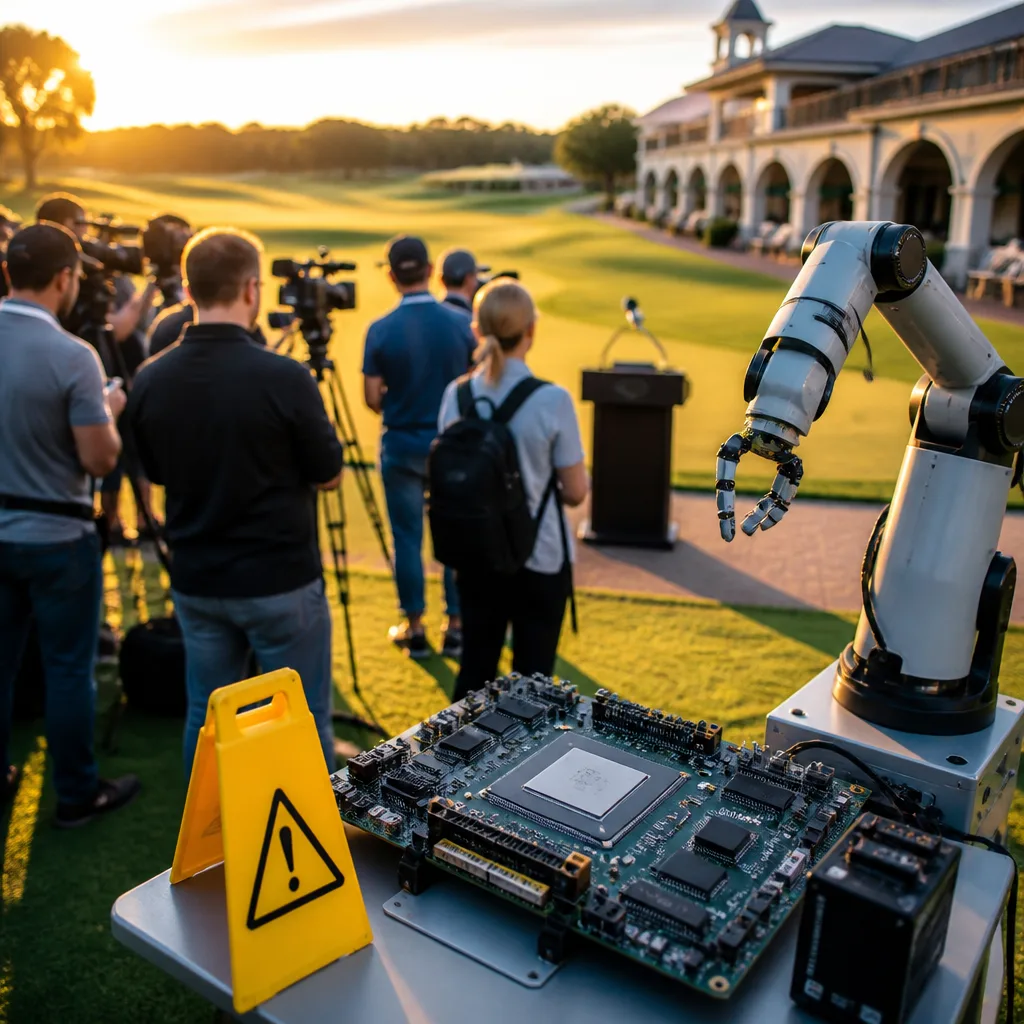
President Donald Trump downplayed concerns about the risks posed by advancing artificial intelligence on Sunday, asserting the United States remains the global leader in the technology as some of the industry’s most prominent executives urged a deliberate pause and tighter safety steps.
Leaders call for caution; president stresses competition
In remarks to reporters at the Irish Open, the president emphasized U.S. dominance in AI and framed leadership in the field as a national security and economic priority. "Whoever wins AI wins," he said, adding that the country can implement protections without slowing progress.
"We're leading China in AI. We're the most sophisticated country in the world, and frankly, I want to keep it that way because whoever wins AI wins," the president said.
At the same time, influential figures inside the AI industry have publicly urged a more measured approach to rolling out the most advanced models. Dario Amodei, chief executive of Anthropic PBC, published a detailed blog post advocating that development be slowed and that companies coordinate globally on safety steps. OpenAI chief Sam Altman and tech entrepreneur Elon Musk signaled their support for Amodei’s recommendations.
Proposed industry steps and government reaction
Amodei’s proposal includes measures such as introducing new safety protocols and allowing independent, third-party evaluators access to advanced models — a step national officials described as a potential template for private-sector behavior.
National Economic Council Director Kevin Hassett said the proposal could function as a model for industry conduct. Speaking on Fox News Sunday, Hassett called the challenge of AI safety "a solvable problem" and noted both the rapid pace of AI advancement and parallel efforts by companies to develop mitigations.
Hassett said AI is advancing rapidly enough to potentially overcome existing cybersecurity defenses, but that companies are also developing new safeguards.
While top executives have signaled agreement with additional safety measures, questions remain about how far companies will go in moderating the development of highly profitable, next-generation systems. The industry’s commercial incentives have prompted scrutiny about whether public endorsements of safety will translate into sustained, verifiable restraint.
Who’s calling for a slowdown
Key industry leaders who have joined the call for slower or more cautious development include executives from major AI development firms and startups. The following table summarizes the principal figures referenced in recent public statements.
| Individual | Role | Position on Pace |
|---|---|---|
| Dario Amodei | CEO, Anthropic PBC | Called for slowing development; proposed safety steps |
| Sam Altman | CEO, OpenAI | Endorsed Amodei’s safety proposals |
| Elon Musk | CEO, xAI Corp. | Supported call for slower pace |
Implications for policy and industry behavior
The unfolding conversation has implications for both regulatory strategy and industry governance. If major AI developers implement third-party evaluations and increased transparency, those practices could shape voluntary norms and ease pressure for immediate regulatory intervention. Conversely, if public commitments do not translate into meaningful checks on deployment, lawmakers and regulators may face renewed calls to act.
- National competitiveness: The administration is positioning AI leadership as central to U.S. strategic advantage over China.
- Industry self-regulation: Leaders have proposed independent audits and safety protocols but face skepticism about follow-through.
- Policy options: Federal officials note private-sector moves could inform regulatory frameworks while emphasizing the need for safeguards.
For now, the debate highlights a broader tension at the intersection of innovation and safety: balancing the desire to maintain a competitive edge in AI with calls from experts and executives for deliberate, coordinated measures to reduce potential harms.
As executives and federal officials continue to outline their positions, the next steps will determine whether voluntary private measures, new regulatory frameworks or a combination of both will govern the rollout of powerful AI systems.















