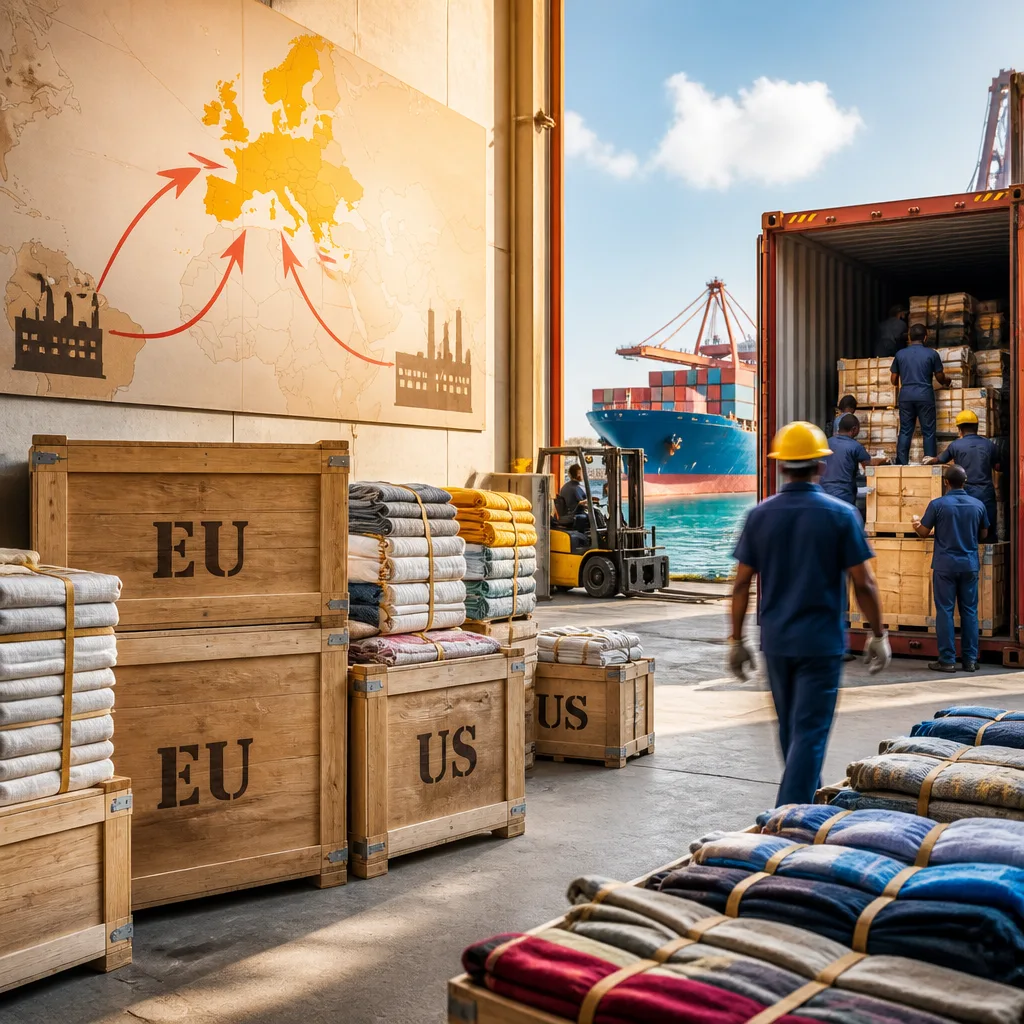
Raymond Lifestyle said it expects European markets to represent approximately 20–25% of its export volumes within the next two years, signaling a notable rebalancing of the company’s international footprint away from heavy reliance on the United States.
Company strategy and market shift
The move comes as Indian garment exporters reassess their exposure to U.S. demand following tariff-related disruptions and as trade agreements with the United Kingdom and the European Union create new openings in Europe. Presently, Raymond derives about 65% of its exports from the U.S. and roughly 17% from Europe. Leadership anticipates the U.S. share will fall to roughly 55–60% while Europe’s slice grows as new relationships are established.
European interest has already shown measurable momentum: the company reported double-digit increases in enquiries after the trade accords were announced, and roughly 30% of those enquiries have converted into orders so far. Demand has been especially strong from the United Kingdom, and Raymond has added customers in Poland, Germany and France.
“The combination of new European customers and trade agreements could provide a ‘double boom’ for the business,”
To support that anticipated growth, Raymond is expanding production capacity abroad and at home. The firm is scaling output at its manufacturing site in Ethiopia and plans to more than triple capacity at its Andhra Pradesh plant, increasing the number of production lines to 10 within two years.
Exports, revenues and sector context
Exports accounted for about one-fifth of Raymond Lifestyle’s revenue in fiscal 2026. The company supplies both its own brands — including Park Avenue and ColorPlus — and international retailers such as JCPenney and Charles Tyrwhitt.
At the sector level, government data show that India’s textile and apparel shipments to its 10 largest European markets rose by 9% to Rs 69,445 crore (about US $7.29 billion) in FY2026, while exports to the U.S. fell 7% in the same period. The United States remains the single largest market for Indian textile and apparel exports, accounting for just over a quarter of the country’s total.
| Metric | Current | Target / FY2026 |
|---|---|---|
| Share of exports to U.S. | ~65% | ~55–60% (expected) |
| Share of exports to Europe | ~17% | 20–25% (target) |
| India apparel exports to top 10 EU markets (FY2026) | Rs 69,445 crore (up 9%) | |
Operational response and implications
Expanding production in Ethiopia and ramping up lines in Andhra Pradesh reflect a two-pronged operational response: diversify geographic manufacturing to mitigate country-specific risks and boost capacity where lead times and costs align with customer demand. The Andhra Pradesh expansion — from current levels to 10 production lines — aims to handle anticipated order volumes as European clients convert enquiries into contracts.
- Customer wins: New accounts in Poland, Germany and France bolster broader European penetration.
- Conversion rate: About 30% of recent European enquiries have already become orders.
- Revenue mix: Exports were roughly 20% of Raymond Lifestyle’s revenue in FY2026.
For India’s apparel sector, Raymond’s shift is emblematic of a broader recalibration. Export patterns are sensitive to trade policy, tariff schedules and preferential access; firms that can pivot their sales networks and scale production quickly may capture near-term gains as Europe’s demand rises. At the same time, a reduced share of U.S. business underscores ongoing volatility in that market.
As Raymond pursues its target, the industry will watch how rapidly the company can translate increased enquiries into durable customer relationships and whether capacity expansions keep pace with order books. The combination of trade deals and new clients presents an opportunity — but execution on manufacturing scale-up and supply-chain reliability will determine whether that opportunity yields sustained growth.