
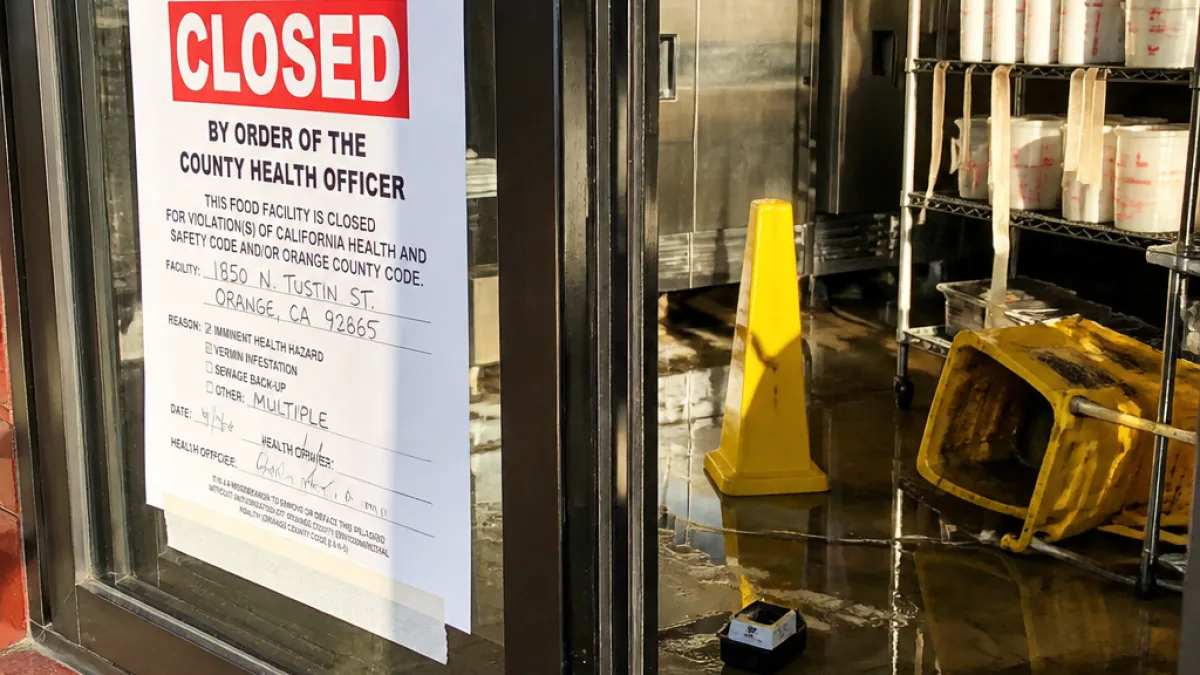
Orange County health inspectors ordered a string of restaurants and food vendors to stop operations between Sept. 10 and Sept. 17 after finding conditions that posed potential health risks to patrons, according to a county report published this week. The closures touched a range of businesses across the county, including several in cities Orange residents frequent.
"Restaurants and other food vendors ordered to close and allowed to reopen by Orange County health inspectors from Sept. 10 to Sept. 17."
Problems cited ranged from pests to plumbing failures
Inspections identified a variety of violations that prompted immediate closure orders. Several businesses were shuttered because of pest infestations: inspectors found cockroaches at multiple sites and rodent activity at others. Facilities were also closed for lack of hot water, broken water supplies and a sewage overflow at a country club snack bar.
Some of the named locations that were ordered closed — and later allowed to reopen after corrective measures — include:
- Ace Liquor, Westminster — closed Sept. 17 for a cockroach infestation; reopened Sept. 18.
- Food sales at 1st. & Fair Market, Santa Ana — closed Sept. 16 for rodent infestation; reopened Sept. 18.
- Guckenheimer at Alcon, Irvine — closed Sept. 16 for a cockroach infestation; reopened Sept. 17.
- Pelicana Chicken at The Source, Buena Park — closed Sept. 15 for a cockroach infestation; reopened Sept. 17.
- Snack bar at Mesa Verde Country Club, Costa Mesa — closed Sept. 15 for sewage overflow; reopened the same day.
Which closures affected the Orange area and what to watch for
While none of the listed closures were at restaurants with an Orange address, several were in nearby cities — Santa Ana, Buena Park, Westminster and Irvine — that draw customers from the city of Orange. County inspectors reported that many establishments were allowed to reopen within days after they corrected the cited conditions.
Residents should be aware that closures for issues like pest infestation and sewage overflow indicate conditions that can increase risk of foodborne illness. Common signs that a restaurant may have sanitation problems include visible pests, foul odors, inconsistent hot water, and standing sewage or blocked plumbing. Patrons who notice these should consider leaving the premises and reporting the issue.
How inspections and reopenings work
Under county procedures, health inspectors can order an immediate closure when they encounter imminent public health hazards. Businesses typically may resume operations only after an inspection confirms that corrective actions have been completed. The recent list shows several food vendors were allowed to reopen after inspections confirmed the issues were addressed.
| Violation type | Examples from Sept. 10–17 list |
|---|---|
| Pest infestation | Cockroaches and rodents at multiple sites (Ace Liquor, Saigon 9, Food sales at 1st. & Fair Market) |
| Plumbing/Water problems | No hot water, no water supply, sewage overflow (Les Amis, La Cosina De Marielita, Mesa Verde snack bar) |
The county periodically publishes lists of enforcement actions. Keeping up with those reports can help consumers make informed dining choices and hold operators accountable for maintaining safe conditions.
What residents can do
- Check the county environmental health website for the latest inspection reports and closure lists before dining out.
- Report concerns to the Orange County Health Care Agency if you observe conditions that look unsafe or unsanitary.
- If you suspect you’ve become ill after eating at a restaurant, seek medical attention and notify public health officials so they can investigate.
The week’s closures underscore the ongoing role of environmental health inspectors in protecting the public. For Orange residents who dine out regularly, the county’s inspection postings provide a public record of where problems have been found and when they were corrected.

















