
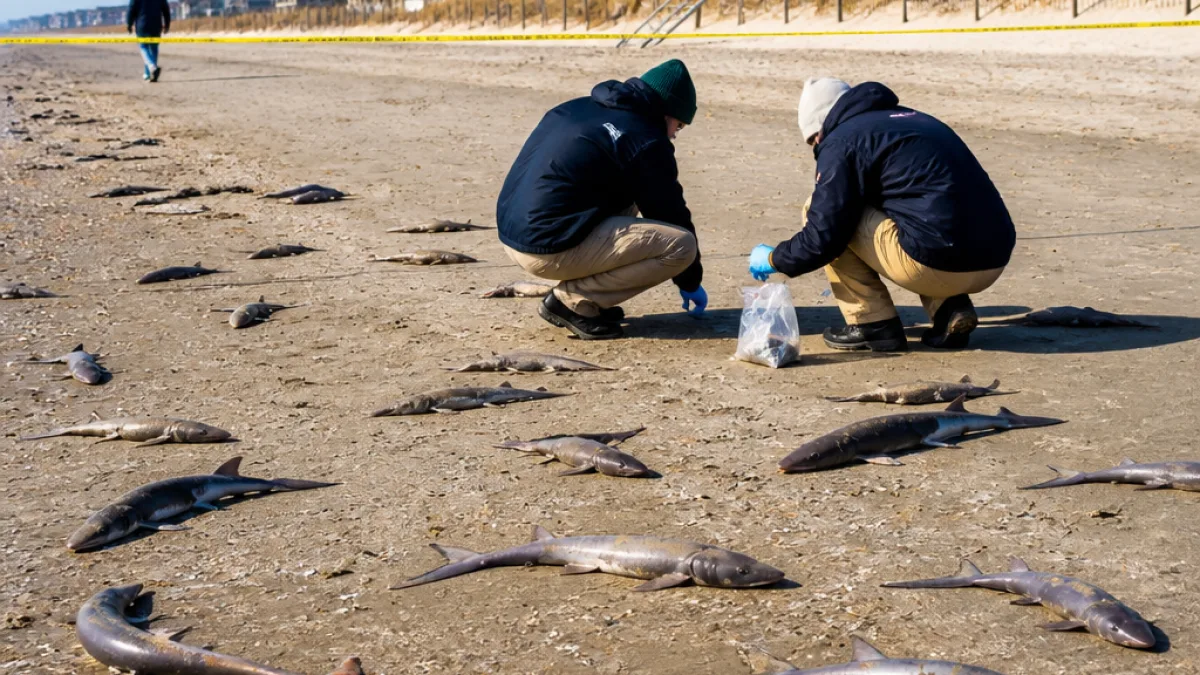
SEA ISLE CITY — Nearly 30 small dogfish sharks were found dead along a stretch of beach in Sea Isle City on Wednesday, scattering across roughly 10 blocks of shoreline and prompting residents and state officials to investigate what caused the unusual washup.
Residents alarmed after morning walk reveals dozens of carcasses
Michelle Greenling said she discovered the animals while walking the beach early Wednesday. She described seeing a concentration of small sand sharks and recognized the scene as out of the ordinary for an otherwise typical summer morning.
"All of a sudden, you start seeing a concentration of small sand sharks, and I thought, 'Well, this is odd,'"
The array of animals stretched along a sizable portion of the city’s beachfront, and photos taken at the scene circulated on local social media, drawing questions from residents and visitors about public safety and the possible causes.
Marine scientists weigh likely explanations
Stephen Nagiewicz, a marine scientist at Stockton University, said the species involved is common in New Jersey waters and typically forms large schools numbering in the hundreds or thousands. That makes a mass mortality of several dozen visible on a single beach surprising but not inexplicable.
Nagiewicz told reporters a few scenarios could account for the beachings. He said a widespread toxin or pathogen in the water would be one explanation, but he deemed that less likely given the absence of human illnesses linked to the event. He suggested a more plausible cause could be accidental capture by fishing gear, followed by discarding or loss of nets, which would allow the animals to float and wash ashore.
"They dumped them over the side or lost a net with all the things in there by accident, and all those sharks just floated up on the beach with the tides,"
State wildlife agency notes seasonal strandings can occur
The New Jersey Division of Fish and Wildlife said small sharks such as dogfish and other species commonly forage close to shore during the summer. In some cases, animals can become trapped near sandbars as the tide goes out and strand on beaches.
The Department of Environmental Protection had not returned requests for comment on whether similar strandings were reported elsewhere along the coast as of Wednesday afternoon. The Division of Fish and Wildlife said it is continuing its review to determine whether the event is isolated or part of a broader pattern.
What officials and scientists are looking at
Investigators are considering several possibilities while examining the carcasses and gathering environmental information:
- Accidental capture and discard from commercial or recreational fishing gear
- Natural stranding due to tides and sandbar dynamics
- Environmental contamination or disease, pending toxicology and pathology results
State and local officials have not released laboratory results or confirmed whether necropsies will be performed on the animals. Those tests — if conducted — can take days to weeks to complete and may require coordination with academic or state labs.
Public health and beachgoer guidance
While an event involving dozens of dead sharks is alarming visually, there is no indication so far that swimmers or beachgoers are at risk. Nagiewicz noted that a waterborne cause would likely produce human illnesses, which have not been reported. Still, local authorities typically advise the public to avoid contact with dead wildlife and to report sightings to state or municipal agencies so specimens can be documented and, if necessary, collected safely.
| Detail | Reported information |
|---|---|
| Species | Small dogfish / sand sharks |
| Number found | Nearly 30 |
| Stretch of beach | About 10 blocks in Sea Isle City |
Next steps and community concern
Officials with the New Jersey Division of Fish and Wildlife and the Department of Environmental Protection said the matter remains under investigation. Residents have expressed concern about the spectacle and sought clearer information from authorities about potential causes and any immediate risks.
For now, the likely explanations offered by local scientists and wildlife officials center on fishery interactions and tidal stranding behavior that can occur in summer months. Determining a definitive cause will depend on further examination and any testing officials elect to pursue.
State and local agencies encouraged anyone who finds additional dead marine animals to report them through the Division of Fish and Wildlife so investigators can track and respond to potential patterns along the coast.
Rohan Iyer is the WE NEWS state correspondent covering environmental and coastal issues in New Jersey.
















