
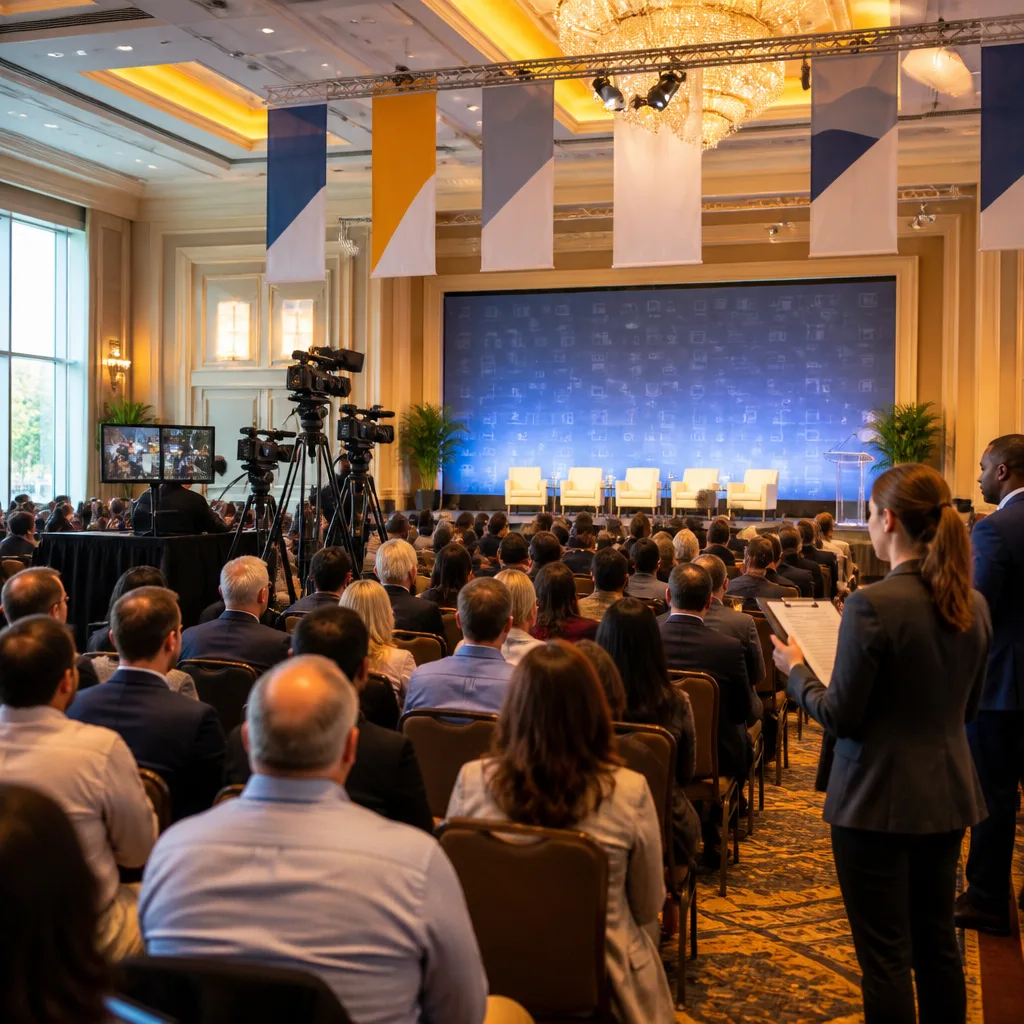
Publishers are increasingly treating live events as core businesses rather than sidelines, turning in-person gatherings into a major revenue engine as advertising and search-driven traffic decline.
Publishers expand event portfolios to offset digital headwinds
Time expects events and related digital revenue to make up about 50% of its total revenue in 2026, up from 28% in 2023, the company told TheWrap. The publisher plans to produce 47 events this year, compared with 11 in 2022. Axios is also increasing its events business: Axios Live revenue is up more than 30% so far in 2026; the company held 160 events in 2025 and has produced 106 to date in 2026.
The shift comes as publishers confront a changing distribution landscape. Chartbeat reported that Google Search pageviews to publishers fell 34% year over year, a decline the industry attributes in part to AI-generated answers and evolving search behavior that reduce referral traffic publishers have long relied on to monetize content.
“Brands are absolutely allocating more of their marketing budgets to live events,” Chris Weil, founder and co-CEO of Horizon Sports & Experiences, told TheWrap.
That advertiser appetite matters. Live gatherings create direct relationships with audiences, diversify revenue beyond ad impressions and pageviews, and produce content that can be repurposed across platforms. For publishers facing volatility in programmatic ad markets and platform-driven referral flows, events offer sponsorship inventory, ticketing revenue, and opportunities to sell higher-margin digital experiences tied to the live programming.
Different strategies, common goals
Publishers are approaching events with varying scales and formats. Some are pursuing broad portfolios of conferences and forums; others focus on smaller, tentpole gatherings. The reporting shows:
- Scale players: Time and Axios are scaling events aggressively to capture sponsorships and build repeatable franchises.
- Curated approaches: The Atlantic and other outlets are concentrating on flagship, tentpole events rather than high-volume slates.
- Audience extension: Broadcast and cable brands use events to deepen ties with television viewers and to produce crossover content.
Beyond direct revenue, events can generate editorial and commercial content that “travels beyond the room,” enabling publishers to monetize follow-on digital products such as podcasts, newsletters, and video series.
| Metric | Figure |
|---|---|
| Time — events share of revenue (2026) | 50% |
| Time — events share of revenue (2023) | 28% |
| Time — planned events (2026) | 47 |
| Axios — revenue change (2026 YTD) | +30% |
| Axios — events (2025) | 160 |
| Google Search pageviews to publishers (YoY) | -34% |
For brands and sponsors, live events offer control and measurability that digital display advertising has sometimes failed to provide. Event sponsorship packages can combine in-person activation with digital distribution, data collection and bespoke content that aligns with brand strategies.
But scaling events is not without risks: production costs, ticket-sales volatility, sponsorship market competition and logistical complexity can pressure margins. Publishers will need to balance investment in live programming with editorial priorities and long-term audience development.
As publishers diversify, the industry’s pivot underscores a broader recalibration of how journalism is monetized in an era of changing platform economics. Events are increasingly central to that strategy, offering publishers an alternative revenue base that does not depend solely on a user clicking through from a search result or scrolling past an ad.
How sustainable the model will be as more media companies chase in-person revenue remains to be seen; for now, major outlets are betting that events and the content they generate can stabilize and, in some cases, substantially grow their bottom lines.
















