
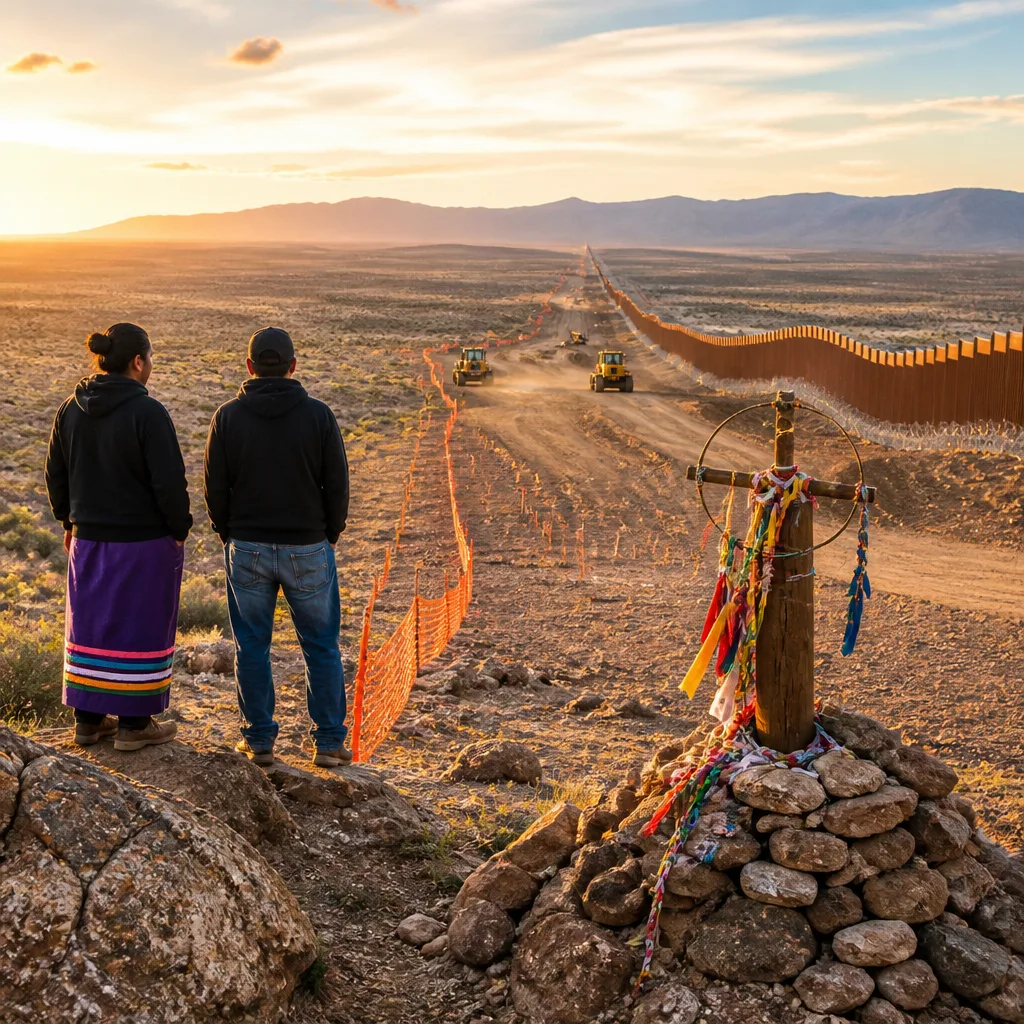
A federal judge has denied a request by the Tohono O’odham Nation to block the federal government from moving forward with plans to construct 62 miles of international border wall along part of the tribe’s Arizona reservation, a decision that underscores a clash between federal border enforcement priorities and tribal sovereignty.
Judge cites authority and national security interests
U.S. District Judge Richard Leon in Washington, D.C., refused Friday to issue a preliminary injunction that would have halted steps toward wall construction on the Nation’s roughly 2.8-million-acre reservation. Leon concluded the tribe had not established that a border barrier would alter reservation boundaries without congressional action, and he rejected the claim that the project would amount to unlawful trespass.
In his written ruling, the judge weighed potential harms and said the government’s interests in securing the border, enforcing immigration laws, and ensuring public safety outweighed any remaining irreparable injury at this stage of litigation.
Tribal leaders vow to continue fight
The Tohono O’odham Nation, which includes more than 37,000 members and stretches across the Sonoran Desert to the U.S.-Mexico boundary, criticized the decision and signaled further action.
“Too many critical issues were not adequately addressed, such as inevitable impacts construction will have on the Nation’s land and the permanent destruction of sacred sites,” Tohono O’odham Nation Chairman Verlon M. Jose said in a statement.
The tribe’s attorneys have argued that construction would cause “significant devastation” across reservation territory and permanently damage mountain peaks that the O’odham consider sacred. The reservation also has thousands of members who live in Mexico, a factor tribal leaders say heightens the cultural and familial consequences of a continuous border barrier.
Legal stakes and practical impacts
The ruling does not resolve the broader legal conflict over the balance of executive authority and tribal rights; rather, it permits the administration to take steps toward construction while litigation continues. Because the judge declined to find that congressional action is required to change reservation boundaries, the decision narrows one line of the tribe’s legal argument.
Tribal officials say the proposed barrier would physically divide communities and obstruct traditional movement across ancestral lands. Federal officials have framed wall construction as part of a broader effort to address cross-border migration and public-safety concerns.
Quick facts
- Length of proposed wall: 62 miles along the Tohono O’odham reservation
- Reservation size: about 2.8 million acres
- Tribal population: more than 37,000 members, including residents on both sides of the border
| Measure | Figure |
|---|---|
| Proposed wall length | 62 miles |
| Reservation area | 2.8 million acres |
| Nation membership | 37,000+ |
Legal experts say the outcome could hinge on subsequent rulings as the case proceeds through the courts. If the government begins construction, the tribe could seek other remedies or additional injunctions based on new facts or harm documented during the work.
For the Tohono O’odham Nation, the dispute raises long-standing tensions between federal border policy and tribal sovereignty — especially for tribes whose lands span or abut the international boundary. The judge’s decision leaves in place the immediate possibility that construction activities will proceed, even as the Nation’s leaders say they will "consider all possible options for moving forward."
The case is likely to remain a focal point in debates over border security, the limits of executive authority, and protection of indigenous cultural and religious sites, with implications for other tribes whose lands are near the U.S.-Mexico border.

















