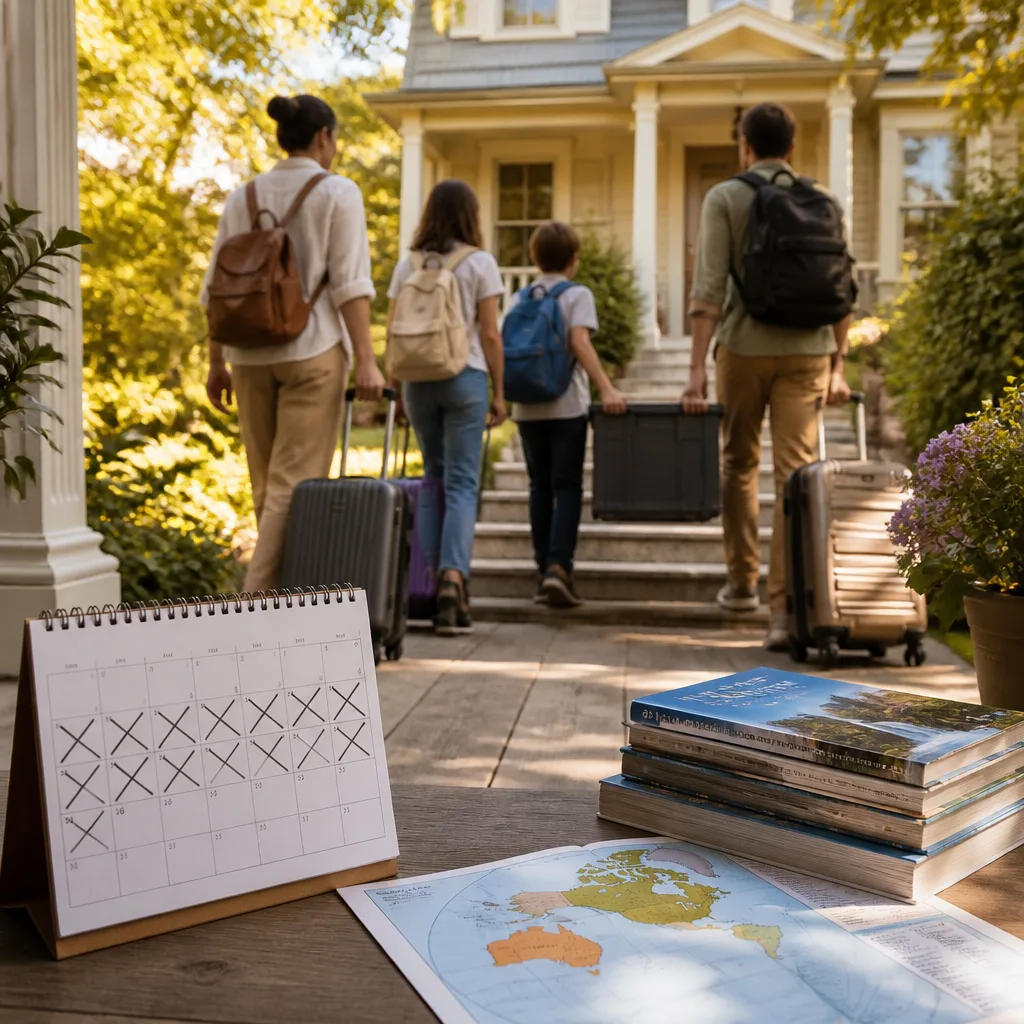
A young Australian family has spent more than a year living without paying rent or a mortgage by regularly house‑sitting, moving between 13 homes across Australia and Canada and saving tens of thousands of dollars in the process. The couple and their two children say the arrangement let them stay flexible while building a deposit for a future home.
How they made it work
The family left New Zealand and relocated to Australia about 15 months ago to seek lower living costs. With traditional renting proving uncertain and long‑term decisions difficult, they began accepting house‑sitting assignments that typically lasted about five weeks or longer. Their stays have included homes in Western Australia, Queensland, Victoria and one assignment in Canada.
Over that period they occupied 13 different properties and report saving more than $35,000 AUD — money they redirected into a deposit fund and travel. They kept most of their belongings in storage between sits and treated each assignment as a chance both to save and to evaluate potential places to settle.
Practical steps and benefits
- Flexible scheduling: The family targeted longer house‑sits, generally five weeks or more, to reduce moving frequency and provide a measure of stability for the children.
- Lower housing costs: Avoiding rent and mortgage payments allowed them to accumulate substantial savings that would otherwise have gone to housing.
- Location scouting: By residing in different areas, they could assess whether a town or neighborhood would be a good long‑term fit before committing to rent or purchase.
The parents described searching house‑sitting platforms and responding quickly to opportunities. What began as a short-term solution became a deliberate lifestyle choice and a financial strategy.
"It seemed like the best option to stay flexible while living comfortably, and getting to experience a location to potentially settle in."
Tradeoffs and considerations
While the arrangement provided large savings, it also required practical tradeoffs. The family used storage for possessions, navigated frequent travel logistics, and had to adapt to a succession of homeowners' rules and routines. House‑sitting often involves responsibilities such as pet care, plant watering and home maintenance, which the family accepted in exchange for rent‑free accommodation.
That lifestyle may not suit everyone. Families with rigid school commitments, people who need long‑term stability, or households that require a permanent base for employment might find frequent moves impractical. Nevertheless, the couple framed their approach as a purposeful compromise: they traded permanence for mobility, lower monthly expenses and the chance to test potential communities before committing.
Numbers at a glance
| Metric | Value |
|---|---|
| Duration of house‑sitting run | 15 months |
| Number of homes stayed in | 13 |
| Estimated housing savings | $35,000+ AUD |
They emphasized that the savings have been allocated toward a house deposit and to support further travel. The couple's plan remains to assess suitable locations during their sits and ultimately choose a place to settle down more permanently.
Their story highlights an increasingly visible approach to managing housing costs: rather than accepting high rents or committing immediately to a mortgage, some households are experimenting with alternative living arrangements that reduce monthly expenses while offering life experiences and mobility.
For readers considering a similar path, the family's experience underlines key practicalities: use reputable house‑sitting platforms, plan around school and work obligations, arrange storage for nonessential items, and be prepared to meet the caretaking responsibilities each homeowner expects.
As housing affordability continues to shape family choices around the world, this household’s experiment illustrates one way to reallocate housing dollars into savings while maintaining a lifestyle that blends travel, flexibility and long‑term planning.