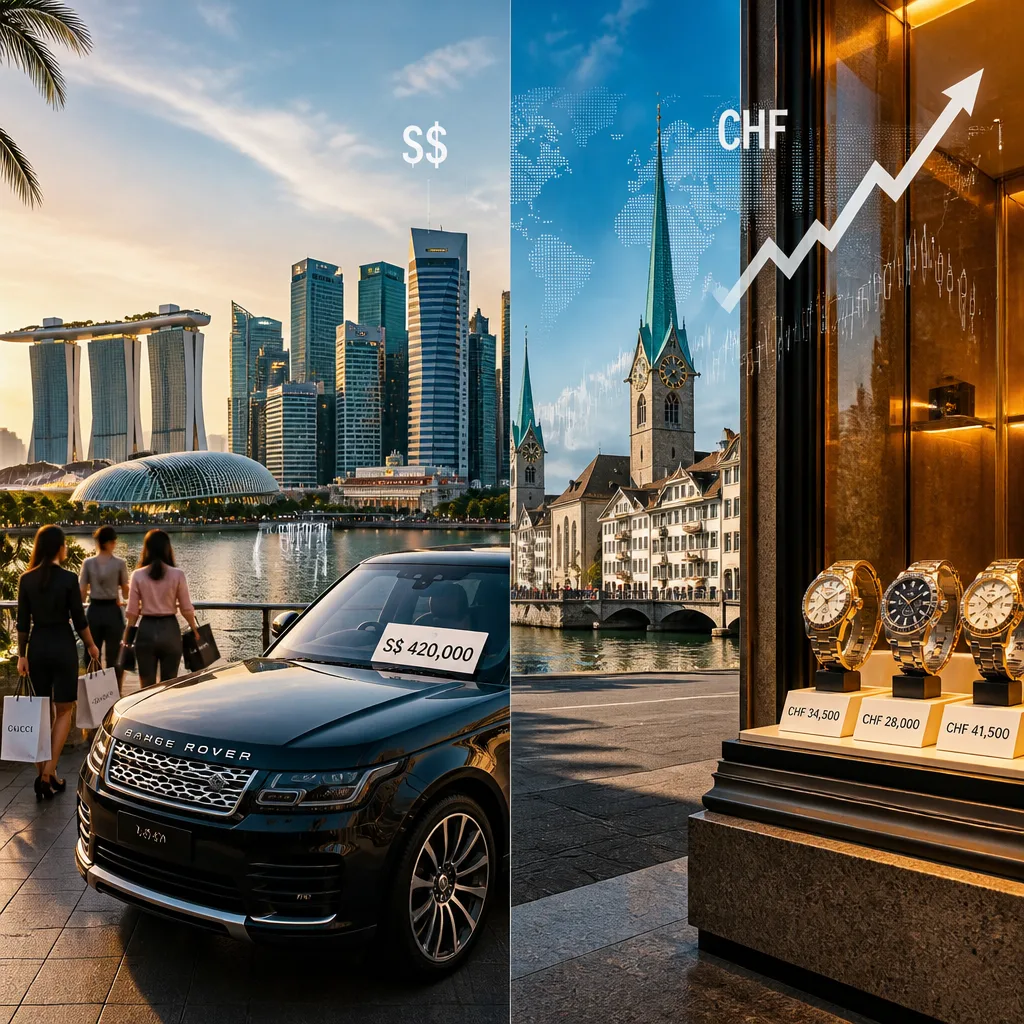
Singapore has been named the most expensive city in which to maintain a premium lifestyle for the fourth consecutive year, according to Julius Baer’s Global Wealth and Lifestyle Report 2026. The Swiss wealth manager found that high housing and automobile costs, combined with a strong Singapore dollar, kept the city at the top of the index.
Currency strength and luxury-price rises drive rankings
The report, which measures the U.S. dollar price of 20 luxury goods and services across 25 global cities, also elevated Zurich to second place after the Swiss franc strengthened. Zurich rose three positions from the prior year, a move Julius Baer tied to the franc’s perceived role as a “store of value” during periods of uncertainty.
“Currencies are once again taking center stage, but the real key lies in how currencies, assets, and investor decisions interact,” said Christian Gattiker, head of research at Julius Baer.
Gattiker added that 2026 remains a complex year with heightened uncertainty, making “stable cities and countries” particularly attractive to wealthy individuals, the report said.
How the index was built and what rose most
The Lifestyle Index compares prices for items including housing, automobiles, business-class flights, school tuition and tasting dinners. Julius Baer surveyed 360 high-net-worth individuals—people with at least $1 million in bankable family assets—between February and March 2026 to inform the findings.
Across the surveyed cities, maintaining a high standard of living has become notably more expensive for affluent households: the index recorded an average increase of 10.2% over the past 12 months when measured in U.S. dollars. Luxury goods led some of the steepest price gains, with jewelry up 16.4% and watches up 15.5%, reflecting broader commodity and market movements.
- Survey scope: 25 cities, 20 luxury items and services.
- Respondents: 360 high-net-worth individuals (family bankable assets of $1 million+).
- Notable price changes: jewelry +16.4%, watches +15.5%, overall index +10.2% year over year (USD).
Regional note: Barcelona holds steady
Among Spanish cities, Barcelona remained the only representative in the ranking and retained the 15th position from the 2025 report. Julius Baer characterized the stability of Barcelona’s placement not as stagnation but as continued competitiveness within the international luxury landscape.
| Rank | City |
|---|---|
| 1 | Singapore |
| 2 | Zurich |
| 3 | Monaco |
| 15 | Barcelona |
The report underscores two intersecting trends: the outsized influence of exchange-rate moves on the cost of imported goods and the persistent rise in prices for high-end housing and automobiles—categories that carry the greatest weight in the index. For wealthy consumers who travel, educate children abroad or invest in luxury assets, currency fluctuations can substantially alter the local-dollar cost of a global lifestyle.
Experts and wealth managers often point to stability as a draw for affluent households during uncertain times. Julius Baer’s findings suggest that cities perceived as safe monetary and institutional havens—especially those with strong currencies—are likely to remain on the radar of high-net-worth individuals seeking to preserve purchasing power and protect assets.
For readers tracking global living costs, the 2026 report provides a snapshot of how market forces, currency valuations and concentrated luxury-price growth are reshaping the financial calculus of premium living. While the index focuses on a narrow affluent segment, its findings ripple through sectors such as real estate, luxury retail and international education, informing decisions by families, advisors and policymakers who engage with global mobility and wealth preservation.
— Lifestyle desk