
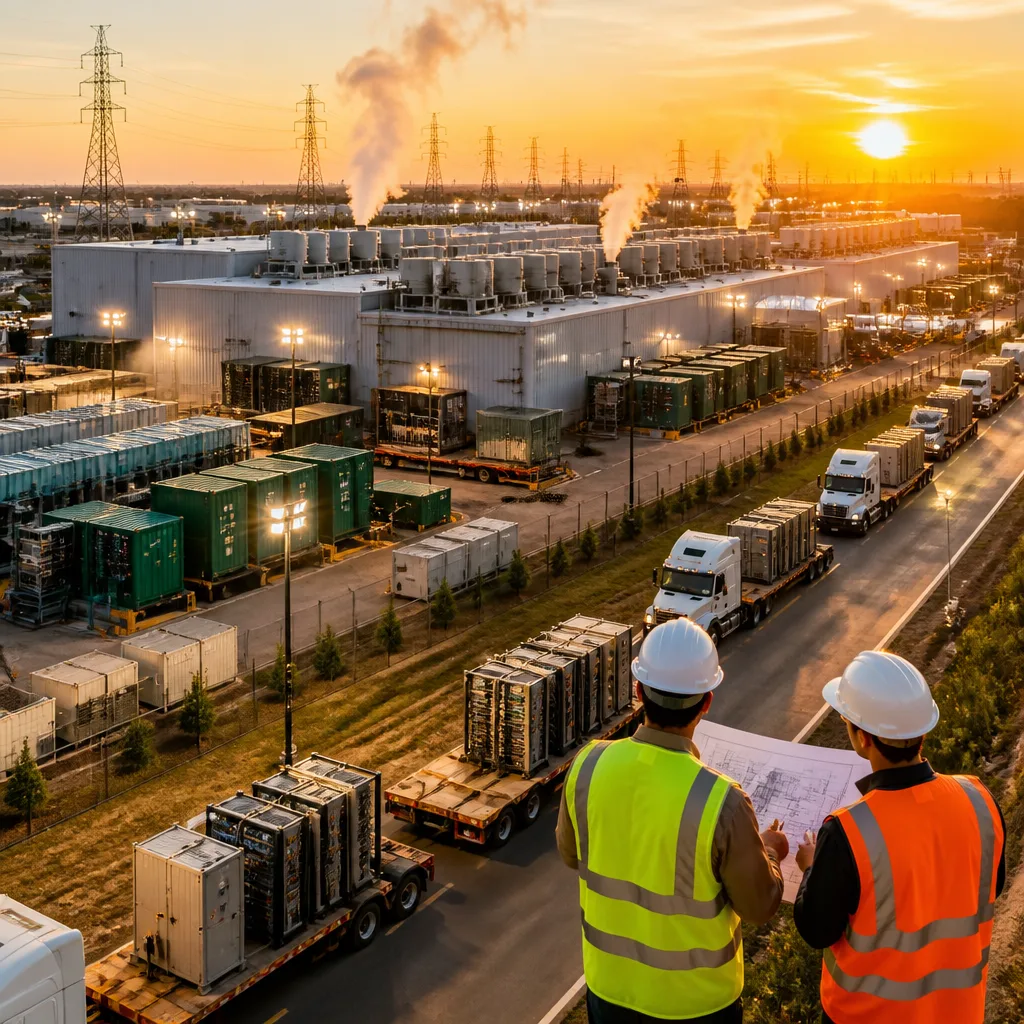
Canada’s rising AI profile is colliding with a new, less glamorous constraint: infrastructure. As the country’s researchers and institutions continue to produce world-class talent, decision-makers and companies are increasingly recognizing that access to massive compute — and the power, cooling and networking that supports it — is becoming the fulcrum of commercial and strategic advantage.
From models to machines
The recent plan by HIVE Digital Technologies to build a 320-megawatt AI factory in the Greater Toronto Area reflects a broader shift in how nations and firms think about AI. For years, public debate focused on algorithms, funding rounds and flagship models. That conversation is now widening to include physical assets: GPUs, data centers, power supply, high-density cooling and networking capacity.
Experts and policymakers argue that those who combine research excellence with substantial domestic compute infrastructure will be best positioned to commercialize AI advances. Canada’s deep talent pool — anchored by figures and institutions that helped pioneer modern machine learning — gives it an important head start in research. But talent alone, the reporting notes, is insufficient when training and operating foundation models and advanced systems require vast and sustained compute resources.
Why location and ownership matter
For industries that handle sensitive data — finance, healthcare, defence and public administration among them — the physical location and ownership of compute resources has real implications for privacy, compliance and national security. The article frames this in terms of a phrase increasingly used in policy circles:
"AI sovereignty depends upon compute sovereignty."
Domestic control of compute infrastructure can reduce reliance on foreign cloud providers, mitigate cross-border data-flow risks and give governments greater leverage over service availability and resilience. That consideration is driving the appeal of large, locally controlled facilities such as the HIVE project.
Technical and economic bottlenecks
The move toward local compute capacity raises immediate technical and economic questions. High-performance GPUs remain a critical bottleneck; their global supply is limited and concentrated among a few suppliers. Equally important are the energy requirements and cooling solutions needed to sustain dense racks of accelerators.
Key infrastructure challenges highlighted include:
- Power generation and grid capacity — Large AI deployments demand steady, high-capacity electricity supplies and may strain local distribution networks.
- Cooling and thermal management — High-performance compute generates concentrated heat loads that require advanced cooling technologies.
- Networking and latency — Efficient training and deployment of AI models depend on high-bandwidth, low-latency interconnects within and between data centers.
These constraints alter the economics of AI development. Building and operating large-scale facilities requires capital, long-term power contracts, and integration with local supply chains for hardware and services.
Policy and market consequences
The emphasis on sovereign infrastructure could reshape competition among nations and cloud providers. Countries investing in compute capacity could see faster commercialization of research outputs and greater control over where and how sensitive workloads are processed. For private firms, proximity to domestic compute resources may become a competitive differentiator for selling AI-enabled products and services to regulated industries.
At the same time, concentrating compute in a few large facilities raises questions about resilience and regional inequality. Governments and industry will need to weigh trade-offs between centralized efficiency and distributed redundancy.
| Issue | Implication |
|---|---|
| GPU availability | Limits pace of model training and increases competition for hardware |
| Power demand | Requires grid upgrades and long-term energy sourcing |
| Data sovereignty | Increases control but raises infrastructure costs |
Canada’s HIVE proposal serves as a concrete example of how private investment in scale compute is becoming a strategic priority. Observers say the trend is likely to prompt more national-level planning around energy policy, data governance and industrial incentives as countries seek to secure both the talent and the machines needed for next-generation AI.
For U.S. policymakers and industry, the Canadian developments are a reminder that leadership in AI will increasingly hinge on aligning research excellence with robust, secure and locally controlled compute infrastructure.















