
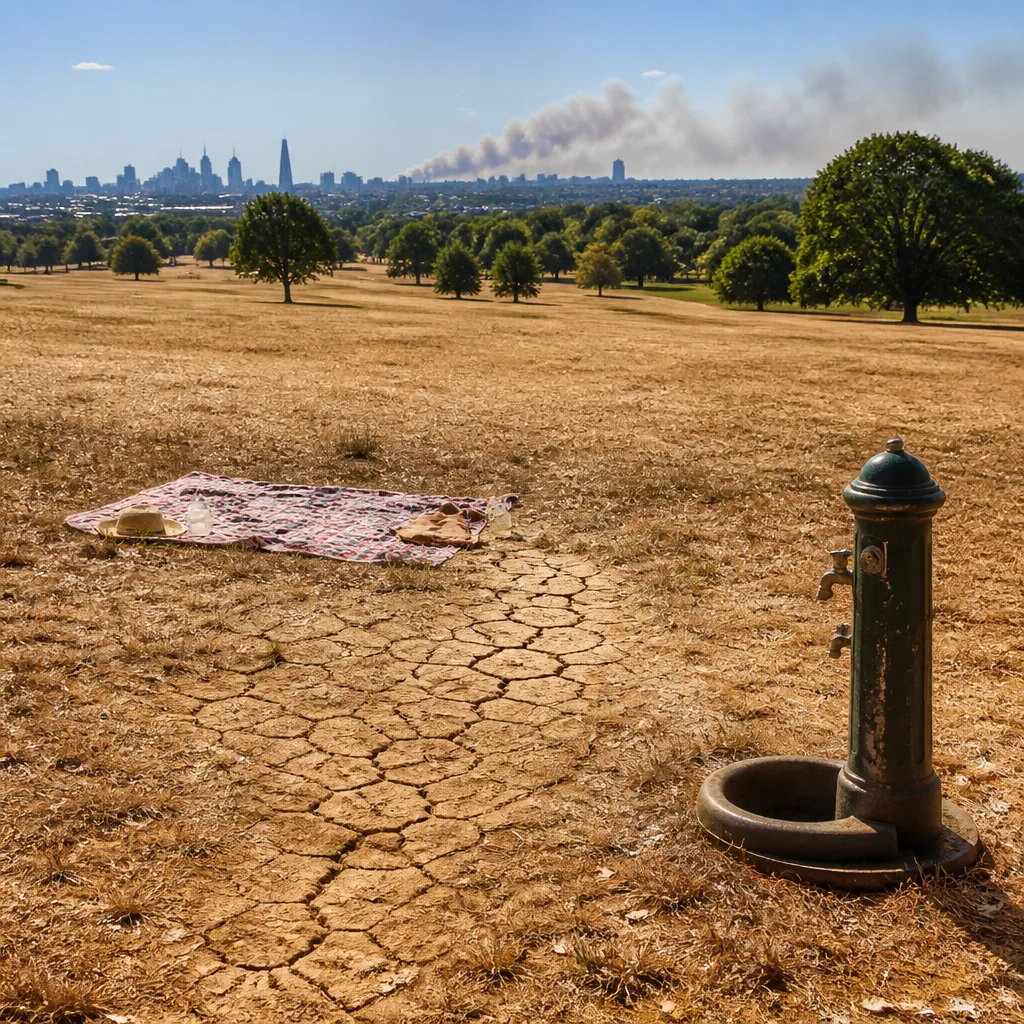
London and much of the UK have seen a short-lived easing of extreme temperatures after last week’s intense heat, but officials warn that dry conditions and the risk of wildfires remain acute.
What has just happened and what to expect
Last Thursday the UK recorded its warmest temperature of the year at 38.1C at Kew Gardens, followed by a high of 34C on the next day. Over the weekend London experienced more moderate readings, with daily maxima near 26C. The Met Office expects similar levels on Monday and Tuesday, before a shift to cooler weather with maximum temperatures around 20C by the coming weekend.
By the Met Office’s definition, a heatwave requires at least three consecutive days with highs of 28C or above. Based on the short-range forecast, London is not expected to meet that threshold in the immediate run of days.
Dryness, drought and wildfire threat
Drought and fire risk are the major continuing concerns. More than 70% of the country is now classified as being in drought following a record dry July. August has so far delivered only around 5% of the rainfall normally expected for the month.
That dryness has left parks and open spaces desiccated and vulnerable to ignition. Local leaders and emergency services have urged measures to reduce fire risk: the Mayor of London, Sir Sadiq Khan, has asked residents to create fire breaks in gardens to protect property, while the London Fire Brigade has warned about hazards from garden fires and barbecues. The article also reports a call for retailers to withdraw disposable barbecues from sale, described as an appeal by Prime Minister Andy Burnham, who warned conditions "could be with us for some weeks yet".
"could be with us for some weeks yet"
Fire services have already dealt with a large number of incidents this year. According to data cited in the report, more than 1,000 wildfires have been recorded across England and Wales so far this year — matching last year’s record total.
The consequences of these fires have been severe in some cases. In the West Midlands a large blaze in Stourbridge led to a child and three firefighters being taken to hospital. West Midlands Fire Service said the incident affected about 40 acres and resulted in 19 houses fully destroyed and a further 18 houses damaged.
How to stay safe and what to do
With heat easing in the short term but drought and fire risk continuing, sensible precautions are still important. Practical steps highlighted by authorities include:
- Avoid using disposable barbecues and open fires in parks and on parched ground.
- Create and maintain fire breaks in garden spaces where advised.
- Follow guidance from local fire services and the London Fire Brigade on safe disposal of smoking materials and use of garden equipment.
Because the ground and vegetation remain dry, small ignition sources can escalate rapidly. Even with lower temperatures, the combination of drought and human activity sustains the elevated wildfire risk.
Outlook and confidence
The immediate meteorological outlook is for a brief spell of cooler conditions in the capital and nearby areas, with a return to values around 20C by the weekend rather than a repetition of last week’s extremes. However, drought indicators and the cumulative lack of rainfall mean fire and water-resource stresses will persist until more sustained rain occurs.
| Metric | Recent/Forecast value |
|---|---|
| Highest temperature recorded this year (Kew Gardens) | 38.1C |
| Recent London highs (weekend) | 26C |
| Short-term forecast peak (Mon–Tue) | 26C |
| Forecast by weekend | 20C |
| Country in drought | More than 70% |
| August rainfall so far | About 5% of expected |
Confidence in the short-range temperature forecast is high — cooler air is expected to move in — but confidence that drought and wildfire risk will quickly abate is low without significant and sustained rainfall. Residents should remain alert to local fire warnings and follow advice from emergency services while water-resource restrictions and dry vegetation continue to affect large parts of the country.









