
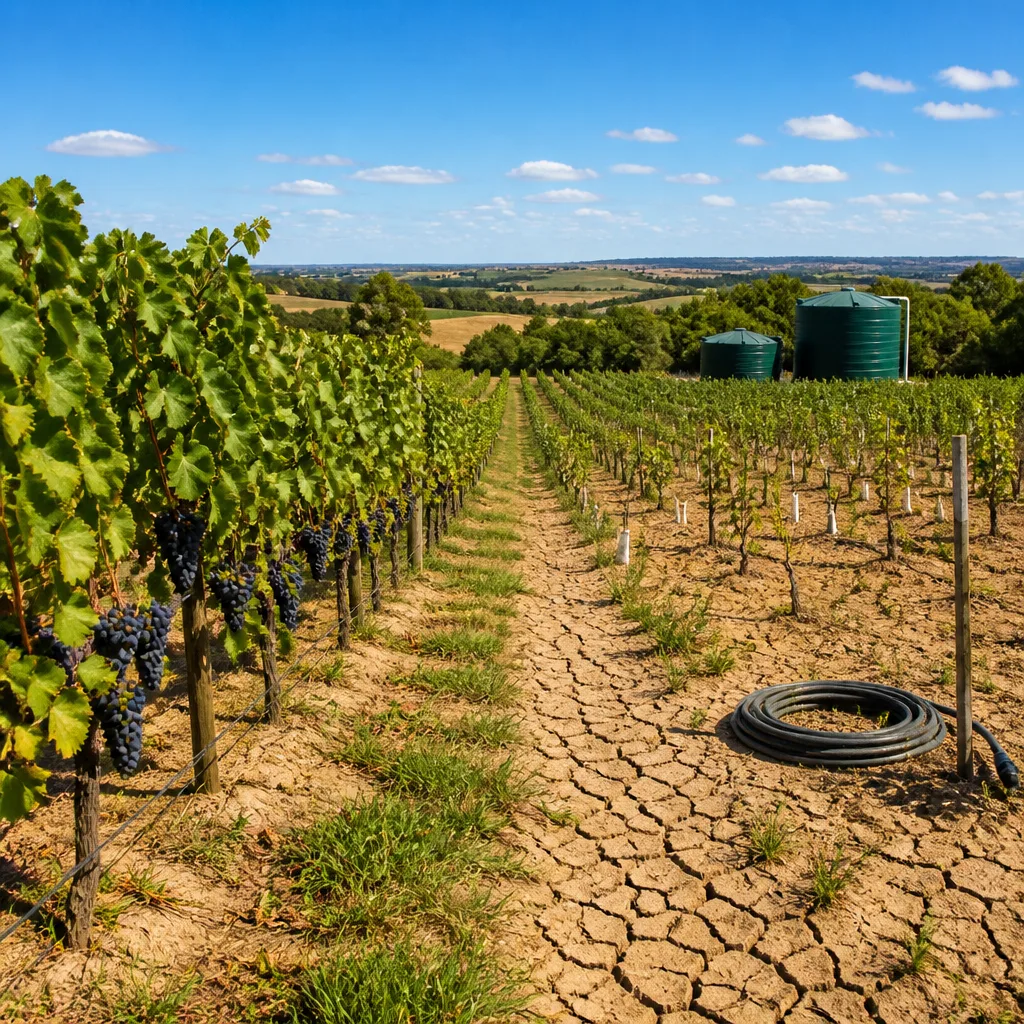
A recent summer heatwave and an unusually disease-free season have combined to deliver what one English vineyard describes as a bumper grape harvest, even as other farmers struggle with drought. The co-founder of Foxbury Fields, on the Gloucestershire-Herefordshire border near Ledbury, says the site looks set to harvest “at least a tonne” of grapes — substantially more than in previous years — but also warns the conditions have been uneven across the site and may force changes in water management.
What happened on the ground
The vineyard’s co-founder reported a clear split in performance across the vines: one half of the vineyard has benefited from the hot weather and produced heavily, while another section has suffered from dryness. She attributed the good yield to a combination of warmer conditions and the absence of vine disease this season.
“I think we've got far more grapes this year than we had last year. I'm pretty confident that we've done at least a tonne,”
Despite the stronger-than-usual crop in places, the grower said some vines were notably dry — a reminder that even within a single site, heat and soil moisture can produce divergent results. The lower section of the site, she said, had seen very little negative impact and was performing positively, even though it normally produced fewer grapes than the top section.
Implications and likely responses
The vineyard is now seriously considering whether to install irrigation for parts of the site that have traditionally managed without supplemental water. The co-founder noted there is already a reservoir and the physical capacity to irrigate, but they hope more rain will make that unnecessary.
- Higher yields have been reported in parts of the vineyard, with at least 1 tonne expected this year.
- Uneven impacts across the property: some vines thrived, others were dry.
- Potential adaptation in the form of irrigation is being considered despite existing water storage on site.
| Vineyard section | Condition this year | Usual behaviour |
|---|---|---|
| Top section | Quite dry; fewer grapes than the bottom this season | Typically produces more grapes |
| Bottom section | Little negative impact; positive performance | Normally produces fewer grapes |
For growers and producers around the country, this sort of variability underlines how heatwaves and droughts can produce both winners and losers within short distances. Where soils, aspect and access to stored water differ, results can vary markedly. The vineyard’s experience suggests that, at least in some pockets, the heat has boosted yield; in others, it has reduced vigour and output.
What growers should consider now
Growers assessing their summer and autumn prospects need to weigh short-term gains against longer-term risk. The presence of a reservoir and plans for potential irrigation are pragmatic responses where water storage exists, but reliance on irrigation can bring additional costs and regulatory considerations. Those without stored water face harder choices, particularly if dry spells become more frequent.
Nationally, the report is one data point among many this season. While increased grape availability in some areas could mean more wine produced in the UK this year, the patchwork nature of the response to heat and drought highlights that heatwaves do not produce uniform outcomes. Producers should monitor soil moisture closely, consider targeted irrigation where feasible, and plan for variable disease pressure — although this site reported no disease this year.
Confidence in the immediate yield estimate is moderate — the vineyard’s co-founder expressed clear belief that output is higher than last year, but also acknowledged variation across the site and the hope for more rain. For consumers and industry planners, the key message is that climate-driven weather extremes are reshaping harvests and prompting practical adaptation decisions.









