
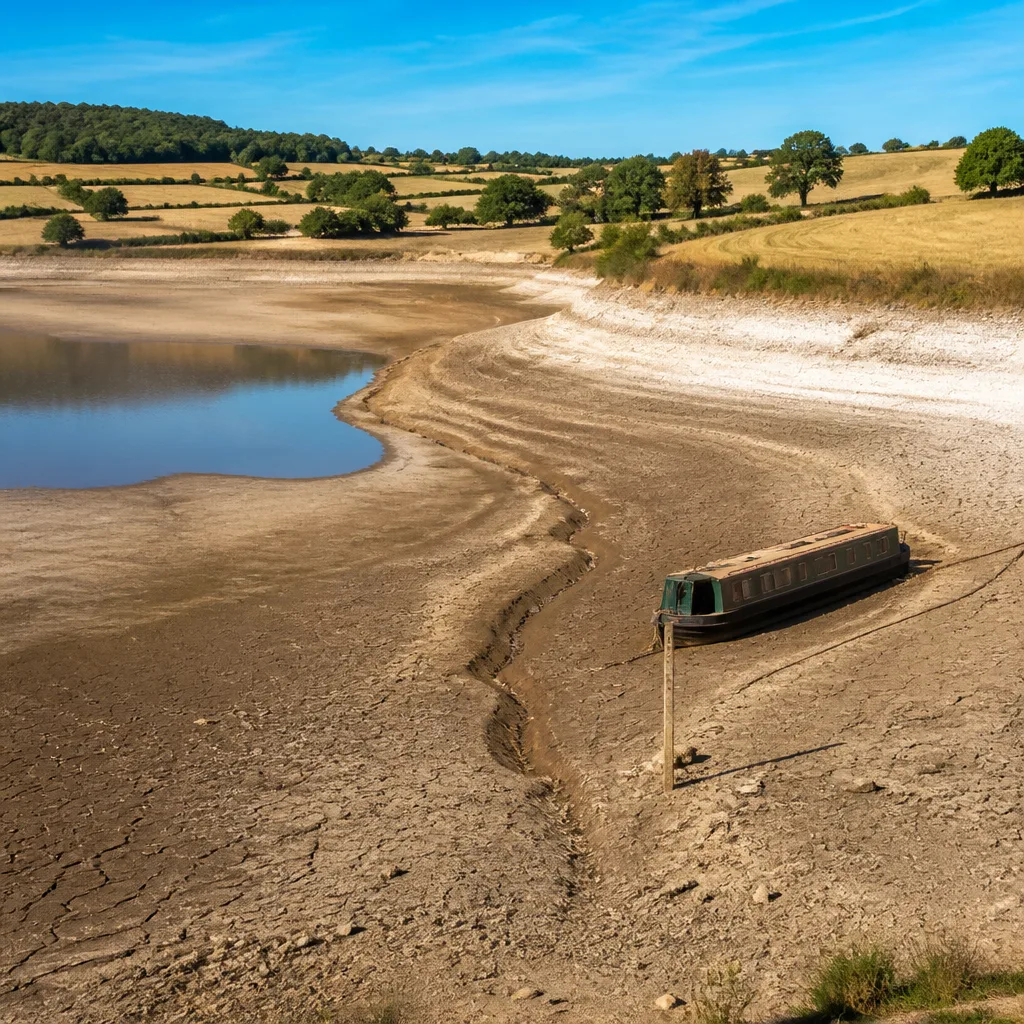
More areas of England are expected to be formally declared in drought after ministers and agencies warned the country had endured an "exceptional, unprecedented summer" that has pushed river and reservoir levels to unusually low states.
Regions at risk and existing drought areas
The Environment Agency has indicated that north-west England — already under a less severe status of "prolonged dry weather" — could be added to the list of areas formally declared in drought. Regions already officially in drought include East Anglia, Hertfordshire, London, Thames Valley, Hampshire, the Isle of Wight, Devon, Cornwall, the West Midlands and Wessex (Dorset, Somerset, Wiltshire and south Gloucestershire).
Scotland and Northern Ireland have not been experiencing drought conditions and are forecast to receive spells of heavy rain during the coming week.
What the dry spell looks like
England and Wales recorded the driest July since records began in 1836, with southern England marking its driest month on record. Rainfall has been exceptionally scarce: several parts of England have seen less than 10mm of rain for a seventh consecutive week, contributing to falling river levels and dropping reservoir stocks.
The Environment Agency has warned of practical impacts already being observed, including potential navigation difficulties for boats on the Thames, Lark and Ouse. Most reservoirs across England are now below normal levels and five are categorised as "exceptionally low" by the agency.
| Indicator | Current status (as reported) |
|---|---|
| River levels | Continuing to fall |
| Reservoir levels | Almost all below normal; five "exceptionally low" |
| Rainfall | Less than 10mm across parts of England for seven consecutive weeks |
Impact on farming and food supply
The National Farmers Union has warned of potential food shortages if the dry weather persists. NFU president Tom Bradshaw said this year's wheat and oats yields were "very, very poor" and that some livestock farmers had been forced to feed winter rations early because grass growth had failed.
- Crop yields: Wheat and oats significantly affected, described as "very, very poor" by NFU.
- Livestock: Farmers using winter feed due to lack of pasture growth.
- Navigation: Potential issues on the Thames, Lark and Ouse reported by the Environment Agency.
Warnings from climate and environment officials
Emma Pinchbeck, chief executive of the Climate Change Committee, told BBC Radio 4's Today programme that the UK was unprepared for persistent dry weather, saying:
"We're not prepared at all"
Another official described the summer as "exceptional, unprecedented", adding to concerns that such conditions may become more frequent.
Short-term forecast and what comes next
Meteorologists expect the week ahead to remain largely dry with temperatures rising across much of England and Wales. Temperatures are forecast to peak on Thursday before easing slightly over the weekend, and forecasters say there is no significant rainfall expected for England and Wales in the immediate outlook.
The likely expansion of formal drought declarations will trigger work by water companies and local authorities to manage supplies and consider restrictions. Formal drought status typically allows greater powers for agencies to protect supplies, prioritise essential uses and support farmers and the environment, though specific measures will depend on the areas named and the condition of local reservoirs and rivers.
Officials and campaigners say the evolving picture will feed into wider debates about long-term water resilience, planning for hotter drier summers and investment in infrastructure and conservation to reduce vulnerability to prolonged dry spells.
As England contends with the immediate effects, communities, farmers and agencies will be watching reservoir and river gauges closely for signs of improvement or further deterioration.















