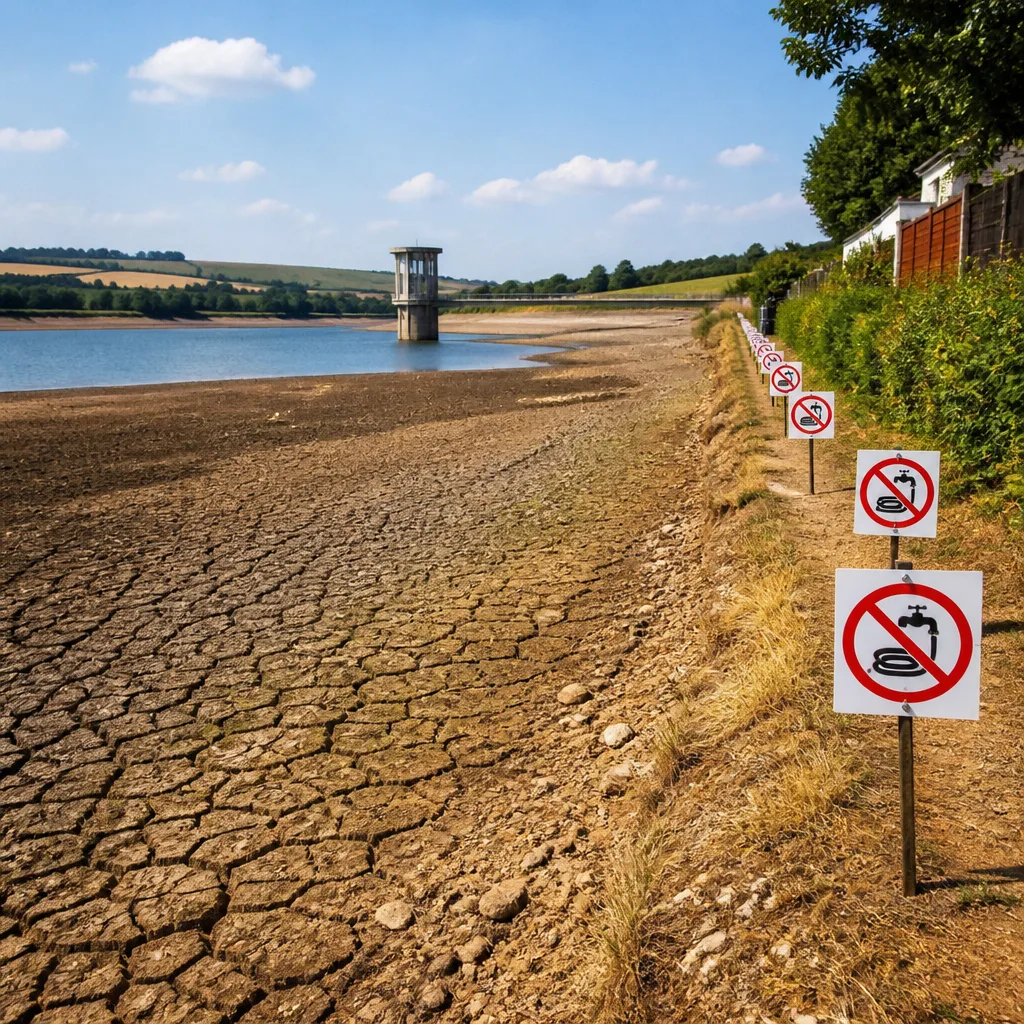
Expect hotter, drier conditions and more official drought designations as the National Drought Group meets to consider extending drought status across England while the UK and Wales brace for a fifth heatwave this summer. Nearly two months without meaningful rainfall have left reservoirs and rivers low and prompted water-use controls for millions of households.
What is happening
The inter-agency National Drought Group — which brings together regulators, government departments, water companies and agricultural representatives — is due to meet today to assess whether additional areas should be formally declared in drought. At present half of England and the whole of Wales are already under an official drought designation. The prolonged dry spell has produced visible effects from exposed lake beds to hard, parched ground at well-known sites across the country.
What to expect this week
Forecasters are signalling a further spell of sustained heat, described in national forecasts as the fifth heatwave of the summer. Temperatures are expected to climb, increasing pressure on already depleted water resources and making hosepipe and other temporary restrictions more likely to expand. While short-term showers cannot be ruled out in some areas, confidence is high that large-scale, replenishing rainfall is not imminent.
What the drought declaration means
An official drought declaration is not a single action but a framework that allows coordinated measures between agencies and water firms. It can lead to:
- expanded or prolonged hosepipe bans and other temporary restrictions on non-essential water use;
- targeted use of standpipes or temporary water deliveries in vulnerable communities;
- support and guidance for farmers and food producers facing crop stress and livestock water shortages;
- increased monitoring of river flows, reservoir levels and groundwater to inform future action.
How many people are affected
Water companies have already imposed restrictions that affect large numbers of customers nationwide. Official figures show approximately 23 million people are subject to hosepipe bans at present. That number could rise if the National Drought Group decides to extend drought area coverage.
| Area | Current drought status |
|---|---|
| England | Half of the country officially in drought |
| Wales | Entire country officially in drought |
Practical advice and immediate actions
Households, businesses and farms should plan for hot, dry conditions to persist in the near term. Practical steps include:
- following your local water company’s guidance and obeying any temporary bans on hosepipe or garden watering;
- checking livestock access to clean water and increasing monitoring of soil moisture for crops;
- reducing non-essential water use at home (shorter showers, not leaving taps running, running full dishwashers/washing machines);
- preparing for possible local restrictions on outdoor events or activities that might require large volumes of water.
Context and implications
Two months with little significant rainfall have created compound stress on natural water systems and human uses. Low reservoir levels and visible dry riverbeds are already being reported in a number of regions. For agriculture, the timing and intensity of heat can damage harvests and reduce yields, while municipal supplies face the twin challenges of increased summer demand and reduced supply.
Decisions by the National Drought Group will be guided by current hydrological data and forward projections. If more territory is officially declared in drought it enables a co-ordinated response but does not by itself solve supply shortages. The situation will require both short-term conservation and longer-term planning to strengthen resilience to recurring dry summers.
We will carry the National Drought Group’s announcements and provide practical guidance as the picture develops. For now, expect hotter weather, more water-use restrictions and continuing pressure on river and reservoir levels.