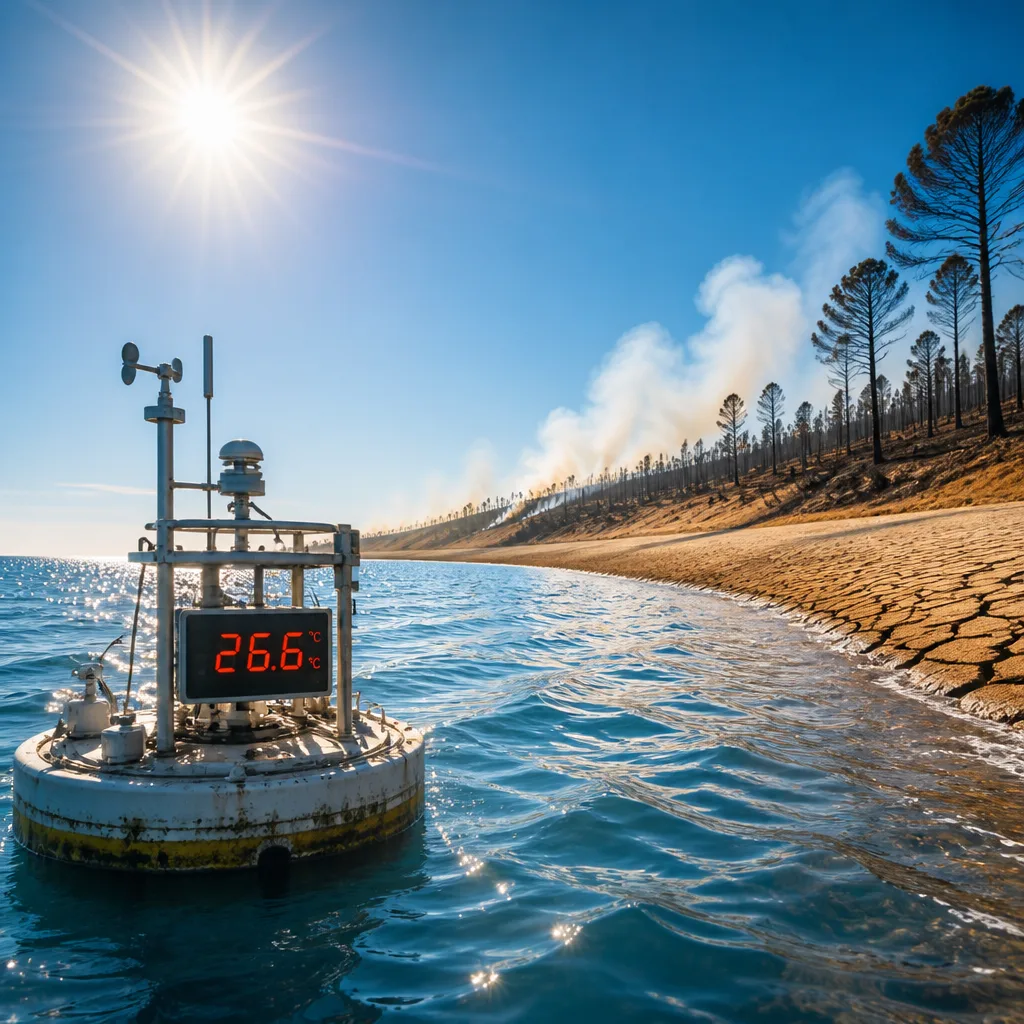
Global sea surface temperatures in July 2026 were the warmest on record for that month, the European Union’s Copernicus climate change service has said, as an intense and sustained heatwave scorched western Europe and left large areas unusually dry.
Ocean heat and terrestrial extremes
Copernicus found that sea surface temperatures along the Atlantic coast and in the western Mediterranean reached record highs for July, and that the global average sea surface temperature outside polar regions was higher than in any previous July, surpassing the prior July record set in 2023. At the same time, average surface air temperatures worldwide in July 2026 were marginally cooler than those in July 2024 — by just 0.01°C — leaving the two months effectively tied as the joint-second warmest Julys on record.
Western Europe has suffered an exceptional June–July period, with data indicating the warmest such two-month stretch recorded for the region. Copernicus reported that the first two months of summer this year were 2.79°C hotter than the long-term average, a figure that underlines the persistence and intensity of the heat since late spring.
Heat, drought and fires: linked hazards
The warming seas and atmosphere have coincided with severe marine heatwaves in European waters and a string of terrestrial heatwaves across the continent. Central European countries have registered new national temperature records in the campaign of extreme heat, and the dry conditions have contributed to widespread wildfires across the Mediterranean.
Copernicus highlighted that dryness observed in May and June intensified in July, with exceptionally low rainfall and reduced soil moisture across much of western Europe. Scientists say this drying effect amplifies heat at the surface: as soils lose water, they provide less natural cooling, enabling temperatures to climb yet higher.
"As soils dry out, they lose their ability to provide natural cooling, allowing heat to build more readily," said Samantha Burgess, a climate scientist at the European Centre for Medium-Range Weather Forecasts.
Burgess described the current season as a clear example of how climate change is intensifying and linking extreme events. The repeated heatwaves since spring have been fuelled by greenhouse gas-driven warming, with fossil fuel emissions identified as a key factor amplifying such extremes.
Human toll and ecological consequences
The late-June heatwave in parts of Europe was particularly severe; early estimates suggest it may have resulted in more than 10,000 deaths. Beyond the direct human health impacts, the combination of record-warm seas and prolonged terrestrial heat threatens marine ecosystems already stressed by marine heatwaves, and increases the risk of further fires and agricultural losses on land.
Marine heatwaves can disrupt fisheries, alter species distributions and damage habitats such as seagrass beds and corals. On land, low soil moisture and diminished precipitation reduce crop yields and heighten wildfire risk, with consequences for food security and air quality that often cross national borders.
- Record sea surface temperatures for July 2026, exceeding the previous July record set in 2023.
- First two months of summer 2026 were 2.79°C hotter than the long-term average for the period.
- Widespread drought and wildfires in western and central Europe, with exceptional temperatures and reduced soil moisture.
| Metric | Reported value |
|---|---|
| Global sea surface temperature (July 2026) | Highest on record for July |
| Difference vs July 2024 (surface air temperature) | 0.01°C cooler (joint-second warmest) |
| Temperature anomaly for June–July 2026 | +2.79°C above usual |
Scientists caution that single-season extremes are part of a broader warming trend driven by human activity. While weather patterns such as persistent high-pressure systems can trap heat regionally, the background warming from greenhouse gases raises the baseline temperatures and increases the likelihood, intensity and duration of such events.
Policy-makers and emergency services face the immediate challenge of protecting vulnerable populations through heat-health measures, firefighting resources and water management. Longer term, the data reinforce calls from climate scientists for accelerated emissions reductions to limit future warming and reduce the frequency of compound extremes that threaten lives, livelihoods and ecosystems.
Copernicus’s analysis provides a stark snapshot of a summer in which ocean and land temperatures combined to create a cascade of hazards across Europe and beyond. The scale of the anomalies recorded this year will be closely examined by researchers tracking how a warming planet reshapes the risks societies now face.