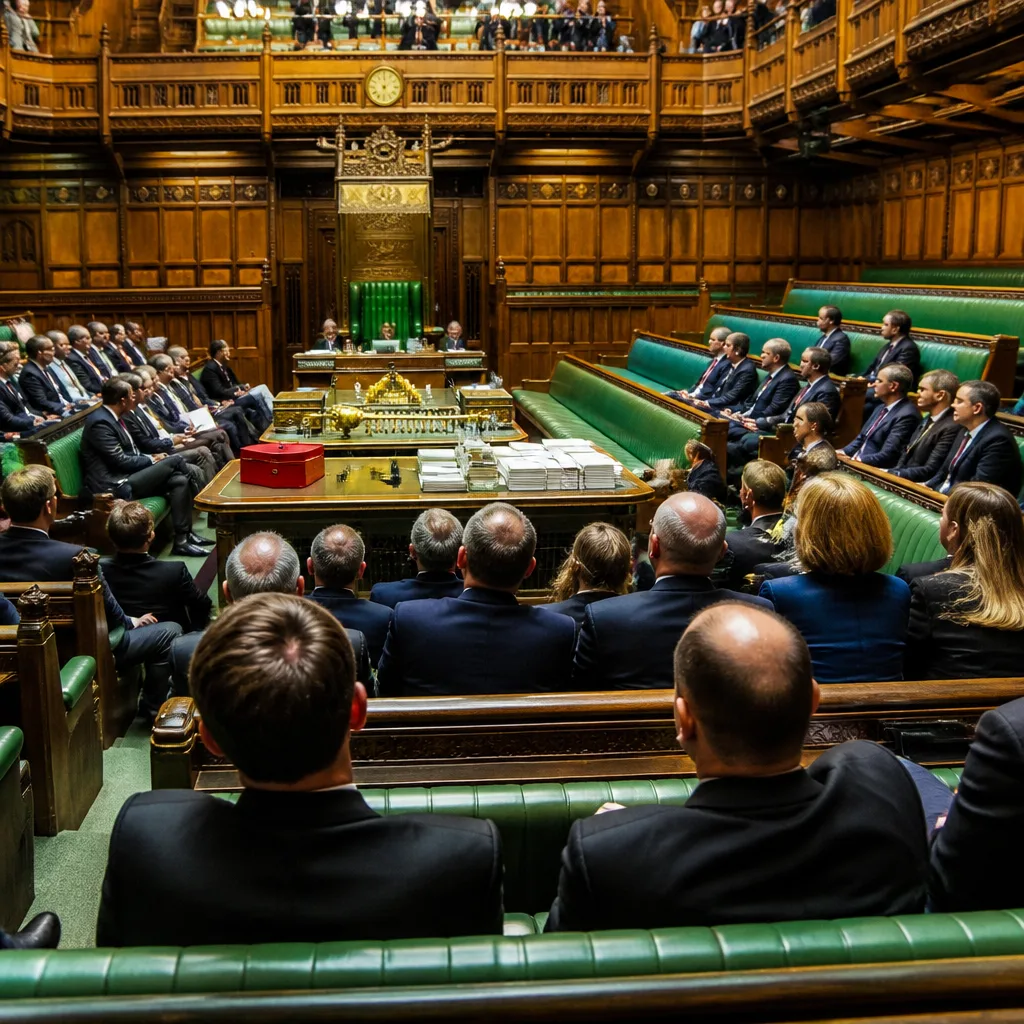
Andy Burnham used his first statement to the House of Commons as prime minister to place part of the blame for the UK’s economic malaise squarely on Brexit, saying it had "ushered in a decade of low growth" the country is still paying for. The intervention was an unexpected critique of a defining policy of recent decades and marked a tonal break with his predecessor.
A change of tone in Downing Street
The speech, delivered after Mr Burnham replaced Sir Keir Starmer following a July leadership change described in political reporting as a "bloodless coup", was framed as the new prime minister’s broad statement of intent. He said he would move away from "point scoring" and seek to work with other parties to tackle long‑standing problems.
"Britain is not where any of us would wish it to be. Things are not working as they should. Life is too expensive and too hard for too many."
Mr Burnham listed a string of policy decisions since the 1980s that, he argued, had contributed to the UK's decline — including centralisation of government, deindustrialisation and privatisation — and said Brexit had entrenched those trends.
Policy commitments and political lines
Despite his criticism of Brexit’s legacy, Mr Burnham reaffirmed the government's current Brexit red lines. He indicated he would not pursue re‑entry to the European Union, the single market or the customs union before the next election, but his critique of the policy's economic effects was read as leaving room for potential future recalibration.
In the Commons, Mr Burnham set out a number of immediate priorities and positions. He:
- Recommitted support for Ukraine and praised his predecessors from both parties for taking action against Vladimir Putin.
- Affirmed a continued commitment to net zero, linking climate policy to recent international events, including the floods in Nepal.
- Paid tribute to Sir Keir Starmer, acknowledging his work in government and stating he would use that legacy.
He also suggested he would seek to address deep institutional issues in British politics, hinting that electoral reform could be examined after a call from Liberal Democrat leader Sir Ed Davey for a national commission.
Contested areas and unanswered questions
Opposition figures pressed Mr Burnham on hot‑button items during exchanges in the Commons. The prime minister declined to give detailed answers to questions from Conservative leader Kemi Badenoch on defence spending, tax policy and reducing the welfare bill, leaving those areas for further ministerial clarification.
| Issue | Mr Burnham’s stance (as stated) |
|---|---|
| Brexit | Critical of its economic legacy; maintains no immediate re‑entry to EU, single market or customs union |
| Ukraine | Continued support and praise for prior government action |
| Net zero | Firm commitment retained |
| Electoral reform | Open to examination following calls for a national commission |
The speech has immediate political consequences. By openly blaming Brexit for a long period of weak growth, the prime minister risks inflaming divisions within his own party and across Parliament. At the same time, the explicit pledge to continue backing Ukraine and net zero signals continuity on key international and climate commitments.
How Mr Burnham translates broad critiques into concrete policy will be closely watched by business groups, devolved administrations and international partners. Any move that looks like softening of the government's Brexit stance would provoke fresh debate about trade, regulation and the UK’s place in global markets.
For now, the statement served to set a rhetorical direction: a government presenting itself as pragmatic, collaborative and willing to re‑examine long‑standing national choices while keeping certain red lines intact.